
Catalogue Search | MBRL


Are you sure you want to remove the book from the shelf?

{{itemTitle}}
10,106
result(s) for
"Sugar trade."
Sort by:

Sugar : a global history
\"Sugar is one of the most beloved substances consumed by humans, and also one of the most reviled. It has come to dominate our diets-- whether in candy, desserts, soft drinks or even bread and pasta sauces-- for better and for worse. This fascinating history of this addictive ingredient reveals its incredible value as a global commodity and explores its darker legacies of slavery and widespread obesity.\"--Dust jacket.
Book

The Sugar Plantation in India and Indonesia
European markets almost exclusively relied on Caribbean sugar produced by slave labor until abolitionist campaigns began around 1800. Thereafter, importing Asian sugar and transferring plantation production to Asia became a serious option for the Western world. In this book, Ulbe Bosma details how the British and Dutch introduced the sugar plantation model in Asia and refashioned it over time. Although initial attempts by British planters in India failed, the Dutch colonial administration was far more successful in Java, where it introduced in 1830 a system of forced cultivation that tied local peasant production to industrial manufacturing. A century later, India adopted the Java model in combination with farmers' cooperatives rather than employing coercive measures. Cooperatives did not prevent industrial sugar production from exploiting small farmers and cane cutters, however, and Bosma finds that much of modern sugar production in Asia resembles the abuses of labor by the old plantation systems of the Caribbean.
eBook

Sugar
\"There is more sugar in the world's diet than ever before, but life is far from sweet for the exploited producers making nature's 'white gold' and the unhealthy consumers eating it. Why has the billion-dollar sugar trade created such inequities? In this insightful analysis, Ben Richardson argues that the most compelling answers to this question can be found in the dynamics of global capitalism. Led by multinational companies, the mass consumption of sweetened snacks has taken hold in the Global South and underpinned a new wave of foreign investment in sugar production. The expansion of large-scale and highly-industrialized farms across Latin America, Asia and Africa has kept the price of sugar down whilst pushing workers out of jobs and rural dwellers off the land. However, challenges to these practices are gathering momentum. Health advocates warning against costly diseases like diabetes, trade unions fighting for better pay, and local residents campaigning for a cleaner environment are all re-shaping the way sugar is consumed and produced. But to truly transform sugar, Richardson contends, these political activities must also address the profit-driven nature of food and farming itself.\"--Back cover.
Book

deepest wounds
In The Deepest Wounds , Thomas D. Rogers traces social and
environmental changes over four centuries in Pernambuco, Brazil's
key northeastern sugar-growing state. Focusing particularly on the
period from the end of slavery in 1888 to the late twentieth
century, when human impact on the environment reached critical new
levels, Rogers confronts the day-to-day world of farming--the
complex, fraught, and occasionally poetic business of making
sugarcane grow. Renowned Brazilian sociologist Gilberto Freyre,
whose home state was Pernambuco, observed, \"Monoculture, slavery,
and latifundia--but principally monoculture--they opened here, in
the life, the landscape, and the character of our people, the
deepest wounds.\" Inspired by Freyre's insight, Rogers tells the
story of Pernambuco's wounds, describing the connections among
changing agricultural technologies, landscapes and human
perceptions of them, labor practices, and agricultural and economic
policy. This web of interrelated factors, Rogers argues, both
shaped economic progress and left extensive environmental and human
damage. Combining a study of workers with analysis of their
landscape, Rogers offers new interpretations of crucial moments of
labor struggle, casts new light on the role of the state in
agricultural change, and illuminates a legacy that influences
Brazil's development even today.
eBook

Sugar plantation in India and Indonesia : industrial production, 1770-2010
\"European markets almost exclusively relied on Caribbean sugar produced by slave labor until abolitionist campaigns began around 1800. Thereafter, importing Asian sugar and transferring plantation production to Asia became a serious option for the Western world. In this book, Ulbe Bosma details how the British and Dutch introduced the sugar plantation model in Asia and refashioned it over time. Although initial attempts by British planters in India failed, the Dutch colonial administration was far more successful in Java, where it introduced in 1830 a system of forced cultivation that tied local peasant production to industrial manufacturing. A century later, India adopted the Java model in combination with farmers' cooperatives rather than employing coercive measures. Cooperatives did not prevent industrial sugar production from exploiting small farmers and cane cutters, however, and Bosma finds that much of modern sugar production in Asia resembles the abuses of labor by the old plantation systems of the Caribbean\"-- Provided by publisher.
Book
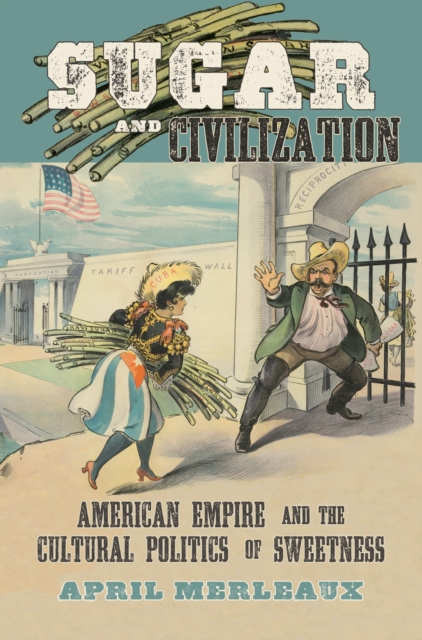
Sugar and Civilization
In the weeks and months after the end of the Spanish-American War, Americans celebrated their nation's triumph by eating sugar.Each of the nation's new imperial possessions, from Puerto Rico to the Philippines, had the potential for vastly expanding sugar production.
eBook

Unrefined : how capitalism reinvented sugar
\"Just what is sugar? This question tormented nineteenth-century planters, scientists, and governments. Sugar was powerful: It colonized and enslaved people, held consumers in thrall, spurred new technologies, and was colossally profitable. David Singerman shows that sugar's grip over the world had as much to do with how knowledge about sugar was created and transmitted as it did with how it was grown and traded. Taking us to the laboratories where it was taxonomized, the docks where it was appraised, and the congressional sessions where tariffs on it were levied, Singerman threads together a novel, multifaceted history of this staple good\"-- Provided by publisher.
BOOK

The sugar plantation in India and Indonesia
\"European markets almost exclusively relied on Caribbean sugar produced by slave labor until abolitionist campaigns began around 1800. Thereafter, importing Asian sugar and transferring plantation production to Asia became a serious option for the Western world. In this book, Ulbe Bosma details how the British and Dutch introduced the sugar plantation model in Asia and refashioned it over time. Although initial attempts by British planters in India failed, the Dutch colonial administration was far more successful in Java, where it introduced in 1830 a system of forced cultivation that tied local peasant production to industrial manufacturing. A century later, India adopted the Java model in combination with farmers' cooperatives rather than employing coercive measures. Cooperatives did not prevent industrial sugar production from exploiting small farmers and cane cutters, however, and Bosma finds that much of modern sugar production in Asia resembles the abuses of labor by the old plantation systems of the Caribbean\"--
Book

Sugar changed the world : a story of magic, spice, slavery, freedom, and science
Chronicles the human pursuit of sugar to satisfy our collective sweet tooth. The book describes this history in terms of ages, beginning with the Age of Honey, built on local growth and consumption of comestibles; through the Age of Sugar and its slave-supported \"factory\" plantation method of production; and into a period of science and freedom, when enslaved workers claimed their human rights and production of sweeteners shifted from the field to the lab.
Book

When Sugar Ruled
Two tropical commodities-coffee and sugar-dominated Latin American export economies in the nineteenth and early twentieth centuries.When Sugar Ruled: Economy and Society in Northwestern Argentina, Tucumán, 1876-1916presents a distinctive case that does not quite fit into the pattern of many Latin American sugar economies.During the last quarter of the nineteenth century, the province of Tucumán emerged as Argentina's main sugar producer, its industry catering almost exclusively to the needs of the national market and financed mostly by domestic capital. The expansion of the sugar industry provoked profound changes in Tucumán's economy as sugar specialization replaced the province's diversified productive structure. Since ingenios relied on outside growers for the supply of a large share of the sugarcane, sugar production did not produce massive land dispossession and resulted in the emergence of a heterogeneous planter group. The arrival of thousands of workers from neighboring provinces during the harvest season transformed rural society dramatically. As the most dynamic sector in Tucumán's economy, revenues from sugar enabled the provincial government to participate in the modernizing movement sweeping turn-of-the-century Argentina.Patricia Juarez-Dappe uncovers the unique features that characterized sugar production in Tucumán as well as the changes experienced by the province's economy and society between 1876 and 1916, the period of most dramatic sugar expansion.When Sugar Ruledis an important addition to the literature on sugar economies in Latin America and Argentina.
eBook