
Catalogue Search | MBRL


Are you sure you want to remove the book from the shelf?

{{itemTitle}}
8
result(s) for
"Sultans Turkey Biography"
Sort by:

Exploring Ottoman Sovereignty
Is it possible to identify the 'essence' of Ottoman kingship?And if so, what were the core motivating principles that governed the dynasty over its 600 year lifespan and how continuous and consistent were they?Following the death of the dynasty's eponymous founder Osman in 1324, 35 successors held the throne.
eBook
Empire and Power in the Reign of Süleyman
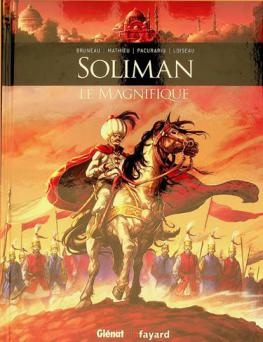
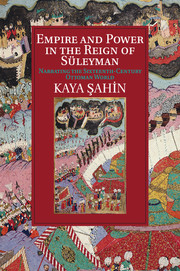
Kaya Şahin's book offers a revisionist reading of Ottoman history during the reign of Süleyman the Magnificent (1520–66). By examining the life and works of a bureaucrat, Celalzade Mustafa, Şahin argues that the empire was built as part of the Eurasian momentum of empire building and demonstrates the imperial vision of sixteenth-century Ottomans. This unique study shows that, in contrast with many Eurocentric views, the Ottomans were active players in European politics, with an imperial culture in direct competition with that of the Habsburgs and the Safavids. Indeed, this book explains Ottoman empire building with reference to the larger Eurasian context, from Tudor England to Mughal India, contextualizing such issues as state formation, imperial policy and empire building in the period more generally. Şahin's work also devotes significant attention to the often-ignored religious dimension of the Ottoman-Safavid struggle, showing how the rivalry redefined Sunni and Shiite Islam, laying the foundations for today's religious tensions.
eBook


“Our Good Friend and Illustrious Coreligionist Theodor Herzl”: The Three Interviews of La epoka with the Zionist Leader and Hamidian Censorship
La epoka was a Ladino newspaper published in Salonica. Its editor Sam Lévy published three interviews with Theodor Herzl between 1901 and 1904. His announcement and subsequent publication of the third interview drew angry responses from the Sublime Porte, which ordered the governor of Salonica to close it down. The governor resisted the orders and La epoka remained open, even publishing a eulogistic obituary of Herzl. In this article, I examine these interviews and obituary, showing that Lévy combined his sharp criticisms of Zionism with an adulation of the Zionist leader. I also explore Ottoman archival documents about the Ladino press and argue that Hamidian censorship could be flexible according to political circumstances, overlooking Lévy’s first two interviews that were made during the Ottoman government’s negotiations with Herzl, yet reacting sharply to the third interview conducted afterward and containing direct references to the Sixth Zionist Congress.
Journal Article
Beshir Agha : chief eunuch of the Ottoman Imperial harem
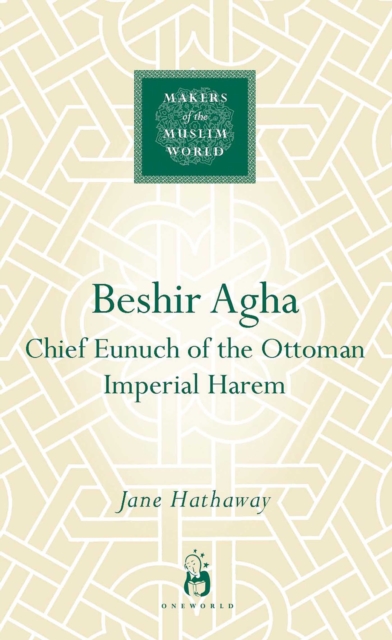
This book explores the life of el-Hajj Beshir Agha (ca. 1657-1746), the most powerful Chief Harem Eunuch in the history of the Ottoman Empire Enslaved in his native Ethiopia as a boy, then castrated in Egypt, el-Hajj Beshir became one of hundreds of East African eunuchs who inhabited the imperial palace's enormous harem. Rising through the ranks to become harem treasurer by 1707, he eventually oversaw the educations of crown princes and harem women whilst choosing and deposing a long series of grand viziers. Wielding unparallelled power and influence over the empire, the libraries that he founded throughout the region helped to shape the religious and intellectual profile of the Ottoman state.
eBook