
Catalogue Search | MBRL


Are you sure you want to remove the book from the shelf?

{{itemTitle}}
10,351
result(s) for
"Sunnites"
Sort by:

A concise history of Sunnis & Shiʻis
\"The 1400-year-old schism between Sunnis and Shi'is is currently reflected in the destructive struggle for hegemony between Saudi Arabia and Iran -- with no apparent end in sight. But how did this conflict begin, and why is it now the focus of so much attention? John McHugo charts the history of Islam from the lifetime of the Prophet Muhammad to the present day. He describes the conflicts that raged over the succession to the Prophet, how Sunnism and Shi'ism evolved as different sects during the Abbasid caliphate, and how the rivalry between the empires of the Sunni Ottomans and Shi'i Safavids ensured that the split would continue into the modern age. In recent decades, this centuries old divide has acquired a new toxicity resulting in violence across the Arab and Muslim world\"--Page 4 of cover.
BOOK

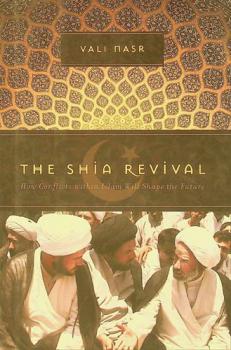
The Shia revival : how conflicts within Islam will shape the future
Considers the ways in which struggles between the Shia and Sunni in the Middle East will affect the region's future, offering insight into the power conflicts between Iran and Saudi Arabia for political and spiritual leadership of the Muslim world.
Book
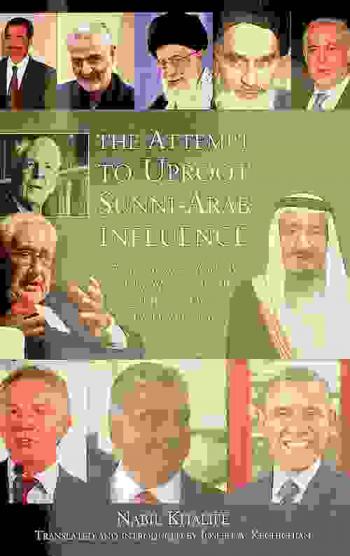
The attempt to uproot Sunni-Arab influence : a geo-strategic analysis of the Western, Israeli and Iranian quest for domination
In the aftermath of popular uprisings that unleashed the quest for freedom, Arab governments scrambled to limit sectarian divisions, though much of these efforts came to naught. Regrettably, weak governments fell into carefully laid traps, aimed to divide and rule. Protracted wars further destroyed Arab wealth and cohesiveness, and Sunni communities saw their power bases marginalized. On cue, and predicted by some commentators, extremist movements like the so-called Islamic State emerged, targeting Sunnis with extreme violence. In 2014 Nabil Khalifé, an established Lebanese thinker, published a widely praised thesis that identified the root causes of renewed sectarian tensions at a time when confrontations polarized awakened Arab societies. Based on an extensive discussion of the 1979 Iranian Revolution that toppled the Shah, Khalifé advanced the notion that the revolution was not \"Islamic\" but an \"Iranian-Shi'ah\" rebellion that ended the Pahlavi military monarchy, and that the post-2011 Sunni-Shi'ah struggle was planned by leading Western powers, including Russia, to preserve Israel and impose the latter's acceptance in the Middle East as a natural element. In this translation of Istihdaf Ahl al-Sunna [Targeting Sunnis], Joseph A. Kéchichian analyses the fundamental questions raised by the author to better place the current sectarian collision in a geo-strategic global perspective. Based on the book's avowals of how the world's three monotheistic religions perceive each other and \"Political Sunnism,\" Kéchichian assesses Henry Kissinger's famous appellation of the \"Middle World\" that houses significant and indispensable oil resources, and why that allegedly makes it - \"Political Sunnism\" - dangerous.
Book


Muslim Sectarianism versus the De-escalation of Sectarianism in Malaysia
Malaysia was initially lauded for its ability to combat the first few waves of COVID-19 but infection spikes since the Sabah state elections in September 2020 and subsequent exponential increases in both infections and deaths in 2021 left the nation reeling. Nationwide vaccination is seen as the only way out of the pandemic.Malaysia's COVID-19 communication strategy was hampered by political machinations and myriad changes in government. The need to shore up favour among the electorate resulted in inconsistent messaging and regular U-turns whenever there was public outrage at arbitrary restrictions. This resulted in confusion on the ground, preventing successful COVID-19 management and containment.Under the current regime, claims to more accessible data have been disputed and doubts have surfaced over data transparency and accuracy. There is an urgent need to ensure convincingly reliable information, as well as to use more engaging messaging on more suitable media.A holistic and effective COVID-19 communication strategy should adopt principles from several communication approaches, resulting in messages that are clear, simple and accessible as well as consistent and credible. Audiences should be segmented so that messages can be better tailored to their needs, with adequate information on the necessary steps to prevent infection and spread. Fake news, misinformation, and disinformation should be constantly tackled and debunked.The Gerai OA and OA Lindungi Komuniti Facebook pages are outstanding examples of grassroots information dissemination channels that effectively provide fact-checked, coherent and accessible information to local communities in languages and on media best-suited to their audiences.
eBook