
Catalogue Search | MBRL


Are you sure you want to remove the book from the shelf?

{{itemTitle}}
49
result(s) for
"Sunnites Relations Shīʻah History."
Sort by:

A concise history of Sunnis & Shiʻis
\"The 1400-year-old schism between Sunnis and Shi'is is currently reflected in the destructive struggle for hegemony between Saudi Arabia and Iran -- with no apparent end in sight. But how did this conflict begin, and why is it now the focus of so much attention? John McHugo charts the history of Islam from the lifetime of the Prophet Muhammad to the present day. He describes the conflicts that raged over the succession to the Prophet, how Sunnism and Shi'ism evolved as different sects during the Abbasid caliphate, and how the rivalry between the empires of the Sunni Ottomans and Shi'i Safavids ensured that the split would continue into the modern age. In recent decades, this centuries old divide has acquired a new toxicity resulting in violence across the Arab and Muslim world\"--Page 4 of cover.
BOOK

Islam without Allah?
This ground-breaking and controversial work locates the antecedents of today's Islamic 'fundamentalism' in 16th and 17th century Iran and the forced conversion of the Sunnite population of Iran to the largely alien doctrines of Twelver Shi'ism; the concomitant extirpation of Sufism and philosophy; and the gradual rise of the 'faqih' or jurist.
eBook
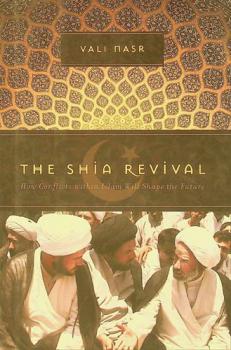
The Shia revival : how conflicts within Islam will shape the future
Considers the ways in which struggles between the Shia and Sunni in the Middle East will affect the region's future, offering insight into the power conflicts between Iran and Saudi Arabia for political and spiritual leadership of the Muslim world.
Book

The Alevis in Turkey
This is the only volume dedicated to the Alevis available in English and based on sustained fieldwork in Turkey. The Alevis now have an increasingly high profile for those interested in the diverse cultures of contemporary Turkey, and in the role of Islam in the modern world. As a heterodox Islamic group, the Alevis have no established doctrine. This book reveals that as the Alevi move from rural to urban sites, they grow increasingly secular, and their religious life becomes more a guiding moral culture than a religious message to be followed literally. But the study shows that there is nothing inherently secular-proof within Islam, and that belief depends upon a range of contexts.
Introduction 1. Setting the Scene: Religion and Social Change in Modern Turkey 2. The Alevis and their Place in the Republic: An Overview 3. An Alevi Community 4. Religion, Ritual and Belief among Alevis 5. Social Change and the Alevi Communities 6. The Alevi, the State, and the Future 7. Theoretical and Comparative Reflections Appendices: Primary Material on the Alevis
David Shankland lectures in the Dept of Social Anthropology at the Univeristy of Wales, Lampeter, and was formerly Assistant and Acting Director of the British Institute of Archaeology at Ankara, Turkey. For many years a specialist on Turkey, he has published widely on the subject.
eBook

The Caliph and the Imam : the making of Sunnism and Shiism
\"The authoritative account of Islam's schism that for centuries has shaped events in the Middle East and the Islamic world. In 632, soon after the Prophet Muhammad died, a struggle broke out among his followers as to who would succeed him. Most Muslims argued that the leader of Islam should be elected by the community's elite and rule as Caliph. They would later become the Sunnis. Others--who would become known as the Shia--believed that Muhammad had designated his cousin and son-in-law Ali as his successor, and that henceforth Ali's offspring should lead as Imams. This dispute over who should guide Muslims, the Caliph or the Imam, marks the origin of the Sunni-Shii split in Islam. Toby Matthiesen explores this hugely significant division from its origins to the present day.\"--Dust jacket flap.
Book

Medieval Islamic Sectarianism
This book asks readers to re-examine their view of the Islamic world and the development of sectarianism in the Middle East by shining a light on the complexity and diversity of early Islamic society. While Sunni Islam eventually became politically and numerically dominant, Sunni and Shiʿi identities took centuries to develop as independent communities. When modern discussions of sectarianism in the Middle East reduce these identities to a 1400-year war between Sunnis and Shiʿis, we create a false narrative.
eBook
Shi'i Cosmopolitanisms in Africa
Mara A. Leichtman offers an in-depth study of Shi'i Islam in two very different communities in Senegal: the well-established Lebanese diaspora and Senegalese \"converts\" from Sunni to Shi'i Islam of recent decades. Sharing a minority religious status in a predominantly Sunni Muslim country, each group is cosmopolitan in its own way. Leichtman provides new insights into the everyday lives of Shi'i Muslims in Africa and the dynamics of local and global Islam. She explores the influence of Hizbullah and Islamic reformist movements, and offers a corrective to prevailing views of Sunni-Shi'i hostility, demonstrating that religious coexistence is possible in a context such as Senegal.
eBook

The Sunni-Shi'a Divide
Until the attacks of September 11, 2001, few Americans knew anything about Islam, let alone about the distinctions between Sunni and Shi'a, the Sufi and Wahhabi, the origins of the Holy Qur'an and Shari'a law, and the respect that all Muslims, even secular ones, harbor for the prophet Muhammad, his family, and Islamic traditions. InThe Sunni-Shi'a DivideRobert Betts traces the tortuous history of Islam's sectarian divisions, emphasizing the most important one, the Shi'a departure from Sunni \"orthodoxy.\" Although the majority of Muslims remain faithful to the Sunni sect of Islam, approximately 15 percent subscribe to the Shi'a creed. As America's involvement in the Middle East drags on, Betts reiterates that policymakers, scholars, and laymen alike must understand the many faces of Islam, the internal forces in the United States that have brought us into these military conflicts, and the role of Israel in the region's escalating tensions. How the increasing hostility between the two main Islamic factions plays out on the world stage-as Sunni Turkey, Shi'a Iran, and their allies vie for dominance-is of major consequence for everyone, especially financially strapped Europe and the United States.
eBook
Medieval Islamic Sectarianism
This book asks readers to re-examine their view of the Islamic world and the development of sectarianism in the Middle East by shining a light on the complexity and diversity of early Islamic society. The focus here is on the tenth century, a period in Middle Eastern history that has often been referred to as the “Shiʿi Century,” when two Shiʿi dynasties rose to power: the Fatimids of North Africa and the Buyids of Iraq and Iran. Historians often call the period after the Shiʿi Century the “Sunni Revival” because that was when Sunni control was restored, but these terms present a misleading image of a unified medieval Islam that was predominately Sunni. While Sunni Islam eventually became politically and numerically dominant, Sunni and Shiʿi identities took centuries to develop as independent communities. When modern discussions of sectarianism in the Middle East reduce these identities to a 1400-year war between Sunnis and Shiʿis, we create a false narrative.
This book asks readers to re-examine their view of the Islamic world and the development of sectarianism in the Middle East by shining a light on the complexity and diversity of early Islamic society. The focus here is on the tenth century, a period in Middle Eastern history that has often been referred to as the “Shiʿi Century,” when two Shiʿi dynasties rose to power: the Fatimids of North Africa and the Buyids of Iraq and Iran. Historians often call the period after the Shiʿi Century the “Sunni Revival” because that was when Sunni control was restored, but these terms present a misleading image of a unified medieval Islam that was predominately Sunni. While Sunni Islam eventually became politically and numerically dominant, Sunni and Shiʿi identities took centuries to develop as independent communities. When modern discussions of sectarianism in the Middle East reduce these identities to a 1400-year war between Sunnis and Shiʿis, we create a false narrative.
eBook

Islamic ecumenism in the 20th century : the Azhar and Shiism between rapprochement and restraint
This survey of more than one century of inner-Islamic ecumenical activities in modern times concentrates on the role of the Cairo-based Azhar University and its relations to Shiite scholars. Particular emphasis is laid on the mutual dependency of theology and politics in the modern Islamic discourse.
eBook