
Catalogue Search | MBRL


Are you sure you want to remove the book from the shelf?

{{itemTitle}}
250
result(s) for
"Superheroes Comic books, strips, etc. Fiction."
Sort by:
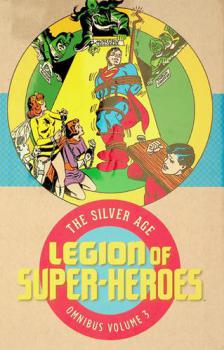
Legion of Super-Heroes, the Silver Age omnibus
\"Now collected in an oversize omnibus edition for the first time, DC proudly presents the LEGION OF SUPERH-HEROES: THE SILVER AGE OMNIBUS! Originally introduced in 1958, the Legion of Super-Heroes is a team of super-powered teenagers from the disparate worlds of the 30th century's United Planets. Each hero had his or her own powers, unique to their planets of origin; together, they stood against evil across the galaxy. Together with 20th century hero Superboy, this team--originally made up of Saturn Girl, Lightning Lad and Cosmic Boy, but soon numbering in the dozens--fought for justice as they dealt with adolescent insecurities.\"-- Provided by publisher.
Book

Bending steel : modernity and the American superhero
“Faster than a speeding bullet. More powerful than a locomotive. Able to leap tall buildings in a single bound . . . It’s Superman!” Bending Steel examines the historical origins and cultural significance of Superman and his fellow American crusaders. Cultural historian Aldo J. Regalado asserts that the superhero seems a direct response to modernity, often fighting the interrelated processes of industrialization, urbanization, immigration, and capitalism that transformed the United States from the early nineteenth century to the present. Reeling from these exciting but rapid and destabilizing forces, Americans turned to heroic fiction as a means of explaining national and personal identities to themselves and to the world. In so doing, they created characters and stories that sometimes affirmed, but other times subverted conventional notions of race, class, gender, and nationalism.
The cultural conversation articulated through the nation’s early heroic fiction eventually led to a new heroic type—the brightly clad, super-powered, pro-social action heroes that first appeared in American comic books starting in the late 1930s. Although indelibly shaped by the Great Depression and World War II sensibilities of the second-generation immigrants most responsible for their creation, comic book superheroes remain a mainstay of American popular culture.
Tracing superhero fiction all the way back to the nineteenth century, Regalado firmly bases his analysis of dime novels, pulp fiction, and comics in historical, biographical, and reader response sources. He explores the roles played by creators, producers, and consumers in crafting superhero fiction, ultimately concluding that these narratives are essential for understanding vital trajectories in American culture.
eBook

The Phoenix colossal comics collection. 2
\"A collection of different comics content taken from the issues of The Phoenix, this bind-up pulls together different humorous, informative, action-packed, and brain-teasing stories into one mega-comic bind-up! A practical buffet table for kids to enjoy, brought together in a tailored format and with in-house favorites like Bunny vs. Monkey and Mega Robo Bros alongside all-new characters and properties for them to love. The Phoenix Colossal Comics Collection provides the unique experience of reading a great comic or magazine... but with loads more material!\"-- Amazom.com.
Book

Enter the superheroes
Ever since the first appearances of Superman and Batman in comic books of the late 1930s, superheroes have been a staple of the popular culture landscape. Though initially created for younger audiences, superhero characters have evolved over the years, becoming complex figures that appeal to more sophisticated readers. While superhero stories have grown ever more popular within broader society, however, comics and graphic novels have been largely ignored by the world of academia. In Enter the Superheroes:American Values, Culture, and the Canon of Superhero Literature, Alex S. Romagnoli and Gian S. Pagnucci argue that superheroes merit serious study, both within the academy and beyond. By examining the kinds of graphic novels that are embraced by the academy, this book explains how superhero stories are just as significant. Structured around key themes within superhero literature, the book delves into the features that make superhero stories a unique genre. The book also draws upon examples in comics and other media to illustrate the sociohistorical importance of superheroes—from the interplay of fans and creators to unique narrative elements that are brought to their richest fulfillment within the world of superheroes. A list of noteworthy superhero texts that readers can look to for future study is also provided. In addition to exploring the important roles that superheroes play in children’s learning, the book also offers an excellent starting point for discussions of how literature is evolving and why it is necessary to expand the traditional realms of literary study. Enter the Superheroes will be of particular interest to English and composition teachers but also to scholars of popular culture and fans of superhero and comic book literature.
eBook

Dinosaur round-up
A team of eager scientists have created a time portal to the Jurassic period, and when dinosaurs start to come through it into Metropolis, it is up to the Super Friends to round them up and get them home safely.
Book

Uncanny Bodies
Superhero comics reckon with issues of corporeal control. And while they commonly deal in characters of exceptional or superhuman ability, they have also shown an increasing attention and sensitivity to diverse forms of disability, both physical and cognitive. The essays in this collection reveal how the superhero genre, in fusing fantasy with realism, provides a visual forum for engaging with issues of disability and intersectional identity (race, ethnicity, class, gender, and sexuality) and helps to imagine different ways of being in the world.
Working from the premise that the theoretical mode of the uncanny, with its interest in what is simultaneously known and unknown, ordinary and extraordinary, opens new ways to think about categories and markers of identity, Uncanny Bodies explores how continuums of ability in superhero comics can reflect, resist, or reevaluate broader cultural conceptions about disability. The chapters focus on lesser-known characters—such as Echo, Omega the Unknown, and the Silver Scorpion—as well as the famous Barbara Gordon and the protagonist of the acclaimed series Hawkeye, whose superheroic uncanniness provides a counterpoint to constructs of normalcy. Several essays explore how superhero comics can provide a vocabulary and discourse for conceptualizing disability more broadly. Thoughtful and challenging, this eye-opening examination of superhero comics breaks new ground in disability studies and scholarship in popular culture.
In addition to the editors, the contributors are Sarah Bowden, Charlie Christie, Sarah Gibbons, Andrew Godfrey-Meers, Marit Hanson, Charles Hatfield, Naja Later, Lauren O'Connor, Daniel J. O'Rourke, Daniel Pinti, Lauranne Poharec, and Deleasa Randall-Griffiths.
eBook

Just my luck
Amos Fortune believes winning is just a matter of luck, and he is going to make a device that controls his own, so it is up to the Super Friends to stop him and show that skill matters too.
Book

Veiled superheroes
Veiled Superheroes: Islam, Feminism, and Popular Culture focuses on female Muslim superheroes in graphic narratives such as the comic Ms. Marvel, the animated television series BurkaAvenger, and the webcomic Qahera.
eBook

Battling Boy
A twelve-year-old demigod is sent to help the people of Arcopolis, a city infested with monsters.
Book

Death, Disability, and the Superhero
The Thing. Daredevil. Captain Marvel. The Human Fly. Drawing on DC and Marvel comics from the 1950s to the 1990s, and marshaling insights from three burgeoning fields of inquiry in the humanities--disability studies, death and dying studies, and comics studies-- José Alaniz seeks to redefine the contemporary understanding of the superhero. Beginning in the Silver Age, the genre increasingly challenged and complicated its hypermasculine, quasi-eugenicist biases through such disabled figures as Ben Grimm/The Thing, Matt Murdock/Daredevil, and the Doom Patrol.
Alaniz traces how the superhero became increasingly vulnerable, ill, and mortal in this era. He then proceeds to a reinterpretation of characters and series--some familiar (Superman), some obscure (She-Thing). These genre changes reflected a wider awareness of related body issues in the postwar U.S. as represented by hospice, death with dignity, and disability rights movements. The persistent highlighting of the body's \"imperfection\" comes to forge a predominant aspect of the superheroic self. Such moves, originally part of the Silver Age strategy to stimulate sympathy, enhance psychological depth, and raise the dramatic stakes, developed further in such later series asThe Human Fly, Strikeforce: Morituri, and the landmark graphic novelThe Death of Captain Marvel, all examined in this volume. Death and disability, presumed routinely absent or denied in the superhero genre, emerge to form a core theme and defining function of the Silver Age and beyond.
eBook