
Catalogue Search | MBRL


Are you sure you want to remove the book from the shelf?

{{itemTitle}}
51
result(s) for
"Superheros Fiction."
Sort by:

Double-team!
Forced to split up when an increasing number of villains wreak havoc throughout the city, the Teenage Mutant Ninja Turtles find their individual skills pushed to the limit.
Book

The superhero symbol : media, culture, and politics
\"As a man, I'm flesh and blood, I can be ignored, I can be destroyed; but as a symbol... as a symbol I can be incorruptible, I can be everlasting\". In the 2005 reboot of the Batman film franchise, Batman Begins, Bruce Wayne articulates how the figure of the superhero can serve as a transcendent icon. It is hard to imagine a time when superheroes have been more pervasive in our culture. Today, superheroes are intellectual property jealously guarded by media conglomerates, icons co-opted by grassroots groups as a four-color rebuttal to social inequities, masks people wear to more confidently walk convention floors and city streets, and bulletproof banners that embody regional and national identities. From activism to cosplay, this collection unmasks the symbolic function of superheroes. Bringing together superhero scholars from a range of disciplines, alongside key industry figures such as Harley Quinn co-creator Paul Dini, The Superhero Symbol provides fresh perspectives on how characters like Captain America, Iron Man, and Wonder Woman have engaged with media, culture, and politics, to become the \"everlasting\" symbols to which a young Bruce Wayne once aspired.
eBook

The Superhero Reader
Despite their commercial appeal and cross-media reach, superheroes are only recently starting to attract sustained scholarly attention. This groundbreaking collection brings together essays and book excerpts by major writers on comics and popular culture.
While superhero comics are a distinct and sometimes disdained branch of comics creation, they are integral to the development of the North American comic book and the history of the medium. For the past half-century they have also been the one overwhelmingly dominant market genre. The sheer volume of superhero comics that have been published over the years is staggering. Major superhero universes constitute one of the most expansive storytelling canvases ever fashioned. Moreover, characters inhabiting these fictional universes are immensely influential, having achieved iconic recognition around the globe. Their images and adventures have shaped many other media, such as film, videogames, and even prose fiction.The primary aim of this reader is twofold: first, to collect in a single volume a sampling of the most sophisticated commentary on superheroes, and second, to bring into sharper focus the ways in which superheroes connect with larger social, cultural, literary, aesthetic, and historical themes that are of interest to a great many readers both in the academy and beyond.
eBook

Do the gods wear capes? : spirituality, fantasy, and superheroes
Brash, bold, and sometimes brutal, superheroes might seem to epitomize modern pop-culture at its most melodramatic and mindless.But according to Ben Saunders, the appeal of the superhero is fundamentally metaphysical - even spiritual - in nature.
eBook
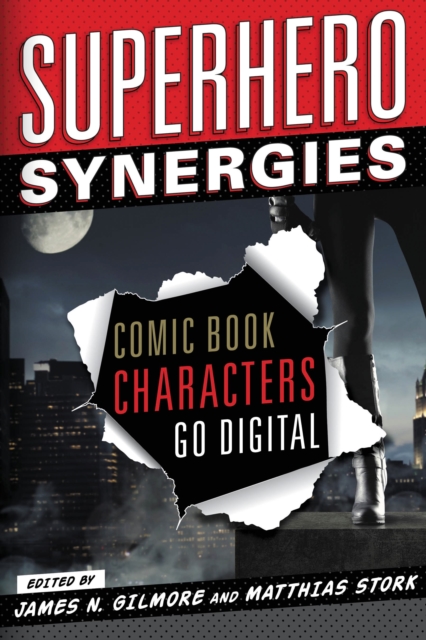
Superhero synergies
In the age of digital media, superheroes are no longer confined to comic books and graphic novels. Their stories are now featured in films, video games, digital comics, television programs, and more. In a single year alone, films featuring Batman, Spider-Man, and the Avengers have appeared on the big screen. Popular media no longer exists in isolation, but converges into complex multidimensional entities. As a result, traditional ideas about the relationship between varying media have come under striking revision. Although this convergence is apparent in many genres, perhaps nowhere is it more persistent, more creative, or more varied than in the superhero genre. Superhero Synergies: Comic Book Characters Go Digital explores this developing relationship between superheroes and various forms of media, examining how the superhero genre, which was once limited primarily to a single medium, has been developed into so many more. Essays in this volume engage with several of the most iconic heroes—including Batman, Hulk, and Iron Man—through a variety of academic disciplines such as industry studies, gender studies, and aesthetic analysis to develop an expansive view of the genre’s potency. The contributors to this volume engage cinema, comics, video games, and even live stage shows to instill readers with new ways of looking at, thinking about, and experiencing some of contemporary media’s most popular texts. This unique approach to the examination of digital media and superhero studies provides new and valuable readings of well-known texts and practices. Intended for both academics and fans of the superhero genre, this anthology introduces the innovative and growing synergy between traditional comic books and digital media.
eBook

Black comics : politics of race and representation
Winner of the 2014 Will Eisner Award for Best Scholarly/Academic Work.Bringing together contributors from a wide-range of critical perspectives, Black Comics: Politics of Race and Representation is an analytic history of the diverse contributions of Black artists to the medium of comics.
eBook
The Contemporary Comic Book Superhero
Over the last several decades, comic book superheroes have multiplied and, in the process, become more complicated. In this cutting edge anthology an international roster of contributors offer original research and writing on the contemporary comic book superhero, with occasional journeys into the film and television variation. As superheroes and their stories have grown with the audiences that consume them, their formulas, conventions, and narrative worlds have altered to follow suit, injecting new, unpredictable and more challenging characterizations that engage ravenous readers who increasingly demand more.
Angela Ndalianis is the Head of Cinema Studies at the University of Melbourne. Her publications include Neo-Baroque Aesthetics and Contemporary Entertainment (MIT Press 2004) and the co-edited books Super/Heroes: from Hercules to Superman (New Academia 2006) and Stars in Our Eyes (Praeger 2002).
'Angela Ndalianis's collection leaves no cape unfurled.' - M/C Reviews
'[A] genre-warping collection of essays... plenty of fanlike enthusiasm fuels these writers as they explore fascinating notions of time, space, identity, and colonialism inspired by superhero comics' colorful and disposable delights.' - The Village Voice, Sound of the City blog
I \"That’s the Problem with You Readers, You Know All the Plots\": Genre and Narration 1. Introduction: Men in Tights - Angela Ndalianis 2. ‘Just Men in Tights’: Rewriting Silver Age Comics in an Era of Multiplicity — Henry Jenkins 3. The Time of Heroes: Narrative, Progress and Eternity in Miracleman — Paul Atkinson 4. ‘Worlds Within Worlds’: The Role of Superheroes in the Marvel and DC Universes — Jason Bainbridge 5. Baroque Mutants in the 21st Century? Re-thinking Genre through the Superhero — Saige Walton II \"We act normal, mom! I want to be normal!\": Superbodies, Identity and Meaning Production 6. Secret Identity Politics — Scott Bukatman 7. The Superhero as Labor: The Secret Corporate Identity — Greg M. Smith 8. The Mild-Mannered Reporter: How Clark Kent Surpassed Superman — Vanessa Russell 9. Recruiting an Amazon: The Collision of Old World Ideology and New World Identity — Clare Pitkethly 10. ‘Oy Gevalt!’: A Peek at the Development of Jewish Superheroines — Jennifer Dowling III \"I’m Just a Puppet Who Can See the Strings\": Revisions, Auteurs and Anti-Superheroes 11. Entering the Green: Imaginal Space in Black Orchid — Sallye Sheppeard 12. It’s a Jungle in Here: Animal Man, Continuity Issues and the Authorial Death Drive — Steven Zani 13. Morrison’s Muscle Mystery versus Everyday Reality... and Other Parallel Worlds! — Martyn Pedler 14. Painted Bodies of Page and Screen: Alex Ross and the Renaissance of Cinematic Superheroes – Bob Rehak 15. Enter the Aleph: Superhero Worlds and Hypertime Realities — Angela Ndalianis
eBook

Bending steel : modernity and the American superhero
“Faster than a speeding bullet. More powerful than a locomotive. Able to leap tall buildings in a single bound . . . It’s Superman!” Bending Steel examines the historical origins and cultural significance of Superman and his fellow American crusaders. Cultural historian Aldo J. Regalado asserts that the superhero seems a direct response to modernity, often fighting the interrelated processes of industrialization, urbanization, immigration, and capitalism that transformed the United States from the early nineteenth century to the present. Reeling from these exciting but rapid and destabilizing forces, Americans turned to heroic fiction as a means of explaining national and personal identities to themselves and to the world. In so doing, they created characters and stories that sometimes affirmed, but other times subverted conventional notions of race, class, gender, and nationalism.
The cultural conversation articulated through the nation’s early heroic fiction eventually led to a new heroic type—the brightly clad, super-powered, pro-social action heroes that first appeared in American comic books starting in the late 1930s. Although indelibly shaped by the Great Depression and World War II sensibilities of the second-generation immigrants most responsible for their creation, comic book superheroes remain a mainstay of American popular culture.
Tracing superhero fiction all the way back to the nineteenth century, Regalado firmly bases his analysis of dime novels, pulp fiction, and comics in historical, biographical, and reader response sources. He explores the roles played by creators, producers, and consumers in crafting superhero fiction, ultimately concluding that these narratives are essential for understanding vital trajectories in American culture.
eBook

The Comic Book Film Adaptation
In the summer of 2000X-Mensurpassed all box office expectations and ushered in an era of unprecedented production of comic book film adaptations. This trend, now in its second decade, has blossomed into Hollywood's leading genre. From superheroes to Spartan warriors,The Comic Book Film Adaptationoffers the first dedicated study to examine how comic books moved from the fringes of popular culture to the center of mainstream film production.
Through in-depth analysis, industry interviews, and audience research, this book charts the cause-and-effect of this influential trend. It considers the cultural traumas, business demands, and digital possibilities that Hollywood faced at the dawn of the twenty-first century. The industry managed to meet these challenges by exploiting comics and their existing audiences. However, studios were caught off-guard when these comic book fans, empowered by digital media, began to influence the success of these adaptations. Nonetheless, filmmakers soon developed strategies to take advantage of this intense fanbase, while codifying the trend into a more lucrative genre, the comic book movie, which appealed to an even wider audience. Central to this vibrant trend is a comic aesthetic in which filmmakers utilize digital filmmaking technologies to engage with the language and conventions of comics like never before.
The Comic Book Film Adaptationexplores this unique moment in which cinema is stimulated, challenged, and enriched by the once-dismissed medium of comics.
eBook

Space Oddities
Space Oddities examines the representation of women in outer space films from 1960 to 2000, with an emphasis on films in which women are either denied or given the role of astronaut. Marie Lathers traces an evolution in this representation from women as aliens and/or \"assistant\" astronauts, to women as astronaut wives, to women as astronauts themselves. Many popular films from the era are considered, as are earlier films (from Aelita Queen of Mars to Devil Girl From Mars) and historical records, literary fiction, and television shows (especially I Dream of Jeannie). Early 1960s attempts by women pilots to enter the Space Race are considered as is the media drama surrounding the death of Christa McAuliffe. In addition to its insightful film scholarship, this is an important addition to current reassessments of the Space Race. By applying insights from contemporary gender, race, and species theories to popular imaginings of women in space, the status of the Space Race as a cultural construct that reproduces and/or warps terrestrial gender structures is revealed.
eBook