
Catalogue Search | MBRL


Are you sure you want to remove the book from the shelf?

{{itemTitle}}
4,240
result(s) for
"Supplement safety"
Sort by:

Exploring the functional properties and utilisation potential of mollusca shell by-products through an interdisciplinary approach
Molluscan shellfish aquaculture contributes to 42.6% of global aquaculture production. With a continued increase in shellfish production, disposal of shell waste during processing is emerging as an environmental and financial concern. Whilst major commercial species such as
Crassostrea
spp. has been extensively investigated on usage of its shell, with information that are crucial for valorisation, e.g. safety and crystal polymorphs, evaluated. There is currently little understanding of utilisation opportunities of shell in several uprising Australian commercially harvested species including Akoya Oyster (
Pinctada fucata
), Roe’s Abalone (
Haliotis roei
) and Greenlip Abalone (
Haliotis levigata
), making it challenging to identify ideal usages based on evidence-based information. Therefore, in this study, an interdisciplinary approach was employed to characterise the shells, and thereafter suggest some potential utilisation opportunities. This characterisation included crude mineral content, elemental profiling and food safety evaluation. As well, physical, chemical, and thermal stability of the shell products was assessed. TGA result suggests that all shells investigated have high thermal stability, suggesting the possibility of utilisation as a functional filler in engineering applications. Subsequent FTIR, SEM and XRD analyses identified that CaCO
3
was the main compositions with up to 77.6% of it found to be aragonite. The spectacular high aragonite content compared to well-investigated
Crassostrea
spp. suggested an opportunity for the utilisation of refined abalone shell as a source of biomedical engineering due to its potent biocompatibility. Additionally, safety evaluations on whole shell also outlined that all investigated samples were safe when utilised as a crude calcium supplement for populations > 11 years old, which could be another viable options of utilisation. This article could underpin abalone and akoya industries actions to fully utilise existing waste streams to achieve a more sustainable future.
Journal Article

Use and Safety of Tyrphostin AG17 as a Stabilizer in Foods and Dietary Supplements Based on Toxicological Studies and QSAR Analysis
This study evaluated two formulations of L-carnitine, which were developed and impregnated in an oil-based self-emulsifying system (SEDDS), the first with tyrphostin AG17 and the second without the addition of tyrphostin AG17. The formulation with tyrphostin AG17 showed the presence of stable microvesicles up to 498 h after its preparation. To establish a robust safety profile in compliance with modern regulatory frameworks and the 3Rs principle (replacement, reduction, and refinement), a toxicological evaluation was conducted integrating an in silico quantitative structure–activity relationship (QSAR) analysis with confirmatory in vivo subchronic toxicity studies. The QSAR analysis, performed using the OECD QSAR Toolbox and strictly adhering to Organization for Economic Co-operation and Development (OECD) validation principles, predicted an acute oral LD50 of 91.5 mg/kg in rats, a value showing high concordance with the historical experimental data (87 mg/kg). Furthermore, computational modeling for repeated-dose toxicity yielded a no-observed-adverse-effect level (NOAEL) of 80.0 mg/kg bw/day, a no-observed-effect level (NOEL) of 60.4 mg/kg bw/day, and an ADI = 56 mg/day. These computational findings were substantiated by a 90-day subchronic toxicity study in male Wistar rats, where daily intragastric administration of tyrphostin AG17 at doses up to 1.75 mg/kg resulted in not statistically significant hematotoxic activity (p < 0.05), with a maximum cumulative dose over 90 days of 157.5 mg/kg. Collectively, these data indicate that tyrphostin AG17 combines high stabilizing efficacy with a manageable safety profile, supporting its proposed regulatory status as a functional food additive. Based on these results, it is concluded that tyrphostin AG17 shows promising characteristics for use as a stabilizer in food and other substances.
Journal Article

Comparative Analysis of L-Carnitine and Coenzyme Q10 Adverse Reaction Reports Using the EudraVigilance Database: Implications for Health and Sports Supplementation
Background/Objectives: L-carnitine and Coenzyme Q10 (CoQ10) are widely used in health and sports supplementation settings to improve energy metabolism, reduce fatigue, and support recovery. Although generally perceived as safe, their safety profiles are mainly based on pre-marketing studies and selected clinical populations, while real-world pharmacovigilance evidence remains limited. This study aimed to evaluate and compare the adverse drug reaction (ADR) reporting patterns associated with L-carnitine and CoQ10 using the EudraVigilance database. Methods: A retrospective pharmacovigilance analysis was conducted using spontaneous individual case safety reports (ICSRs) retrieved from the EudraVigilance database. ADRs associated with L-carnitine and CoQ10 were analyzed and compared at the System Organ Class (SOC) level. Disproportionality analyses were performed using the reporting odds ratio (ROR) and proportional reporting ratio (PRR). Results: A total of 257 ICSRs for L-carnitine and 271 for CoQ10 were identified. Serious cases accounted for 34.2% of L-carnitine reports and 74.5% of CoQ10 reports. For L-carnitine, the most frequently reported SOC categories were gastrointestinal disorders, skin and subcutaneous tissue disorders, general disorders and administration site conditions, and nervous system disorders. For CoQ10, the most commonly reported SOC categories were general disorders and administration site conditions, nervous system disorders, investigations, and gastrointestinal disorders. Comparative disproportionality analysis showed higher reporting frequencies for CoQ10 in blood and lymphatic system disorders (ROR 3.04; PRR 2.99), musculoskeletal and connective tissue disorders (ROR 2.63; PRR 2.52). Conclusions: Real-world pharmacovigilance data suggest partially different ADR reporting patterns for L-carnitine and CoQ10 compared with those described in pre-marketing studies. CoQ10 was associated with a higher proportion of serious reports and greater disproportionality signals for selected SOC categories; however, these findings should be interpreted cautiously, as reporting patterns may be influenced by reporting bias, comorbidities, concomitant therapies, and differences in the populations using these compounds. Continuous pharmacovigilance monitoring and periodic reassessment of their benefit–risk profile remain essential given their widespread use in health and sports supplementation settings.
Journal Article

Creatine Supplementation Dose and Duration Are Not Associated with Increased Side Effects: A Structured Review and Study-Level Dose–Response Analysis of Randomized Controlled Trials
There are concerns that high-dose and/or long-term creatine monohydrate supplementation (CrM) leads to greater side effects (SEs) compared to placebo. This analysis investigated whether the dose or duration of CrM was associated with SEs. Data from trials involving more than 12,800 participants within CrM and placebo study arms of 684 randomized clinical trials were analyzed. SEs were combined into categories and total absolute dose and CrM duration were grouped into tertiles (low, moderate, and high). Crosstabs with chi-square tests were used to compare the prevalence of SEs across CrM dose and duration tertiles. Logistic regression models, adjusted for biological sex, age, and population categories, were used to test dose and duration as continuous predictors. Across 684 randomized controlled trials, reported SEs were infrequent. Although dose and duration tertiles were statistically associated with study-level side effect reporting, the effect sizes were uniformly small, events were infrequent, and the reported symptoms were primarily mild and nonspecific. No consistent exposure–response pattern indicative of clinically meaningful risk was observed. Adjusted logistic regression and frequency-based analyses showed no consistent dose- or duration-dependent increase in SE risk, with placebo groups often reporting similar or greater SE frequencies at the study-reporting level. CrM appears to be well-tolerated and, at the study-level, does not increase the risk of gastrointestinal, renal, liver, musculoskeletal, or other SEs compared to placebo, even at high doses or longer durations.
Journal Article
Exploring the Efficacy and Safety of Nutritional Supplements in Alzheimer’s Disease
Background: Alzheimer’s disease (AD) represents one of the major challenges of modern medicine, with a growing impact on public health and healthcare systems. In recent years, dietary supplements use has been the subject of increasing interest as a complementary strategy for the prevention and treatment of the disease. Materials and Methods: A Review of reviews was conducted following PRISMA guidelines and REAPPRAISED checklist to evaluate the efficacy and safety of supplement use in AD. The search, performed across major scientific databases, identified 54 relevant articles, including 53 reviews and one mini-review, after applying specific inclusion criteria and removing duplicates. Results: The growing body of evidence suggests that some supplements may help reduce cognitive decline, inflammation, and target mechanisms behind AD. However, many of these supplements are still under investigation, with mixed results highlighting the need for high-quality research. A key challenge is the lack of data on optimal dosages, administration duration, and long-term safety, which limits clinical guidelines. Some studies have reported positive effects from specific regimens, such as curcumin (800 mg/day), omega-3 fatty acids (2 g/day), and resveratrol (600 mg/day). Other supplements, like phosphatidylserine (300 mg/day), multinutrient formulations, probiotics, vitamin E (2000 IU/day), and melatonin (3–10 mg/day), also show benefits, though study variability makes conclusions uncertain. Conclusions: While certain supplements show potential in mitigating cognitive decline in AD, inconsistent findings and gaps in dosage and safety data highlight the need for rigorous, large-scale trials. Future research should focus on personalized, multimodal strategies integrating targeted supplementation, dietary patterns, and microbiota-gut-brain interactions for enhanced neuroprotection.
Journal Article

Microbiological quality and safety of dietary supplements sold in Saudi Arabia
The global market for dietary supplements has advanced in recent years capitalizing on the growing awareness of healthy living worldwide. Supplements provide enhanced nutritional levels for daily competitive performance. However, there is a need to explore the quality of dietary supplements as there are few studies related to this area. Therefore, the objective of this study was to determine the microbiological quality of dietary supplements in the local markets of Saudi Arabia. The total bacterial count, coliform, Escherichia coli, Salmonella, and Staphylococcus aureus were included in this analysis. The 80 most popular supplements were tested in this study. Our results showed that microbial contamination was present in only nine products. The microbial level ranged from 1.69-8.43 Log CFU/mL. The higher level of total count (8.43 Log CFU/mL) and S. aureus (8.39 Log CFU/mL) were found in supplement glutamine. Amino acids, dynamisan, glucosamine sulfate, glucosaiene, creatine monohydrate, whey protein, and folate acid also showed the presence of bacterial contamination. Our findings suggested that improvements are needed in these supplements which were tested for microbiological contamination. These findings highlight the fact that a review of product safety and quality is becoming increasingly important for consumer health. This will help to ensure safe products available for today's savvy, health-conscious consumer. [PUBLICATION ABSTRACT]
Journal Article
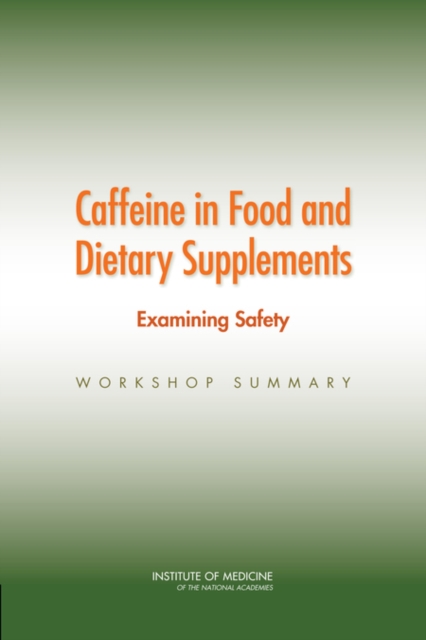
Caffeine in Food and Dietary Supplements
Caffeine in Food and Dietary Supplements is the summary of a workshop convened by the Institute of Medicine in August 2013 to review the available science on safe levels of caffeine consumption in foods, beverages, and dietary supplements and to identify data gaps. Scientists with expertise in food safety, nutrition, pharmacology, psychology, toxicology, and related disciplines; medical professionals with pediatric and adult patient experience in cardiology, neurology, and psychiatry; public health professionals; food industry representatives; regulatory experts; and consumer advocates discussed the safety of caffeine in food and dietary supplements, including, but not limited to, caffeinated beverage products, and identified data gaps.
Caffeine, a central nervous stimulant, is arguably the most frequently ingested pharmacologically active substance in the world. Occurring naturally in more than 60 plants, including coffee beans, tea leaves, cola nuts and cocoa pods, caffeine has been part of innumerable cultures for centuries. But the caffeine-in-food landscape is changing. There are an array of new caffeine-containing energy products, from waffles to sunflower seeds, jelly beans to syrup, even bottled water, entering the marketplace. Years of scientific research have shown that moderate consumption by healthy adults of products containing naturally-occurring caffeine is not associated with adverse health effects. The changing caffeine landscape raises concerns about safety and whether any of these new products might be targeting populations not normally associated with caffeine consumption, namely children and adolescents, and whether caffeine poses a greater health risk to those populations than it does for healthy adults. This report delineates vulnerable populations who may be at risk from caffeine exposure; describes caffeine exposure and risk of cardiovascular and other health effects on vulnerable populations, including additive effects with other ingredients and effects related to pre-existing conditions; explores safe caffeine exposure levels for general and vulnerable populations; and identifies data gaps on caffeine stimulant effects.
eBook

Chapter 35 - Dietary supplements
About half of adults and one-third of children and adolescents in the United States consume dietary supplements, which contain vitamins, minerals, herbs, and other dietary substances. However, US law limits regulatory oversight by the US Food and Drug Administration. As a result, supplement products may reach the market with limited scientific backing and potential quality concerns.
These facts, combined with the more than 50,000 dietary supplement products on the market, underscore the importance of rigorously conducted scientific research on supplements to understand their efficacy, safety, and quality. Continued development of validated biomarkers for measuring health outcomes associated with supplement use and analytical methods for characterizing supplement ingredients is also important, as is additional research on nonnutritive bioactive ingredients. Reliable sources of information on dietary supplements can help researchers, clinicians, and consumers understand the current state of knowledge and make informed decisions about their use.
Book Chapter
