
Catalogue Search | MBRL


Are you sure you want to remove the book from the shelf?

{{itemTitle}}
12,449
result(s) for
"Support workers"
Sort by:

Perceptions of Supervisors of Peer Support Workers (PSW) in Behavioral Health: Results from a National Survey
This content analysis of open-ended survey responses compares and contrasts perceptions on supervision from supervisors with experience providing direct peer support services (PS) and supervisors without experience providing direct peer support services (NPS).A 16-item online survey was distributed via the National Association of Peer Supporters (N.A.P.S.) listserv and through peer networks and peer run organizations. Responses from 837 respondents, across 46 US states, were analyzed. Four open ended questions assessed supervisors’ perceptions on differences supervising peer support workers (PSW) as compared to other staff, important qualities of PSW supervisors, roles when supervising a PSW, and concerns about PSWs in the organization. Among NPS and PS, three major differences in themes emerged: the
knowledge
required of supervisors,
understanding
of the role of the PSW, and supervisors’
beliefs
regarding PSW competencies. PS have a more nuanced understanding of the peer support worker role and the impact of lived experience in the role.
Journal Article

A systematic review exploring youth peer support for young people with mental health problems
Youth peer support workers (YPSWs) are young adults with lived experience of mental illness during childhood or adolescence who support young people receiving treatment in mental health services. The contributions made by YPSWs are a promising development to facilitate consumer-centered and recovery-oriented care. Although the youth peer support workforce is expanding rapidly, structurally embedding YPSWs in practice is challenging. To overcome these challenges and thereby improve care for young people, insight into YPSW roles, barriers and facilitators for implementing and pursuing youth peer support (YPS) is a necessity. This systematic review examined the published literature to identify existing knowledge on YPSW roles in treatment settings, and the barriers and facilitators for implementing and pursuing YPS in practice. A total of 24 studies from a variety of youth serving contexts were included in this review. Thematic synthesis resulted in six YPSW roles and five themes with barriers and facilitators. The roles included the: engagement role, emotional support role, navigating and planning role, advocacy role, research role and the educational role. The themes explored the needs of YPSWs, experiences of YPSWs, relationships between service users and YPSWs, the collaboration process between YPSWs and non-peer staff, and organizational readiness. This review underlines that YPSWs likely are a valuable addition to numerous youth treatment contexts. Overall, the implementation of YPSWs is a multifaceted operation that requires careful planning. We recommend services to set clear and realistic expectations for YPSWs, to consider potential power imbalances between YPSWs and non-peer staff, to provide adequate resources to pursue YPS, and to approach the implementation of YPSWs with a growth mindset.
Journal Article
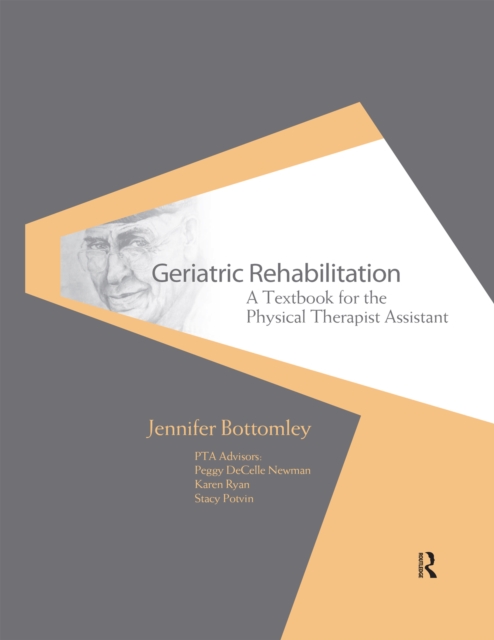
Geriatric Rehabilitation
As the aging population continues to increase, so does the need for a text specific to the specialized care of the elderly patient as it applies to the physical therapist assistant student, faculty, and clinician.
Geriatric Rehabilitation: A Textbook for the Physical Therapist Assistant
, recognizes the growing role of the PTA in a variety of heath care settings from acute to home to long-term care settings, to name a few.
Inside
Geriatric Rehabilitation
, Dr. Jennifer Bottomley, along with her contributors, focuses on the clinically relevant assessment, treatment, and management of the geriatric population. Pathological manifestations commonly seen in the elderly patient are addressed from a systems perspective, as well as a focus on what is seen clinically and how it affects function.
Each pathological area covered includes:
Screening, assessment, and evaluation
Treatment prescription
Goal setting
Modification of treatment
Anticipated outcomes
Psychosocial, pharmacological, and nutritional elements
The organization and presentation of the practical, hands-on components of interventions, assessments, and decision-making skills make this a go-to text for the PTA to administer comprehensive geriatric care at each point along the continuum of care.
Some of the features inside include:
Emphasis on treatment interventions-techniques, tips, and options
Focus on how assessment tools and treatments are applied and modified to benefit the geriatric population, and what the expected outcomes are
Clear and outlined chapter objectives
User-friendly summary tables in the nutritional and pharmacology chapters
Pearls that highlight important chapter information
Appendices and study aids
Geriatric Rehabilitation: A Textbook for the Physical Therapist Assistant
answers the call for a text that focuses on the management of geriatric patients across the spectrum of care for the PTA, from students to those practicing in geriatric populations.
eBook

The working conditions for personal support workers in the Greater Toronto Area during the COVID-19 pandemic: a mixed-methods study
ObjectiveDuring the height of the COVID-19 pandemic, personal support workers (PSWs) were heralded as healthcare ‘heroes’ as many of them cared for high-risk, vulnerable older populations, and worked in long-term care, which experienced a high number of COVID-19 outbreaks and deaths. While essential to the healthcare workforce, there is little understanding of PSW working conditions during the pandemic. The aim of our study was to examine the working conditions (including job security, work policies, and personal experiences) for PSWs in the Greater Toronto Area during the COVID-19 pandemic from the perspectives of PSWs.MethodsThis study used a mixed-methods design. From June to December 2020, we conducted a survey of 634 PSWs to understand their working conditions during the COVID-19 pandemic. Semi-structured interviews with 31 survey respondents were conducted from February to May 2021 to understand in greater depth how working conditions were impacting the well-being of PSWs.ResultsWe found PSWs faced a range of challenges related to COVID-19, including anxiety about contracting COVID-19, reduced work hours, taking leaves of absences, concerns about job security, and losing childcare. While the COVID-19 pandemic highlighted the PSW workforce and their importance to the healthcare system (especially in the long-term care system), pre-existing poor work conditions of insecure jobs with no paid sick days and benefits exacerbated COVID-19–related challenges. Despite these hardships, PSWs were able to rely on their mental resilience and passion for their profession to cope with challenges.ConclusionSignificant changes need to be made to improve PSW working conditions. Better compensation, increased job security, decreased workload burden, and mental health supports are needed.
Journal Article
A balancing act: integrating the expertise of youth peer workers in child and adolescent mental health services
The socio-relational focus of youth peer support workers (YPSWs) poses a challenge when YPSWs are embedded in medical oriented contexts common to child and adolescent mental health services (CAMHS); as it requires YPSWs to find a balance between being a peer on one hand, and adhering to professional boundaries and medical standards set out by CAMHS on the other. To create a suitable position for YPSWs in CAMHS, this study investigated the unique socio-relational contributions YPSWs can make to CAMHS in addition to clinicians, and identified how these contributions can be embedded within CAMHS. This study reports on 37 semi-structured interviews conducted in the Netherlands with youth (n = 10), YPSWs (n = 10), and clinicians (n = 17). Overall, the unique socio-relational contributions YPSWs can make include: their ability to build authentic trusting relationships with youth by providing empowerment, promoting autonomy, valuing stillness in recovery, reducing isolation, recognizing strengths, and navigating life inside and outside of (residential) mental healthcare and beyond classification. Moreover, prerequisites to safeguard the integration of YPSWs and these socio-relational contributions were also identified, including YPSWs achieving stability in recovery, recent lived experiences with mental health challenges, and organizational support in terms of suitable treatment climate, resources to enhance flexibility of YPSWs, and shared goals regarding youth peer support work. Overall, YPSWs view youth holistically and foster a connection with youth based on youthfulness and recent lived experience. Involving YPSWs is an important step forward to drive positive transformation in CAMHS.
Journal Article

Impact of Community Support Workers in Rural Ethiopia on Emotional and Psychosocial Health of Persons Living with HIV: Results of a Three-Year Randomized Community Trial
People living with HIV face multiple psychosocial challenges. In a large, predominantly rural Ethiopian region, 1799 HIV patients new to care were enrolled from 32 sites in a cluster randomized trial using trained community support workers with HIV to provide individual health education, counseling and social support. Participants received annual surveys through 36 months using items drawn from the Centre for Epidemiologic Studies Depression Scale-10, Medical Outcome Study Social Support Survey, and HIV/AIDS Stigma Instrument-PLWA. At 12 months (using linear mixed effects regression models controlling for enrollment site clustering), intervention participants had greater emotional/informational and tangible assistance social support scores, and lower scores assessing depression symptoms and negative self-perception due to HIV status. A significant treatment effect at 36 months was also seen on scores assessing emotional/informational social support, depression symptoms, and internalized stigma. An intervention using peer community support workers with HIV to provide individualized informational and psychological support had a positive impact on the emotional health of people living with HIV who were new to care.(ClinicalTrials.gov protocol ID: 1410S54203, May 19, 2015).
Journal Article

Peer Support Workers in Mental Health Care: Plural Positionings Beyond Transformation and Assimilation Dichotomy
Introduction The role of the Peer Support Worker (PSW) has gained increasing prominence in mental health services, yet its institutionalisation raises questions about balancing autonomy and assimilation into service logics. This study examines the narrative positionings of three PSWs, focusing on how they construct professional identity in relation to mandate, collaboration with practitioners, and service organisation. Methods A qualitative design was adopted using semi‐structured interviews with three PSWs. Data were analysed through Positioning Theory (Davies and Harré 1999) and Bamberg's three‐level model (2022), which investigates positioning in relation to temporality, the other and agency. Particular attention was given to positions regarding the professional mandate, collaboration with practitioners, psychiatric and psychotherapeutic practices, and the services in which participants had placements or are currently engaged. Results PSW positioning emerged as dynamic and multifaceted, constantly negotiated between institutional mandates and fidelity to lived experience. Three configurations were identified: (1) a critical and independent stance, maintaining symbolic distance from services whilst collaborating with them; (2) an integrated stance, balancing institutional logics with attentiveness to user experience; and (3) a fluid stance, affirming the coexistence of PSW and service‐user roles and challenging conventional boundaries between clinical and experiential knowledge. Across all narratives, PSWs located themselves in liminal spaces that foster transformative possibilities for mental health services. Conclusion PSW identity is not fixed but articulated through multiple positionings, ranging from critical autonomy to institutional integration and fluid coexistence of service‐user and professional roles. This plurality, rather than constituting ambiguity, represents an epistemic and ethical resource that extends the transformative potential of services beyond the dichotomy of transformation versus assimilation. Recognising this plurality means valuing PSW agency and fostering flexible, participatory practices responsive to the complexity of lived experience. Involving the Participants The research team included both academics and PSWs in a co‐participatory design initiated through voluntary applications. Only interviews with explicit consent were included. The first draft of the analyses was submitted for participant validation: each PSW reviewed their own transcript and related comments, with the option to modify or expand the analysis. Materials were then shared within the group to enable collective reflection and refinement of interpretation. Through this collective process, the group co‐authored the present version of the article. Clinical Trial Registration Does not fit.
Journal Article

Fear of terror and increased job burnout over time: Examining the mediating role of insomnia and the moderating role of work support
While the prevalence of terrorism has increased substantially, there is a paucity of research on the effects of terrorism on employee behavior at work. Building on conservation of resources (COR) theory, and its extension, the conservation of social resources theory, we close gaps in the literature by investigating the effect of fear of terror on increased job burnout over time, the mediating effect of insomnia, and the moderating effect of supervisor and co-worker support on these relationships. This longitudinal study followed a large sample of Israeli employees (n = 670) across three time measurements over 7 years, in a time period characterized by a high number of terror attacks. The results showed fear of terror to be related to elevated job burnout over time, even during a period in which terror attacks were reduced substantially. Further, insomnia mediated the relationship between fear of terror and increased burnout, while co-worker support, but not supervisor support, moderated the relationships between fear of terror and increased insomnia and between increased insomnia and increased burnout. The results further support the notion of loss cycles in COR theory, as well as the importance of social resources, which are the cornerstones of conservation of social resources theory.
Journal Article
“A Feeling of Safeness and Freedom”: The Promotion of Mental Health Recovery Through Co-Production in an Italian Community Organization
In mental health promotion, recovery is a process that leads to personal strengthening, control over crucial life decisions, and participation in communities through relevant professional, educational, or family social roles. Co-production, a key aspect of the recovery-oriented approach, emphasizes collaboration and active participation of people with mental health first-hand experience, family members, and citizens. Even though studies on co-production are limited and fragmented, there is evidence that co-production leads to positive outcomes, including improved well-being, empowerment, social connectedness, inclusion, and personal competencies. This study aimed to contribute to the limited literature on co-production in mental health by evaluating the co-production process in a non-profit mental health organization and its impact on empowerment processes and personal recovery outcomes. The research team adopted a collaborative approach and conducted qualitative research, including 13 individual semi-structured interviews and four focus groups. Results showed how the different dimensions of empowerment are promoted in and by the organization: (a) co-production processes supported empowered outcomes on an individual level, such as self-awareness; (b) the organization was perceived to promote empowering processes, such as a sense of safeness and protection; (c) co-production was a mean to build and maintain a network with mental health services that acknowledges the dignity and value of each subjectivity and promotes participation and recovery. Peer support workers were seen as facilitators of mental illness management, and the organization as a place for sharing mental health experiences and fostering individual recovery journeys.
Journal Article
Staff Experiences of Integrating Peer Support Workers and Clinical Staff in Community-Based Residential Mental Health Rehabilitation: A Pragmatic Grounded Theory Analysis
Mental health services are increasingly incorporating the views and expertise of people with a lived experience of mental illness in service delivery. A novel approach to this is the ‘integrated staffing model’ being trialled at two Australian public residential mental health rehabilitation services (Community Care Units, CCUs) where peer support workers (PSWs) occupy the majority of staff roles and work alongside clinicians. Semi-structured interviews were completed with fifteen staff 12-to-18-months after service commencement. Transcripts were analysed following principles of grounded theory analysis. Key emergent themes were: (1) recovery is a deeply personal and non-linear process; (2) The CCU as a transitional learning environment; (3) the integrated staffing model facilitates an effective rehabilitation team; and (4) coming together under the integrated staffing model required a steep learning curve. The findings suggest that the integrated staffing approach may provide a pathway to facilitate the meaningful inclusion of PSWs in rehabilitation settings.
Journal Article