
Catalogue Search | MBRL


Are you sure you want to remove the book from the shelf?

{{itemTitle}}
127
result(s) for
"Surprise attacks"
Sort by:

Techno-Digital Vulnerability and Intelligence Failures
Scholars and practitioners of international relations and security studies view technological capabilities in general, and digital ones in particular, as crucial to enhancing state power. Among other things, digital technologies sharpen intelligence, thus reducing the likelihood of strategic surprise by improving situational awareness and strengthening deterrence. Yet the empirical record of the early twenty-first century presents a paradox: states with highly advanced digital infrastructures remain vulnerable to unexpected strategic shocks, including intelligence failures. This article develops a conceptual framework, techno-digital vulnerability, that explains why digital superiority can paradoxically increase susceptibility to strategic surprise. Drawing on international relations theory, this article identifies four interrelated mechanisms: illusions of informational completeness; structural dependence on digital systems; hypervisibility of digitally open societies; and the systematic undervaluation of low-tech adversaries. The argument is illustrated through the case of Israel’s failure to foresee the Hamas attack of 7 October 2023. The article concludes by outlining the implications for digitally advanced democracies and for the study of strategic surprise in IR.
Journal Article

Just Wars and Moral Victories: Surprise, deception and the normative framework of European war in the later Middle Ages
By exploring the moral and legal context of medieval strategic thinking, this work explains how the use of surprise and deception could, in certain circumstances, be reconciled with the practise of chivalric warfare.
eBook
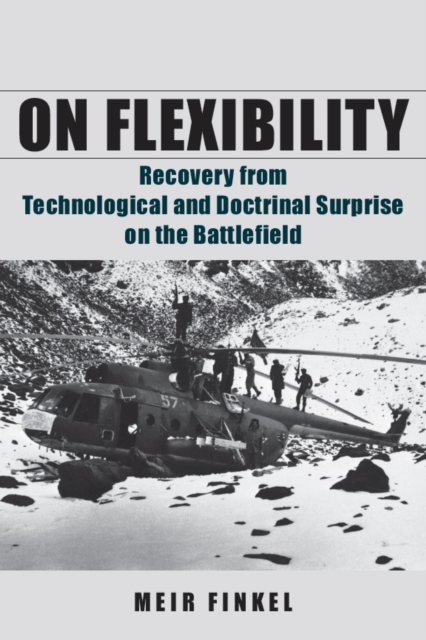
On flexibility : recovery from technological and doctrinal surprise on the battlefield
This book addresses one of the basic questions in military studies: How can armies cope effectively with technological and doctrinal surprises—ones that leave them vulnerable to new weapons systems and/or combat doctrines?
Author Meir Finkel contends that the current paradigm—with its over-dependence on intelligence and an all-out effort to predict the nature of the future battlefield and the enemy's capabilities—generally doesn't work.
Based on historical case analysis of successful \"under-fire\" recovery and failure to recover, he identifies the variables that have determined these outcomes, and he presents an innovative method for military force planning that will enables armies to deal with the uncertainties of future wars \"in real time.\"
His proposed method combines conceptual, doctrinal, cognitive, command, organizational, and technological elements to produce optimal battlefield flexibility and adaptability. He then demonstrates that, when properly applied, this method can eliminate most obstacles to overcoming battlefield surprises.
eBook
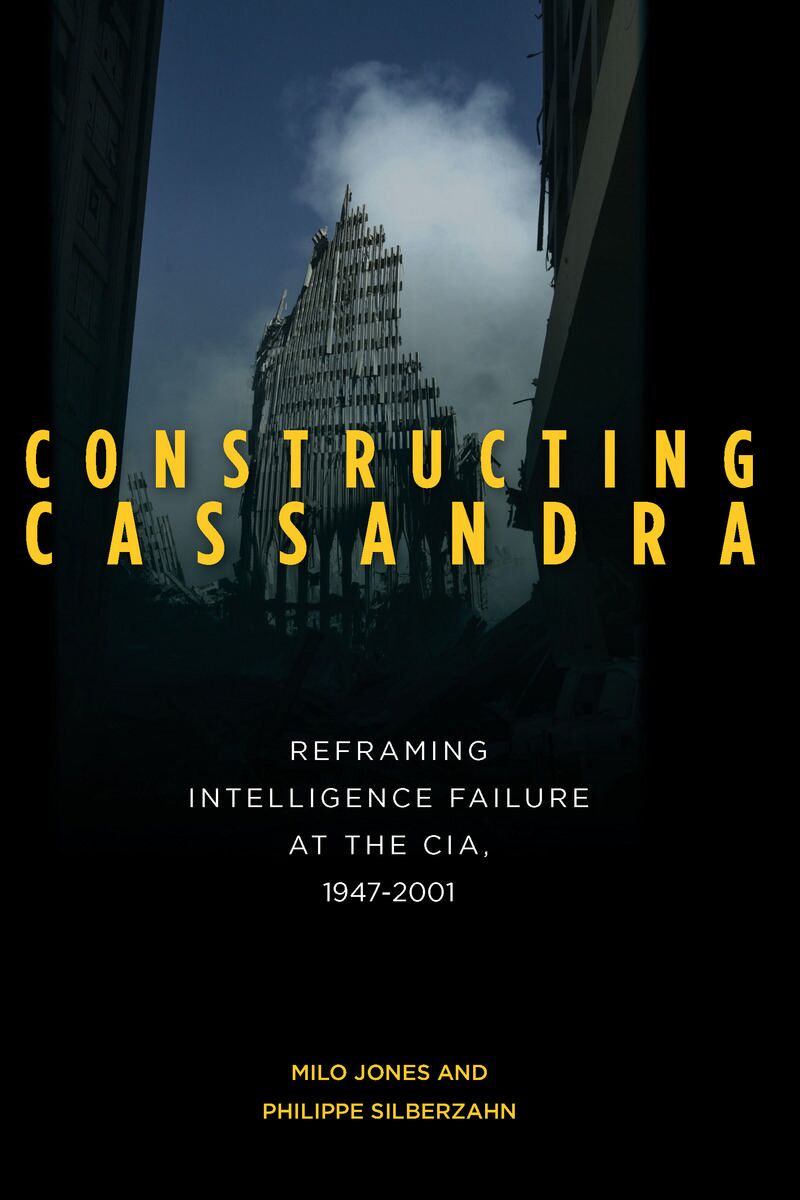
Constructing Cassandra
Constructing Cassandra analyzes the intelligence failures at the CIA that resulted in four key strategic surprises experienced by the US: the Cuban Missile Crisis in 1962, the Iranian revolution of 1978, the collapse of the USSR in 1991, and the 9/11 terrorist attacks-surprises still play out today in U.S. policy. Although there has been no shortage of studies exploring how intelligence failures can happen, none of them have been able to provide a unified understanding of the phenomenon.
To correct that omission, this book brings culture and identity to the foreground to present a unified model of strategic surprise; one that focuses on the internal make-up the CIA, and takes seriously those Cassandras who offered warnings, but were ignored. This systematic exploration of the sources of the CIA's intelligence failures points to ways to prevent future strategic surprises.
eBook

The Impenetrable Fog of War
Current trends suggest that the fog of war continues to make strategy an opaque enterprise notwithstanding enormous U.S. investments in high-tech weapons, intelligence capabilities, and homeland defense. This edited volume includes essays originally presented at the IISS Global Strategic Review, which was held in Geneva on September 7-9, 2007.
eBook

Changes in Integrative Complexity prior to Surprise Attacks
Previous archival analyses of governmental communications show a decrease in integrative complexity prior to the outbreak of war between nations. No such decrease is found when a conflict is resolved through peaceful negotiation. Integrative complexity is a structural measure, based on the source's recognition of alternative perspectives and several dimensions (differentiation), and the combination of these perspectives and dimensions in synthesized solutions (integration). The current study, using documents from nine international crises in the twentieth century that culminated in a surprise attack, found that the attackers showed a decline in complexity between three months and two to four weeks before the attack. The attacked nations increased in complexity between two to four weeks and one week, dropping to approximately the same level as the attacker on and immediately after the day of the attack. A drop in the integrative complexity of the communications issued by an opposing government thus may be one predictor of imminent strategic surprise.
Journal Article

Team Theory and Distributed Processing: Surprise Attack
It is argued that team theory is the appropriate analytic tool for studying distributed processing. It is shown that the so-called \"surprise attack paradox\" disappears when approached from a team-theory viewpoint. [PUBLICATION ABSTRACT]
Journal Article
THE WORK OF INTELLIGENCE
THIS CHAPTER HAS FOUR SECTIONS. The first section makes the case that intelligence is a social problem, a recognition that has significant implications for the work of the CIA. The second section introduces the theoretical viewpoint, social constructivism, and explains why it is well suited to investigate the CIA’s work. In sum, this is because intelligence work happens not merely in the minds of individual analysts but in a distinctive community, the CIA. This section also spends time illuminating the details of exactly what is meant by “intelligence work,” especially “intelligence analysis,” to demonstrate its essentially social nature. The third
Book Chapter
Surprise Attack Policy Considerations
U.S. National Security Council. Interagency Working Group on Surprise Attack concludes that forthcoming discussions at the Conference on Surprise Attacks in Geneva, Switzerland (1958) should focus on designing a system for On-site inspection as a safeguard against a First strike which might include limitations on [Ballistic missiles; Operational readiness; Bomber aircraft] as well as prescribe Military force reductions
Government Document

NOT EVERY MISFORTUNE CAN BE PREVENTED
AMID ALL the agonizing and political post-9/11 posturing over whether we are safer than we were five years ago I found myself thinking of the fifth-century monk, Pelagius, and the heresy that bears his name. Pelagius got into trouble with Rome because he denied the existence of original sin and believed that men and women could, by their own choice, live a life of moral goodness deserving of salvation without God's grace. It took Richard Posner, the prolific judge of the US Court of Appeals for the Seventh Circuit in Chicago, to introduce me to a modern version of Pelagius's heresy. In his book, \"Preventing Surprise Attacks,\" a treatise on the 9/11 Commission and the reorganization of government to combat terrorism, Posner posits that Americans have a \"cultural peculiarity\" that holds that \"human will can conquer all adversities.\" Thus \"every nonsuccess is deemed a culpable failure.\"
Newspaper Article