
Catalogue Search | MBRL


Are you sure you want to remove the book from the shelf?

{{itemTitle}}
1,477
result(s) for
"Surrealism (Literature)"
Sort by:

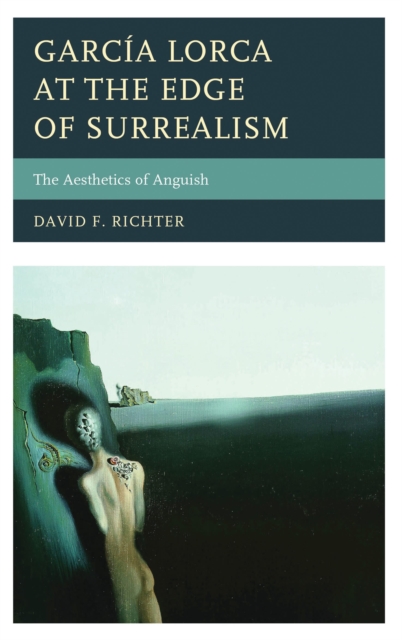
García Lorca at the Edge of Surrealism
García Lorca at the Edge of Surrealism: The Aesthetics of Anguish examines the variations of surrealism and surrealist theories in the Spanish context, studied through the poetry, drama, and drawings of Federico García Lorca (1898–1936). In contrast to the idealist and subconscious tenets espoused by surrealist leader André Breton, which focus on the marvelous, automatic creative processes, and sublimated depictions of reality, Lorca's surrealist impulse follows a trajectory more in line with the theories of French intellectuals such as Georges Bataille (1897–1962), who was expelled from Breton's authoritative group. Bataille critiques the lofty goals and ideals of Bretonian surrealism in the pages of the cultural and anthropological review Documents (1929–1930) in terms of a dissident surrealist ethno-poetics. This brand of the surreal underscores the prevalence of the bleak or darker aspects of reality: crisis, primitive sacrifice, the death drive, and the violent representation of existence portrayed through formless base matter such as blood, excrement, and fragmented bodies. The present study demonstrates that Bataille's theoretical and poetic expositions, including those dealing with l'informe (the formless) and the somber emptiness of the void, engage the trauma and anxiety of surrealist expression in Spain, particularly with reference to the anguish, desire, and death that figure so prominently in Spanish texts of the 1920s and 1930s often qualified as \"surrealist.\" Drawing extensively on the theoretical, cultural, and poetic texts of the period, García Lorca at the Edge of Surrealism offers the first book-length consideration of Bataille's thinking within the Spanish context, examined through the work of Lorca, a singular proponent of what is here referred to as a dissident Spanish surrealism. By reading Lorca's \"surrealist\" texts (including Poetaen Nueva York,Viaje a la luna, and El público) through the Bataillean lens, this volume both amplifies our understanding of the poetry and drama of one of the most important Spanish writers of the twentieth century and expands our perspective of what surrealism in Spain means.
eBook

The garbage times : a novella ; White ibis : a novella
\"From the freezing alleys of Chicago to the dew-blanketed bayou of Florida. From bouncing drunks and cleaning up puke to biking through the swamp laughing at peacocks. Freeze to thaw. Filth and broken glass and black water backed up in showers; lizards and Girl Scouts and themed birthday parties. A baby rat freed from the bottom of a dumpster becomes a white ibis wandering the wet driveway after a storm. Goodbye, hello, goodbye. It was the garbage times; it was time for something else. A tale of two tales, connected by a mysterious sunlit portal\"-- Provided by publisher.
Book
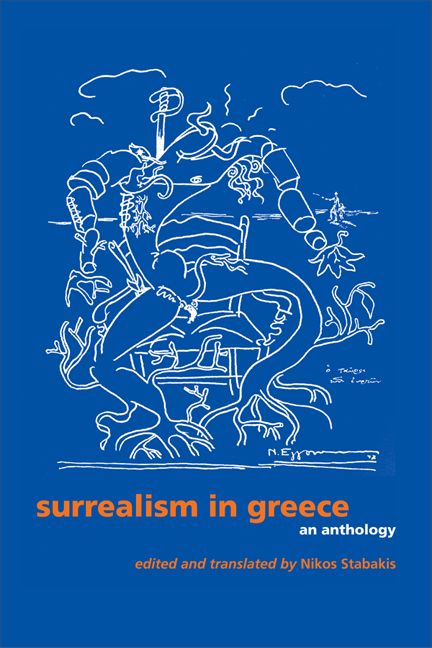
Surrealism in Greece
In the decades between the two World Wars, Greek writers and artists adopted surrealism both as an avant-garde means of overturning the stifling traditions of their classical heritage and also as a way of responding to the extremely unstable political situation in their country. Despite producing much first-rate work throughout the rest of the twentieth century, Greek surrealists have not been widely read outside of Greece. This volume seeks to remedy that omission by offering authoritative translations of the major works of the most important Greek surrealist writers. Nikos Stabakis groups the Greek surrealists into three generations: the founders (such as Andreas Embirikos, Nikos Engonopoulos, and Nicolas Calas), the second generation, and the Pali Group, which formed around the magazine Pali. For each generation, he provides a very helpful introduction to the themes and concerns that animate their work, as well as concise biographies of each writer. Stabakis anthologizes translations of all the key surrealist works of each generation—poetry, prose, letters, and other documents—as well as a selection of rarer texts. His introduction to the volume places Greek surrealism within the context of the international movement, showing how Greek writers and artists used surrealism to express their own cultural and political realities.
eBook

Blanca Andreu, Galicia, and the new Iberian mysticism : from post-mortem to post-mystic
\"This book contributes to the ongoing discussion of the place of contemporary Galician writer Blanca Andreu's work within the 1980s post-\"novâisimo\" movement, as part of a larger resurgence of the Surrealist in Spanish poetry and its possible placement in the more recent mystical poetry of Spain\"-- Provided by publisher.
Book

Surrealism and Quebec Literature
In 1948 the Quebec artist Paul-Emile Borduas published his famous manifesto Refus global—a plea on behalf of the powers of imagination and sensibility in society and a revolt against rationalization, mechanization, and other restraining influences, including the church. Borduas and his consigners were bitterly attacked. But the message of Refus global had far-reaching and revolutionary effects on the culture of Quebec and ultimately on its politics.
André Bourassa, in this important work, underlines the role played by artists and poets during the 1940s and the relationships among various groups. But his emphasis is on the literature of Quebec, from the first novel in 1837 (also the year of Quebec’s first revolution), through the Quiet Revolution of the 1950s and 1960s, to the present. In manifestos, poems, articles, and theatre pieces he examines the nature of Quebec surrealism and its international context.
Surrealism took three main forms in the province: one reflecting André Breton’s school of thought as defined in the manifestos from 1924 on; another more generally related to the movements such as cubism or revolutionary surrealism; and finally, the spontaneous use of surrealism in its timeless aspect—as in cathedral gargoyles and African masks, religious myths and communications with the spirit world, the dream imagery of Bosch and Goya, or the automatic writing of Achim von Arnim and Gérard de Nerval.
An understanding of these kinds of surrealism is essential to understanding the significance of Refus global and of the events and attitudes which followed when surrealists took ideological stands, especially against Stalinism and Duplessis.
When first published in 1977, Surréalisme et literature québécoise won immediate critical acclaim, including the Prix France-Canada. Jean Ethier-Blais, in Le Devoir, called ‘une vue spectrale, non seulement de nos lettres, mais mieux encore, de notre sensibilité.’ For this English translation, Bourassa has revised the text significantly to incorporate new insights and new information. The updated and comprehensive bibliography will be particularly valuable for anyone studying surrealism.
eBook


Pulp Surrealism
In addition to its more well known literary and artistic origins,
the French surrealist movement drew inspiration from currents of
psychological anxiety and rebellion running through a shadowy side
of mass culture, specifically in fantastic popular fiction and
sensationalistic journalism. The provocative nature of this
insolent mass culture resonated with the intellectual and political
preoccupations of the surrealists, as Robin Walz demonstrates in
this fascinating study. Pulp Surrealism weaves an
interpretative history of the intersection between mass print
culture and surrealism, re-evaluating both our understanding of
mass culture in early twentieth-century Paris and the revolutionary
aims of the surrealist movement. Pulp Surrealism presents
four case studies, each exploring the out-of the-way and
impertinent elements which inspired the surrealists. Walz discusses
Louis Aragon's Le paysan de Paris, one of the great
surrealist novels of Paris. He goes on to consider the popular
series of Fantômes crime novels; the Parisan press coverage of the
arrest, trial, and execution of mass-murderer Landru; and the
surrealist inquiry \"Is Suicide a Solution?\", which Walz juxtaposes
with reprints of actual suicide faits divers
(sensationalist newspaper blurbs). Although surrealist interest in
sensationalist popular culture eventually waned, this exploration
of mass print culture as one of the cultural milieux from which
surrealism emerged ultimately calls into question assumptions about
the avant-garde origins of modernism itself.
eBook