
Catalogue Search | MBRL


Are you sure you want to remove the book from the shelf?

{{itemTitle}}
299
result(s) for
"Surrealism - Philosophy"
Sort by:

What to do
\"A nameless narrator and his friend Alberto move through a constantly morphing continuum of dream-like situations while discussing philosophy, literature, and war. The impossible question of an enormous student in a lecture hall at an English university sets off a series of alternate paths that open before them like a fan. In taverns, boats, and plazas, the two protagonists discuss John Donne, Lawrence of Arabia, and Lenin with English students, a group of young and old women, and eight hundred drinkers, all the while being dropped from one strange place into the next. A remarkable work of refined surreal comedy.\"-- Provided by publisher
Book
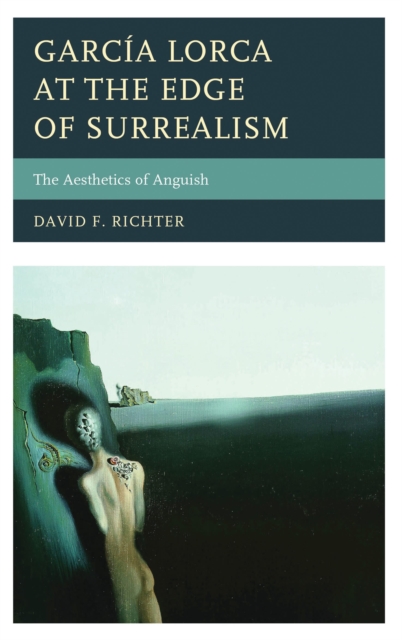
García Lorca at the Edge of Surrealism
García Lorca at the Edge of Surrealism: The Aesthetics of Anguish examines the variations of surrealism and surrealist theories in the Spanish context, studied through the poetry, drama, and drawings of Federico García Lorca (1898–1936). In contrast to the idealist and subconscious tenets espoused by surrealist leader André Breton, which focus on the marvelous, automatic creative processes, and sublimated depictions of reality, Lorca's surrealist impulse follows a trajectory more in line with the theories of French intellectuals such as Georges Bataille (1897–1962), who was expelled from Breton's authoritative group. Bataille critiques the lofty goals and ideals of Bretonian surrealism in the pages of the cultural and anthropological review Documents (1929–1930) in terms of a dissident surrealist ethno-poetics. This brand of the surreal underscores the prevalence of the bleak or darker aspects of reality: crisis, primitive sacrifice, the death drive, and the violent representation of existence portrayed through formless base matter such as blood, excrement, and fragmented bodies. The present study demonstrates that Bataille's theoretical and poetic expositions, including those dealing with l'informe (the formless) and the somber emptiness of the void, engage the trauma and anxiety of surrealist expression in Spain, particularly with reference to the anguish, desire, and death that figure so prominently in Spanish texts of the 1920s and 1930s often qualified as \"surrealist.\" Drawing extensively on the theoretical, cultural, and poetic texts of the period, García Lorca at the Edge of Surrealism offers the first book-length consideration of Bataille's thinking within the Spanish context, examined through the work of Lorca, a singular proponent of what is here referred to as a dissident Spanish surrealism. By reading Lorca's \"surrealist\" texts (including Poetaen Nueva York,Viaje a la luna, and El público) through the Bataillean lens, this volume both amplifies our understanding of the poetry and drama of one of the most important Spanish writers of the twentieth century and expands our perspective of what surrealism in Spain means.
eBook


Intentional mind-wandering as intentional omission
Mind-wandering seems to be paradigmatically unintentional. However, experimental findings have yielded the paradoxical result that mind-wandering can also be intentional. In this paper, we first present the paradox of intentional mind-wandering and then explain intentional mind-wandering as the intentional omission to control one’s own thoughts. Finally, we present the surrealist method for artistic production to illustrate how intentional omission of control over thoughts can be deployed towards creative endeavors.
Journal Article

Expressive Circles—Original Concept Regarding the Structural and Dramaturgical Aspects of the Musical Composition in the Piece EXPRESSIVE CIRCLES—Three Pieces for Piano Trio: Composer’s Self-Reflection
The objective of this article is to present an original approach for modern composers to construct their musical work regarding its structural and dramaturgical aspects. The concept of Expressive circles originated primarily in inspirations taken from the movement in art called Surrealism and from music composed by Hanna Kulenty (which she describes as musique surrealistique). There are also parallels to other concepts (unism in music, surconventional deconstruction of the musical material) or to other composers (Witold Lutosławski). In the article, I present three types of Expressive circles (i.e., three form models)—closed structure, open structure and inverted structure. Each model is characterised by different approach to the musical theme and to its development in the musical piece. Considering the dramaturgical aspects of the work, the trance-like character of the music is important and there are two types of musical trances that I distinguish in Expressive circles, logarithm and drive; both are achieved differently in the musical work. The theoretical assumptions of the concept presented in the article are illustrated by chosen fragments from the score of my composition (EXPRESSIVE CIRCLES—Three pieces for piano trio) and by colourful schemes showing how the concept translates from theory to music.
Journal Article

Vratislav Effenberger’s conception of the role of imagination in ideological thought
This paper explores the core characteristics of Vratislav Effenberger’s theoretical system, highlighting his perspective on the significance of imagination in ideological thinking. It provides background and an overview of Effenberger’s concept of ideology, outlines the Surrealist notion of imagination, and presents the author’s methodological connection of Surrealism, psychoanalysis, and Prague Structuralism. Effenberger emerges as a thinker dedicated to bridging the gap between the modernist (primarily avant-garde) interpretation of the world and the postmodern tendencies evident from the mid-20th century onwards.In Effenberger’s terms, ideology is an approach to reality that aims to grasp it as at least a potentially meaningful totality and engages in the actualization of this meaning or totality in social and psychological practice. He argues that such an approach is closely linked with avant-garde thought, which, for various reasons, has diminished in significance since the Second World War. In place of prior unifying perspectives, relativism and skepticism have become more dominant. However, Effenberger contends that integrative inclinations remain alive in human thought in the form of “idea models” found in the field of “psychoideology”—the realm of preconscious thought formation. These idea models play a pivotal role in psychoideology, nurturing the dialectics of imaginative and conceptual reasoning, which are vital for fostering innovation and creative endeavors.
Journal Article

Anarchist literature and the development of anarchist counter-archaeologies
A recent surge in interest in the application of anarchist theory to archaeology follows from earlier work in the field of anarchic anthropology. Published work in both anarchic archaeology and anthropology has tended to make little use of the large and challenging body of literature created by members of anarchist political and philosophical movements over the last 180 years. This paper explores a sample of themes from anarchist literature that intersect with the interests of archaeologists. It is argued that ideas such as the anarchist use of surrealism, the anarchist take on environmentalism and radical anarchist history might all provide useful inspiration to archaeologists. It is clear however that the nature of the alternative philosophies utilized by anarchists will not make incorporating the work into archaeology a straightforward task, and archaeologists themselves are not exempt from the critical analysis of anarchists.
Journal Article

Nuclear weapons, existentialism, and International Relations: Anders, Ballard, and the human condition in the age of extinction
IR scholars increasingly turn to the writings of Existentialists to make sense of the multiple and entangled planetary crises that characterise the twenty-first century. In this article, I argue that two postwar intellectuals, Günther Anders (1902–1992) and J. G. Ballard (1930–2009), offer a rich intellectual ancestry and inspiration to such scholarship. Both authors critically and creatively reworked central Existentialist ideas in the context of postwar technological acceleration and the development of nuclear weapons. To Anders and Ballard, nuclear weapons symbolised, and were the most extreme manifestation of, the pathologies they associated with technological modernity: mass consumption, spectacular violence, a deadening of affect, and an increased inability of humans to psychologically process and grasp the destructive capacities of science and technology. To counter these trends, they both firmly relied on Surrealism to bolster the human imagination as a catalysator for personal and social transformation. I argue that their work offers an opportunity to reconnect the study of nuclear weapons in IR to broader existentialist questions and suggest that their respective attempts to foreground human being in the nuclear age as ‘being-towards-extinction’ holds important lessons for recent attempts to recentre the study of IR around planetary imaginaries of extinction.
Journal Article

The Edinburgh companion to Samuel Beckett and the arts
This landmark collection showcases the diversity of Samuel Beckett's creative output with 35 newly written chapters by major Beckett critics such as Steven Connor, David Lloyd, Andrew Gibson, John Pilling, Jean-Michel Rabaté, and Mark Nixon, as well as emerging researchers.
eBook
“Blue, Upon Your Grave”: The Testament of Derek Jarman in Blue
This article develops an understanding of Derek Jarman’s Blue (1993) as a testament film. It considers the filmmaker’s personal philosophy and concept of history, proposing the resonance of Walter Benjamin’s angel of history, the epitome of Benjamin’s contention with the ‘continuum of history’ in his final text, Theses on the Philosophy of History. This article considers the testament of Blue as a concept of history, contextualised by Jarman’s reckoning with the HIV/AIDS pandemic, and thereby with his own mortality, as Jarman’s attestation of a model of history (both personal and national, or coinhered as ‘memory’), which answers the demand of the ‘tradition of the oppressed.’ Theories of profane illumination, second nature, and the crisis of representation are explicated for the purposes of identifying Jarman’s model of history, and of his refusal of a historicist conception. In addition, it proposes the context of the AIDS crisis, as the ‘state of emergency’, the condition which compels this concept of history.
Journal Article