
Catalogue Search | MBRL


Are you sure you want to remove the book from the shelf?

{{itemTitle}}
14
result(s) for
"Sustainable agriculture Handbooks, manuals, etc."
Sort by:

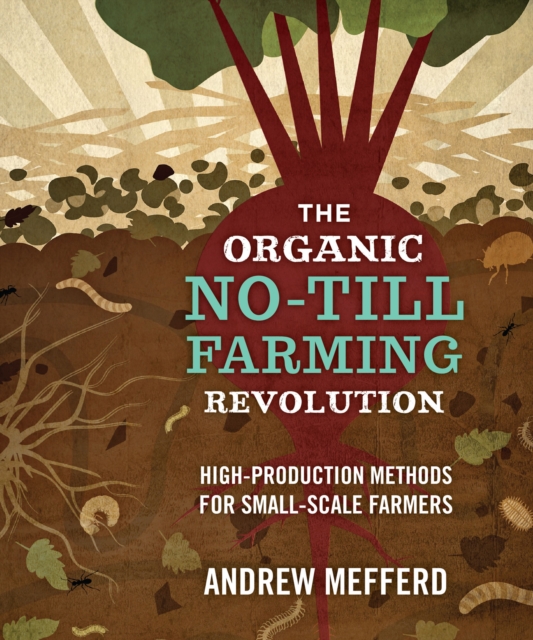
The organic no-till farming revolution : high-production methods for small-scale farmers
Learn how to use natural no-till systems to increase profitability, efficiency, carbon sequestration, and soil health on your small farm.
The Organic No-Till Farming Revolution is the comprehensive farmer-developed roadmap showing how no-till lowers barriers to starting a small farm, reduces greenhouse gas emissions, increases efficiency and profitability, and promotes soil health.
Farming without tilling has long been a goal of agriculture, yet tilling remains one of the most dominant paradigms; almost everyone does it. But tilling kills beneficial soil life, burns up organic matter, and releases carbon dioxide. If the ground could instead be prepared for planting without tilling, time and energy could be saved, soil organic matter increased, carbon sequestered, and dependence on machinery reduced.
This hands-on manual offers:
* Why roller-crimper no-till methods don't work for most small farms
* A decision-making framework for the four no-till methods: occultation, solarization, organic mulches grown in place, and applied to beds
* Ideas for starting a no-till farm or transitioning a working farm
* A list of tools, supplies, and sources.
This is the only manual of its kind, specifically written for natural and small-scale farmers who wish to expand or explore chemical-free, regenerative farming methods.
eBook

The organic no-till farming revolution : high-production methods for small-scale farmers
\"The Organic No-Till Farming Revolution is the no-till chemical-free growing roadmap, showing how no-till lowers barriers to starting a small farm, reduces greenhouse gas emissions, increases efficiency and profitability, and promotes soil health. This hands-on manual is specifically written for natural and small-scale farmers.\"-- Provided by publisher.
Book

Forests sourcebook : practical guidance for sustaining forests in development cooperation
The 'Forests Sourcebook' provides practical operations-oriented guidance for forest sector engagement toward the goals of poverty reduction, conservation and economic development. Intended to guide World Bank lending activities and projects, the 'Forests Sourcebook' offers information useful to a broad audience of practitioners, government agencies, and non-governmental organizations. The 'Sourcebook was developed in partnership with members of the Collaborative Partnership on Forests, including the Food and Agriculture Organization. The 'Sourcebook' provides background on key issues, lessons learned, and recommendations for practitioners on a number of topics including private sector engagement, forest governance, sustainable plantation and commercial harvesting, and forest information management systems. Giving insight into the complex interplay between different realms of development work that effect or are affected by forests, the 'Forests Sourcebook' is a valuable tool for any stakeholder involved in development or business projects that could have impact on forests.
eBook

The self-sufficient life and how to live it
\"Describes how to live in harmony with the planet independently, and presents information on raising crops and livestock, making homemade food staples and household items, and using natural forms of energy.\"-- (Source of summary not specified).
Book
The Forest Certification Handbook
First published in 1995, The Forest Certification Handbook has become the landmark book concerning all aspects of forest and wood product certification from policy to business to in-the-field technical issues. Yet since first publication an enormous amount has happened in the field. This new second edition has been entirely rewritten to incorporate the changes over the past decade, and is a complete and up-to-date source of information on all aspects of developing, selecting and operating a forest certification programme that provides both market security and raises standards of forest management.
eBook

Climate change and crop production
Current trends in population growth suggest that global food production is unlikely to satisfy future demand under predicted climate change scenarios unless rates of crop improvement are accelerated. In order to maintain food security in the face of these challenges, a holistic approach that includes stress-tolerant germplasm, sustainable crop and natural resource management, and sound policy interventions will be needed. The first volume in the CABI Climate Change Series, this book provides an overview of the essential disciplines required for sustainable crop production in unpredictable environments. Chapters include discussions of adapting to biotic and abiotic stresses, sustainable and resource-conserving technologies and new tools for enhancing crop adaptation. Examples of successful applications as well as future prospects of how each discipline can be expected to evolve over the next 30 years are also presented. Laying out the basic concepts needed to adapt to and mitigate changes in crop environments, this is an essential resource for researchers and students in crop and environmental science as well as policy makers.
eBook

Handbook of Energy, Volume II
Handbook of Energy, Volume II: Chronologies, Top Ten Lists, and Word Clouds draws together a comprehensive account of the energy field from the prestigious and award-winning authors of the Encyclopedia of Energy (2004), The Dictionary of Energy, Expanded Edition (2009), and the Handbook of Energy, Volume I (2013). Handbook of Energy, Volume II takes the wealth of information about historical aspects of energy spread across many books, journals, websites, disciplines, ideologies, and user communities and synthesizes the information in one central rep
Book
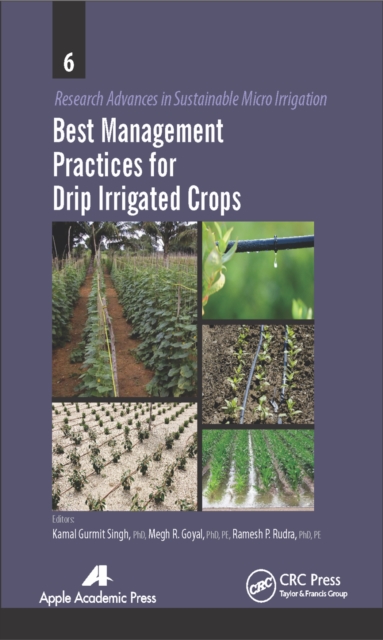
Best Management Practices for Drip Irrigated Crops
This book focuses on best management practices for drip irrigated crops. It cover irrigation methods, scheduling of micro irrigation, and mulching and crop performance. Micro irrigation techniques with diverse crops are discussed, including sweet pepper, chili, tomatoes, cauliflower, wheat, sweet peas, sugarcane, and potatoes. The performance of the various techniques has been tested and evaluated in the field. Written by experts on micro irrigation, this valuable book is a must-have for micro irrigation professionals as well as advanced students.
eBook
The little green data book 2014
The Little Green Data Book is a pocket-sized ready reference on key environmental data for over 200 countries. Key indicators are organized under the headings of agriculture, forestry, biodiversity, oceans, energy, emission and pollution, and water and sanitation. For the second year, The Little Green Data Book presents a new set of ocean-related indicators, highlighting the role of oceans in economic development.
eBook