
Catalogue Search | MBRL


Are you sure you want to remove the book from the shelf?

{{itemTitle}}
317
result(s) for
"Sustainable development Europe, Eastern."
Sort by:

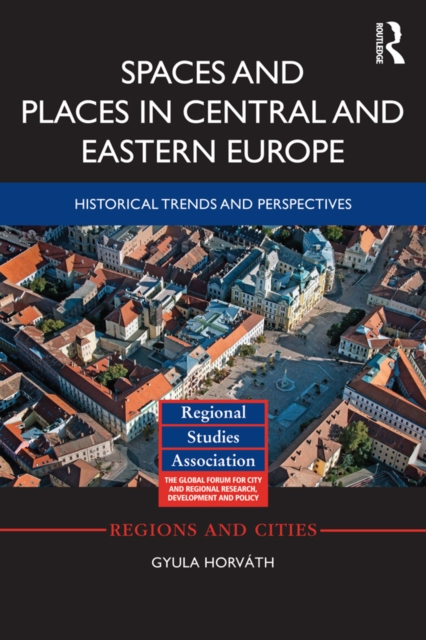
Spaces and Places in Central and Eastern Europe
Across Europe there is a rapidly changing context for undertaking regional development. In the 20th century, development of the former planned economies (Bulgaria, Czech Republic, Hungary, Poland, Romania and Slovakia), was defined by these countries differences, rather than their common ideological roots. These disparities altered over time and were marked by changing social structures. However, the ranking of regions has remained the same as core areas have strengthened their positions while the structural obstacles to the modernisation of peripheral areas have remained due to a lack of coherent regional policy.
This book examines the specific regional development paths of Central and Eastern European countries and evaluates the effects of the determining factors of this process. Through analysis of the system of objectives, instruments and institutions used in different eras, and case studies of Hungary, East Germany and Germany, development models are established and compared with Western European patterns.
The book summarises the experiences of Central and Eastern European regional cooperation and examines the basic nature of the cohesion problems of the Carpathian Basin trans-national macro region. It confirms by comparative historical analyses that the transformation was indeed unique. This book will make a welcome addition to the literature for students and academics interested in the broader picture of Central and Eastern European politics, future integration within the European Union and the history of regional development processes.
eBook


Spaces and Places in Central and Eastern Europe
Across Europe there is a rapidly changing context for undertaking regional development. In the 20th century, development of the former planned economies (Bulgaria, Czech Republic, Hungary, Poland, Romania and Slovakia), was defined by these countries differences, rather than their common ideological roots. These disparities altered over time and were marked by changing social structures. However, the ranking of regions has remained the same as core areas have strengthened their positions while the structural obstacles to the modernisation of peripheral areas have remained due to a lack of coherent regional policy.
This book examines the specific regional development paths of Central and Eastern European countries and evaluates the effects of the determining factors of this process. Through analysis of the system of objectives, instruments and institutions used in different eras, and case studies of Hungary, East Germany and Germany, development models are established and compared with Western European patterns.
The book summarises the experiences of Central and Eastern European regional cooperation and examines the basic nature of the cohesion problems of the Carpathian Basin trans-national macro region. It confirms by comparative historical analyses that the transformation was indeed unique. This book will make a welcome addition to the literature for students and academics interested in the broader picture of Central and Eastern European politics, future integration within the European Union and the history of regional development processes.
1. Regional transition in the Central and Eastern European countries 2. Regions in Central and Eastern Europe 3. Towards a Knowledge based regional development: decentralization of science and research 4. The German Mezzogiorno? The natural history of East German regional development 5. Regional transformation in Russia 6. Regionalism in a unitary state: the case of Hungary 7. Interregional cooperation in a Central European macro-region: the case of the Carpathian Basin
Gyula Horváth is Professor in Regional Economics and Policy of the University of Pécs, Hungary and Scientific advisor of Institute of Regional Studies, Hungarian Academy of Sciences.
eBook

Just Sustainabilities
Environmental activists and academics alike are realizing that a sustainable society must be a just one. Environmental degradation is almost always linked to questions of human equality and quality of life. Throughout the world, those segments of the population that have the least political power and are the most marginalized are selectively victimized by environmental crises. This book argues that social and environmental justice within and between nations should be an integral part of the policies and agreements that promote sustainable development. The book addresses the links between environmental quality and human equality and between sustainability and environmental justice.
eBook


Sustainable Consumption and Production in the European Union—An Attempt to Assess Changes and Convergence from the Perspective of Central and Eastern European Countries
The aim of this paper is to attempt to assess changes in terms of sustainable consumption and production (SCP) in the European Union (EU), with particular emphasis on the countries of central and eastern Europe (CEE). So far, relatively little attention has been paid to the analysis of SCP in countries at different levels of development in the literature in this subject area. Even less attention has been paid to the study of the similarity of economies in this respect and the signs of convergence. The basis for assessment is the analysis of dispersion measures, cluster analysis, variance analysis and the construction of a synthetic index. The authors conclude that CEE countries are characterized by a relatively low level of development in terms of SCP compared to the rest of the EU. The signs of σ-convergence and β-convergence can only be identified in terms of “Average CO2 emissions per km from new passenger cars”. It is also the only indicator that significantly differentiates both analyzed clusters. In CEE countries, changes in other SCP indicators were mainly negative (increased adverse environmental impact), and the distance to other EU countries increased. The pandemic was conducive to σ-convergence in terms of “Generation of waste” and β-convergence in terms of “Circular material use rate”, but in 2021, the conditions of gradual easing of pandemic restrictions favored divergence in SCP indicators. The lack of convergence (while reducing the environmental impact) may be a serious problem in achieving the Sustainable Development Goals (SDGs) at the EU level. The above results were supplemented with a discussion on the causes of the observed situation and recommendations.
Journal Article
Progress towards the 2030 Sustainable Development Goals for EU Urban Communities (SDG11)
The 2030 Agenda for sustainable development emphasizes the interconnectedness of environmental issues with socio-economic development, recognizing their fundamental role in human prosperity, while the sustainable development goals (SDGs) serve as a pivotal framework globally. This study provides a critical assessment of the progress made by EU Member States in pursuing the SDG 11 (sustainable cities and communities) targets as set out in the 2030 Agenda. The analysis is based on official data published by the EU Statistical Office—Eurostat—and uses the AAA (Holt-Winters) exponential smoothing algorithm for the trend analysis of specific indicators. The results show significant progress during the first seven years of implementation of the Agenda 2023, while indicating concerns about the achievement of the 2030 targets in some Member States. The mapping of potentially negative trends emphasizes the need for firm corrective actions, underlining the urgency of early interventions to address expected negative developments before they have potentially irreversible consequences.
Journal Article
Sustainable Urban Development Through Creative Film Industries: From Hollyłódź to Bollywood
This conceptual article explores how the film sector within the creative industries contributes to sustainable development and the achievement of the Sustainable Development Goals (SDGs) in post-socialist and postcolonial cities. It develops a framework linking the creative industries to the SDGs and applies it to the film sectors of Łódź (Poland) and Mumbai (India). The analysis shows how film production supports the environmental, social, and economic pillars of sustainability by fostering social inclusion, strengthening urban economies, and promoting environmental responsibility. The study also highlights the sector’s role in advancing green production practices and raising public awareness of sustainability issues. Overall, the analysis demonstrate that the film industry contributes to sustainable urban transformation, illustrating how cities can leverage their cinematic heritage to build cultural resilience, stimulate local development, and enhance social well-being.
Journal Article