
Catalogue Search | MBRL


Are you sure you want to remove the book from the shelf?

{{itemTitle}}
173
result(s) for
"Sustainable development Islamic countries"
Sort by:
Linking Sustainable Livelihoods to Natural Resources and Governance
This book investigates the current level and trend of poverty in the Muslim World, including selected countries in Africa, the Middle East and Central Asia, East Asia, the Pacific and South America. Authors explore themes of poverty reduction, poverty alleviation and the extent of influences on social and economic development, particularly natural resource endowments (especially mineral resources) and their utilization. Chapters explore theory and practice, including governance and programmes, and take a detailed look at Zakat as a faith-based policy tool, to reduce poverty and improve livelihoods and thus contribute to better environmental stewardship. The final chapters look at development questions in the Muslim World and make policy recommendations, including a proposed multi-dimensional development collaboration model called the Development Collaboration Octagon Model (DeCOM). Readers will discover theoretical explanations of poverty and how poverty hampers the development of many nations because the poor are unable to partake actively in the development process. Poverty indicators and measurement are discussed, and trends of economic growth including productivity, manufacturing, trade patterns, investment and saving activity, and socio-economic developments are all explored: supporting data is presented in tables and figures, throughout this text. Authors explore the potency and success stories of public poverty alleviation strategies and programmes pursued in the Muslim world, especially the extent to which the institution of Zakat has been effectively incorporated into public poverty alleviation strategies. Policy options required to enhance social and economic development are proposed, to help pull the poor out of the poverty trap into the mainstream economy in the Muslim world. This work will appeal to anyone wishing to scrutinise poverty, its parameters and its relationship with the development of countries in the Muslim world. Scholars in the fields of economics, sociology, geography and Islamic studies will all find something of value here.
eBook
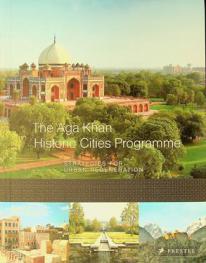
The Aga Khan Historic Cities Programme : strategies for urban regeneration
The extraordinary accomplishments of the Aga Khan Historic Cities Programme are celebrated in this generously illustrated volume that includes hundreds of photographs, maps, and drawings along with informative text, offering fascinating insight into the built environment of Muslim societies around the world. The Aga Khan Historic Cities Programme promotes the conservation and re-use of buildings and public spaces in historic cities in the Muslim World as a catalyst to improving the quality of life of their inhabitants. This book presents more than 30 case studies that illustrate the Programme's efforts to spur social, economic, and cultural development in sustainable ways. In countries such as Afghanistan, Egypt, India, Mali, Pakistan, Syria, Tajikistan and Tanzania the Historic Cities Programme has gone beyond restoration to address the questions of the social and environmental context, adaptive re-use, institutional sustainability and training. Recent photographs filled with brilliant detail; precise maps, drawings and technical data; and expert essays on urban planning, collaborative networks, parks and gardens, and sustainability are included in this exciting book on the work of one of the Muslim world's most successful proponents of cultural conservation. -- Book Description.
Book

Analyzing the commonalities between Islamic social finance and sustainable development goals
PurposeThis study aims to explore commonalities and differences between Islamic social finance (ISF) and sustainable development goals (SDGs).Design/methodology/approachThe study has adopted a qualitative library-based research method, and the secondary data is collected through the available literature on the topic.FindingsThis study concludes that the majority of SDGs are compatible with ISF. Moreover, it finds that the global ISF possesses adequate financial resources to assist Muslim majority nations in achieving some of the most critical and urgent SDGs on time.Research limitations/implicationsThe scope of this study is confined to examining the possible role of ISF in achieving many of the most pressing development goals aligned with the SDGs. To maintain coherence within the study’s focus, this paper makes no comparisons between the ISF and other types of endowments/charities.Practical implicationsThis paper outlines an agenda for the ISF-led development strategy and makes some crucial recommendations on how the global ISF might potentially lead the charge of Islamic charities in achieving the SDGs in Muslim majority nations.Originality/valueThis paper adds original value to the available literature on the potential of ISF and SDGs in the arena of development. The paper analyses the role of ISF in achieving the SDGs.
Journal Article

The Influence of Islamic Religiosity on the Perceived Socio-Cultural Impact of Sustainable Tourism Development in Pakistan: A Structural Equation Modeling Approach
Typically, residents play a role in developing strategies and innovations in tourism. However, few studies have sought to understand the role of Islamic religiosity on the perceived socio-cultural impacts of sustainable tourism development in Pakistan. Previous studies focusing on socio-cultural impacts as perceived by local communities have applied various techniques to explain the relationships between selected variables. Circumstantially, the structural equation modeling (SEM) technique has gained little attention for measuring the religiosity factors affecting the perceived socio-cultural impacts of sustainable tourism. This investigation aims to address such limitations in this area of scientific knowledge by applying Smart PLS-SEM, developing an empirical approach, and implementing Smart-PLS software V-3.2.8. The proposed tourism model predicts the effects of the religiosity level on the perceived socio-cultural impacts of sustainable tourism development. In this study, we examine the relationships among religious commitments, religious practice, and religious belief and the socio-cultural effects of sustainable tourism. Our research identifies influential factors through an extensive literature review on communities’ religiosity and the socio-cultural impacts of developing sustainable tourism. We examine and analyze data based on 508 residents’ responses. The findings reveal an R² value of 0.841, suggesting three exogenous latent constructs, which collectively elucidate 84.10% of the variance in the perceived socio-cultural impact of sustainable tourism. The findings reveal that religious respondents with a higher religiosity level have a positive attitude towards developing sustainable tourism. These findings are helpful to understand the dynamics of communities’ perceptions, behaviors, quality of life, cultural aspects, and religiosity factors affecting sustainable tourism in Pakistan. This study is novel in the context of Pakistani cultural and social norms, and this study’s implications may provide further direction for researching and developing sustainable tourism in the northern regions of Pakistan.
Journal Article

Waqf, Sustainable Development Goals (SDGs) and maqasid al-shariah
Purpose
This paper attempts to contextualise the potential role of waqf (plural; awqaf, Islamic perpetual trust) in the contemporary world, particularly, in the developmental arena. The purpose of this paper is to provide a framework for awqaf to maintain its convergence with some of the fundamental goals of the SDGs which are also congruent with the maqasid al-shariah (the higher objectives of shariah).
Design/methodology/approach
This paper is based on a desk-based research, and it adopts the qualitative research paradigm for the analysis of the available literature.
Findings
This paper finds that most of the 17 developmental goals of the SDGs comfortably match with the long-term objectives of shariah and there is good scope for the stakeholders of awqaf to develop waqf-based development plan in line with the framework of SDGs. Additionally, it finds that the global awqaf enjoy sufficient financial capacity to help muslim majority countries to realise some of the most relevant and urgent maqasid-oriented SDGs in a timely manner.
Research limitations/implications
The scope of this paper is limited to analyse the potential role of global awqaf in realising some of the most urgent maqasid-based development objectives in congruence with SDGs. For the purpose of maintaining the coherence in the focus of the study, this paper does not undertake any comparison between the waqf and other forms of endowments/charities in fulfilling the similar objectives.
Practical implications
This paper provides a framework for maqasid-oriented waqf-based development plan followed by provision of some critical recommendations on how the global awqaf can potentially spearhead the initiative of Islamic charities in realising the maqasid-oriented SDGs among muslim majority countries.
Originality/value
This paper adds original value to the available literature on the potential of waqf in the arena of development. The paper analyses the role of waqf in achieving the most urgent maqasid-based SDGs, and thus, it fills the existing gap of a systematic research on the possible collaboration of global awqaf and SDGs.
Journal Article

A structured literature review on green sukuk (Islamic bonds): implications for government policy and future studies
Purpose
Green sukuk (Islamic bonds) is one of Islamic financial instrument as an alternative financing source for supporting green finance projects in several sectors such as renewable energy or climate change problems. The aim of study is to present an understanding of the issues, explore the lesson for government policy and identify the potential for future studies directions.
Design/methodology/approach
This study conducted a literature review on green sukuk or Islamic bonds based on eight journal databases. The authors have carried out a strict selection of journals that are only indexed by Scopus and are protected from predatory journals.
Findings
This study has selected 7 of 118 published articles on green topics. This study has found that 50% of green sukuk research is dominated by a theoretical qualitative approach. While research that uses a quantitative or empirical approach is still below 30%, followed by using mixed methods. This study finds that research discusses green sukuk on Sustainable Development Goals (SDGs) or environmental issues, especially climate change, COVID-19 issues and green financial reporting. In addition, in the existing literature, this study found that green sukuk has main advantages instead of green bonds where green sukuk must comply with sharia principles, namely, being free from usury, interest and uncertainty.
Practical implications
This study analyzes two important implications, namely, first, the implications of government policies regarding the potential for issuing green sukuk in supporting all programs on the agenda for the 2030 SDGs, especially controlling and preventing the adverse impacts of global climate change; second, the implications for further research, further researchers can refer to the results of this review to make it easier to find new research things about the relationship of green sukuk with SGDs.
Originality/value
To the best of the authors’ knowledge, this paper is the first review paper that structurally reviews the previous literature on green sukuk (Islamic bonds) based on reputable publisher journals that have been indexed by Scopus.
Journal Article

Financial inclusion and sustainable development of banks: the place of organization of Islamic cooperation (OIC) in emerging markets
PurposeThis study examines the impact of financial inclusion on the corporate sustainability of banks in both Organization of Islamic Cooperation (OIC) and non-OIC emerging economies, considering the COVID-19 pandemic.Design/methodology/approachThe research utilizes data from 3,159 bank-years from 2007 to 2021 across 33 emerging markets.FindingsEmpirical findings indicate that firms operating in higher financial inclusion developing countries tend to exhibit higher levels of sustainable development. This positive relationship has become even more pronounced during the COVID-19 pandemic, suggesting the importance of financial inclusion in fostering corporate sustainability, especially in times of economic challenges. Interestingly, while the positive correlation between financial inclusion and sustainable development remains consistent across both OIC and non-OIC countries, firms in OIC countries do not show significant changes during the pandemic.Practical implicationsThis observation suggests that the pandemic’s impact on corporate sustainability may vary between the two groups of countries. This study highlights the significance of financial inclusion in promoting corporate sustainability in developing economies. In times of recessions when accessing finance becomes expensive, policymakers in OIC countries should identify firms that adhere to Islamic principles, such as those sensitive to interest rates, and provide them with targeted support. This assistance can enable these companies to compete effectively and achieve their financial sustainability objectives.Originality/valueThere has been no attempt to investigate the effect of financial inclusion and the pandemic on the sustainable development of banks in developing countries.
Journal Article

Financial intermediation through risk sharing vs non-risk sharing contracts, role of credit risk, and sustainable production: evidence from leading countries in Islamic finance
The asset side of Islamic banks has two different portfolios running side by side, namely risk-sharing (PLS) and non-risk sharing (non-PLS) financing. The segregation of PLS and non-PLS financing has gathered some attention recently owning to its relative importance for sustainable economic output. This study attempts to analyze the impact of decomposed Islamic financing modes (PLS and non-PLS) with a particular focus on their impact on real economic activity. In addition, we moderated the relationship with asset quality of aggregate Islamic banking sector. Quarterly data from 2014 to 2021 have been sourced from datasets of the Islamic financial service board (IFSB), the International Monetary Fund (IMF), World Bank, and Central banks’ data streams. Eleven countries have been selected based on the highest local and global share in global Islamic financial assets. Panel data regression model has been used in this study. The findings indicate that PLS financing is a weaker driver to channelize funds. However, industrial production output is significantly affected by non-PLS financing. Further the results suggest, Islamic finance–output nexus found to have a stronger relationship in the presence of higher asset quality of Islamic banks. The results show that firms mostly rely on non-PLS financing, due to reduced asymmetry and higher transparency in non-PLS contracts compared to PLS modes. The results have implications for governing bodies of Islamic financial system in boosting risk-sharing contracts and firms to limit agency conflicts arising from fluctuating cost of financing.
Journal Article

Deeper Effects of fiscal multidimensional poverty reduction: household characteristics, financial lags and elite capture
The governance of multidimensional relative poverty is a key challenge in rural poverty alleviation in the new era, as well as an important practice of the implementation of the United Nations Sustainable Development Goals in China. Based on provincial fiscal and financial data as well as data from the China Family Panel Studies (CFPS), this article employs multilevel linear regression and structural equation modeling to empirically examine the impact and mechanisms of fiscal investment in agriculture on multidimensional relative poverty among farmers. The research results indicate that fiscal investment in agriculture can effectively alleviate multidimensional relative poverty among rural households, and this conclusion still holds after the robustness and endogeneity tests of traditional measurement and Double Machine Learning. However, differences in household characteristics affect the performance of fiscal poverty alleviation. Households in the central and western regions, with larger family sizes, younger members, and lower levels of education, exhibit higher policy responsiveness. In terms of mechanisms, digital inclusive finance and social capital serve as important channels for fiscal multidimensional poverty reduction. However, attention should be paid to the positive lag effect of digital inclusive finance and the risk of “elite capture” in households with low levels of social capital. Accordingly, the article recommends that fiscal spending should be increased and made more efficient, with precise policy measures, strengthened institutional coordination, and efforts to cultivate optimal levels of social capital. While the article is limited by data availability to allow for a more in-depth and complex discussion, it still provides insights for fiscal strategies aimed at building high-quality shared prosperity.
Journal Article