
Catalogue Search | MBRL


Are you sure you want to remove the book from the shelf?

{{itemTitle}}
255
result(s) for
"Sustainable development Kazakhstan."
Sort by:

Sustainable energy in Kazakhstan : moving to cleaner energy in a resource-rich country
\"Kazakhstan is rich in natural resources including coal, oil, natural gas and uranium and has significant renewable potential from wind, solar, hydro and biomass. In spite of this, the country is currently dependent upon fossil fuels with coal-fired plants accounting for 75% of total power generation leading to concerns over greenhouse gas emissions and impacts on human health and the environment. This book analyses the implications of the global shift to cleaner energy for a country whose economy has centred on hydrocarbon exports. The challenge is urgent for Kazakhstan, whose recent economic growth has driven increased demand for energy services, making the construction of additional generating capacity increasingly necessary for enabling sustained growth. In this context, renewable energy resources are becoming an increasingly attractive option to help bridge the demand-supply gap. Chapters written by experts in the field provide a comprehensive review of the current energy situation in Kazakhstan including fossil energy and renewable resources and analyses policy drivers for the energy sector. Emphasising that clean energy covers a variety of renewables, as well as cleaner use of hydrocarbons, this book argues that future technological change will affect the relative attractiveness of the various choices. Recognising technical, geographical and domestic and international political constraints on policymakers' options, this book will be of interest to an interdisciplinary audience in the fields of resource management and clean energy, development economics and Central Asian Studies\"--Provided by publisher.
Book

Kazakhstan and Role of the Middle Powers
The Singapore Lecture is one of the intellectual highlights of Singapore. It provides an opportunity for distinguished statesmen and leaders to reach a wider audience in Singapore. The presence of such eminent personalities will allow members of the civil service, business community, diplomatic corps, academic community, media, and other interested parties, the opportunity to hear from leading world figures speak on topics of international and regional interest. The 46th Singapore Lecture was delivered by Kassym-Jomart Tokayev, President of the Republic of Kazakhstan, on 24 May 2024, under the distinguished Chairmanship of Mr Teo Chee Hean, Senior Minister and Coordinating Minister for National Security, Singapore.
eBook
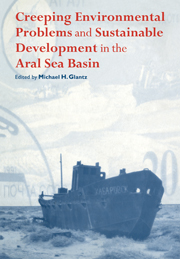
Creeping Environmental Problems and Sustainable Development in the Aral Sea Basin
Environmental degradation in the Aral Sea basin has been a touchstone for increasing public awareness of environmental issues. The Aral crisis has been touted as a 'quiet Chernobyl' and as one of the worst human-made environmental catastrophes of the twentieth century. This multidisciplinary 1999 book comprehensively describes the slow onset of low grade but incremental changes (i.e. creeping environmental change) which affected the region and its peoples. Through a set of case studies, it describes how the region's decision-makers allowed these changes to grow into an environmental and societal nightmare. It outlines many lessons to be learned for other areas undergoing detrimental creeping environmental change, and provides an important example of how to approach such disasters for students and researchers of environmental studies, global change, political science and history.
eBook

Higher education contributing to local, national, and global development
Higher education offers the potential to support glonacal (global, national, and local) development. This study presents new empirical and conceptual insights into the ways in which higher education can help to achieve and exceed the outcomes enshrined in the Sustainable Development Goals. Open-ended online surveys were used to learn how academics in Georgia and Kazakhstan view the contributions of universities to addressing self-identified development challenges; and how universities work with the government and the private sector for realising their glonacal development potential. While the study provides ample evidence on the national manifestations of the developmental role of universities, it also shows that limited academic freedom and institutional autonomy impede the full realisation of the potential of higher education. The assumptions underpinning the academics’ views on how higher education can support development are discussed in the light of an innovative framework of essentialist and anti-essentialist approaches. Juxtaposing the national with the global development missions of universities, the paper raises questions on the possibility of delinking higher education from the immediate human capital and modernisation needs of the nation-state and becoming concerned with the global, on promoting freedom to cultivate intellectual curiosity through education and research, and stimulating a more holistic imaginary of the developmental purposes of higher education.
Journal Article

Resource abundance and economic development
Since the 1960s the resource-poor countries have grown much faster than the resource-rich ones. This reflects basic differences in the speed of industrialization and the nature of the political state that are rooted in the natural resource endowment. Most resource-rich countries experienced a growth collapse in the 1960s and 1970s. This book shows.
eBook

Impact of agricultural land use in Central Asia: a review
Agriculture is major sector in the economy of Central Asia. The sustainable use of agricultural land is therefore essential to economic growth, human well-being, social equity, and ecosystem services. However, salinization, erosion, and desertification cause severe land degradation which, in turn, degrade human health and ecosystem services. Here, we review the impact of agricultural land use in the five countries of Central Asia, Kazakhstan, Kyrgyzstan, Tajikistan, Turkmenistan, and Uzbekistan, during 2008–2013 in 362 articles. We use the Land Use Functions framework to analyze the type and relative shares of environmental, economic, and social topics related to agricultural land use. Our major findings are (1) research on land use in Central Asia received high levels of international attention and the trend in the number of publications exceeded the global average. (2) The impacts of land use on abiotic environmental resources were the most explored. (3) Little research is available about how agricultural land use affects biotic resources. (4) Relationships between land degradation, e.g., salinization and dust storms, and human health were the least explored. (5) The literature is dominated by indirect methods of data analysis, such as remote sensing and mathematical modeling, and in situ data collection makes up only a small proportion.
Journal Article

Employee Pro-Environmental Behavior: The Impact of Environmental Transformational Leadership and GHRM
We investigated the impact of environmental transformational leadership (ETL) on pro-environmental behavior (PEB) of employees in Kazakhstan. The study also examined the potential mediating effect of environmental awareness and green human resource management (GHRM) as a moderating effect, using the theory of planned behavior. An online cross-sectional survey was conducted with 268 Kazakh employees from private and public organizations. Structural equation modeling was used to test the theory-driven model. The results show that environmental leadership predicted employees’ PEB, environmental awareness mediated the relationship, and GHRM partially moderated the relationship. The results of bootstrapping tests reveal that environmental awareness played successive mediating roles in the link between ETL and PEBs, but the simple slope test did not support the moderating effect of GHRM. Environmental awareness and GHRM were identified as fundamental mechanisms that accounted for the connection between ETL and PEBs.
Journal Article

Construction professionals’ perspectives on drivers and barriers of sustainable construction
With the associated environmental challenges and unsustainable patterns of construction, there is also notable awareness and willingness among the state bodies to adopt sustainability measures and practices in Kazakhstan. This study explores the drivers of and barriers inhibiting the adoption of sustainability paradigm in the construction context of Kazakhstan. The drivers and barriers were validated through the survey and structured workshop with the construction professionals to ensure their relevance to the local context, which were then ranked according to their levels of influence through the lens of the industry professionals in Kazakhstan. Delphi technique was the last stage before consolidating the specified lists. Stakeholder opinions were then consolidated to develop a context-oriented decision support system. The findings reveal that addressing environmental issues is vital to increase the level of sustainability leading to the more efficient use of construction materials and resources. Various social aspects are also found to be driving forces for the effective adoption of the SC concept. On the other hand, a great portion of SC barriers is related to economic aspects, which are followed by government as well as awareness and education related barriers. The findings are hoped to contribute to the body of knowledge in terms of drivers of, and barriers to SC in developing countries, particularly in Central Asian countries due to similarities in context. The findings may also be useful for the construction forefront players seeking ways to improve sustainability performance of the construction industry.
Journal Article
A New Method for the Quantitative Assessment of Sustainable Development Goals (SDGs) and a Case Study on Central Asia
Regarding the sustainable development goals (SDGs) formulated by the United Nations (UN), how to effectively measure, assess and compare the progress and trends of these SDGs in different countries was the problem we wanted to address. Based on past quantitative assessments, this paper proposed a new methodological framework for SDG assessment and analysis, and used two typical Central Asian countries, Kazakhstan and Kyrgyzstan, as the sample area to test the framework. Our study chose 209 indicators and indicator sets, including 429 specific indicators and collected relevant indicator data for the two countries from 2000 to 2017, then proposed a new direction for the unification of indicator data as well as methods for normalization. Afterward, the scores of each goal and SDG performance were calculated. This analysis was also done innovatively using the Chow Test to conduct further analysis of the SDG performance. According to the assessment, over those 18 years, Kyrgyzstan’s SDGs had been performing poorly, especially the economic SDGs, while the performance of Kazakhstan’s SDGs had remained in constant fluctuation. It could be said that the SDG performance in Central Asia as a whole was not very optimistic. It required the devotion of greater efforts in the gathering of different types of indicator data because there were still gaps in data collection between countries as well as the missing of time-series data, which could challenge the indicator selection and further restrict the follow-up assessment and analysis. The assessment framework presented in this paper can be applied for assessing the long-term performance of national SDGs of different countries, helping analyze the internal relationship dynamic among and within countries, underscoring specific issues of sustainable development, assessing policy and selecting development models and directions.
Journal Article
Sustainable Regional Development: A Challenge Between Socio-Economic Development and Sustainable Environmental Management
In the context of sustainability, the concept of balanced development is crucial at both global and regional levels. This principle is equally significant for specific regions, natural-economic complexes, and local communities. Sustainable regional development necessitates a holistic approach to addressing economic, social, and environmental challenges, which are particularly pertinent at the regional scale. The sustainable development of nations is intrinsically linked to their integration into global processes; however, its resilience and stability are contingent upon balanced regional progress. The West Kazakhstan region exemplifies an economic powerhouse within the country and plays a pivotal role in national regional policy. This study introduces a conceptual model designed to evaluate sustainable development through the balanced interaction of various indicators. The results reveal a disparity between the financial and economic potential of different regions and their environmental challenges. These findings form the foundation for developing a new paradigm of sustainable development that emphasizes the integration of economic growth, social stability, and environmental security. The proposed model has the potential to be adapted in various regions of the world facing similar climatic, water, and social challenges. However, it is necessary to consider local characteristics, data availability, and institutional contexts.
Journal Article