
Catalogue Search | MBRL


Are you sure you want to remove the book from the shelf?

{{itemTitle}}
6,840
result(s) for
"Swimming Competitions."
Sort by:

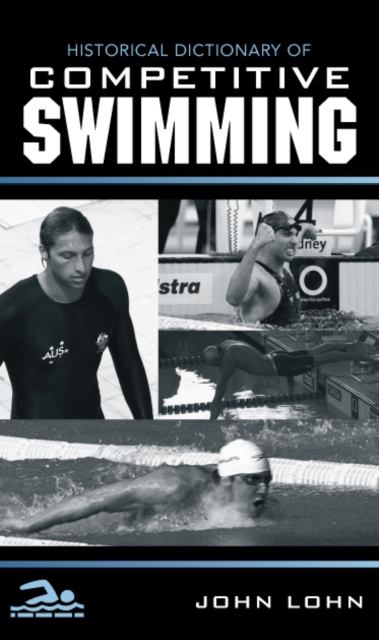
Historical dictionary of competitive swimming
Swimming has been an Olympic sport since the inception of the Games, with the 100, 400, and 1500 freestyles being the original events along with the 100 freestyle for sailors. While the spirit of the sport remains the same, the technology and the competitive formats have advanced tremendously through the years. The number of events contested in competition has increased to the point where the program for a typical international meet, such as the World Championships or Olympics, produces a true reflection of the best swimmers over various distances and in different strokes.The Historical Dictionary of Competitive Swimming examines the sport of swimming since its inception as a competitive athletic event. This is done through a chronology, an introductory essay, a bibliography, and appendixes that detail Olympic and World Championships medal winners. The dictionary section has over 500 cross-referenced dictionary entries on individuals, major competitions, and there are also entries for each of the competitive strokes and countries that have enjoyed significant success in the sport.
eBook

Cora's mystery
When two of her Neptunia relay team members are injured and unable to swim in the thirteen-year-olds' race, Cora presses her friends Rachel and Shyanna into service--but when the team's lucky Sea Lion statue disappears Cora fears sabotage and sets out to find the guilty party, and her chief suspect is a merboy on the rival Titania team.
Book

Neither an Individualised Nor a Standardised Sodium Bicarbonate Strategy Improved Performance in High-Intensity Repeated Swimming, or a Subsequent 200 m Swimming Time Trial in Highly Trained Female Swimmers
Inconsistent swimming performances are often observed following sodium bicarbonate (NaHCO3) ingestion, possibly because the time taken to reach peak blood buffering capacity is highly variable between individuals. Personalising NaHCO3 ingestion based on time-to-peak blood bicarbonate (HCO3−) could be a solution; however, this strategy is yet to be explored in swimming, or adequately compared to standardised NaHCO3 approaches. Therefore, six highly trained female swimmers ingested 0.3 g·kg BM−1 NaHCO3 in capsules to pre-determine their individual time-to-peak blood HCO3−. They then participated in three experimental trials, consisting of a 6 × 75 m repeated sprint swimming test, followed by a 200 m maximal time trial effort after 30 min active recovery. These experiments were conducted consuming a supplement at three different timings: individualised NaHCO3 (IND: 105–195 min pre-exercise); standardised NaHCO3 (STND: 150 min pre-exercise); and placebo (PLA: 90 min pre-exercise). Both NaHCO3 strategies produced similar increases in blood HCO3− prior to exercise (IND: +6.8 vs. STND: +6.1 mmol·L−1, p < 0.05 vs. PLA) and fully recovered blood HCO3− during active recovery (IND: +6.0 vs. STND: +6.3 mmol·L−1 vs. PLA, p < 0.05). However, there were no improvements in the mean 75 m swimming time (IND: 48.2 ± 4.8 vs. STND: 48.9 ± 5.8 vs. PLA: 49.1 ± 5.1 s, p = 0.302) nor 200 m maximal swimming (IND: 133.6 ± 5.0 vs. STND: 133.6 ± 4.7 vs. PLA: 133.3 ± 4.4 s, p = 0.746). Regardless of the ingestion strategy, NaHCO3 does not appear to improve exercise performance in highly trained female swimmers.
Journal Article

Swimming
The story of a teenage girl's journey from a small Midwestern swim team to her first state meet, her brutal professional training, and the final, record-breaking swims that lead to her dizzying ascent to the Olympic podium in Barcelona. In the loneliness of adolescence, in the family tragedies that threaten to engulf her, Pip discovers the resilience of the human spirit and the spectacular power of her own body.
Book

Respuesta de cortisol salival y ansiedad precompetitiva en nadadores (Salivary cortisol response and precompetitive anxiety in swimmers)
El objetivo de este trabajo fue medir los niveles de ansiedad precompetitiva y su relación con la secreción de cortisol medido a nivel salival dentro de una competición oficial de natación. Participaron 19 nadadores de ambos sexos, con una edad media de 12.64 años (DT = 1.65). La medida fisiológica incluyó cortisol salival medido con ELISA. En adición, estados psicológicos precompetitivos fueron medidos con el CSAI-2R. La recolección de datos se llevó a cabo en dos tomas, en la Toma 1 se midió el cortisol salival tres semanas antes de una competición (línea base); mientras que en la toma 2 se midió el cortisol salival 16 horas previas a la competición, y se midió la ansiedad precompetitiva. Las dos colectas se realizaron a las 16 horas. Para el análisis de los datos, la muestra se dividió en dos submuestras, una con participantes de 10 y 11 años de edad, y la otra con los de 12 a 16 años de edad. Los resultados del análisis estadístico convencional por hipótesis nula, rechazan diferencias significativas en la concentración de cortisol salival entre las dos tomas, para ambas submuestras. No obstante, el cambio mínimo relevante confirmó un cambio relevante de cortisol salival precompetitivo para la primer submuestra. Además, ambas submuestras presentan baja ansiedad precompetitiva. Las concentraciones de cortisol un día antes de la competición no correlacionaron con la ansiedad (somática y cognitiva). En conclusión, los bajos niveles de cortisol, y altos niveles de autoconfianza sugieren una respuesta psicobiológica adaptativa a la competición. Esto puede contribuir al rendimiento y resultados esperados en la competición.
Journal Article


Warmup in Swimming Competition: Characterization of the strategies used by Portuguese coaches
The main objective of this study was to characterise the warmup strategies currently used by Portuguese coaches in swimming competitions. A questionnaire, \"Warmup in Swimming Competition: Characterization of the strategies used by Portuguese Coaches” was applied to collect the data. All coaches who participated in the study stated that they prescribe warmup to athletes in a competition situation, arguing that the main benefits are related to the physical component, such as preparing the body for intense activity and sensitivity to water; the mental component, about concentration and component tactical, referring to the adjustment of the swimming rhythm and adaptation to the characteristics of the pool (e.g., block and walls). We observed that all coaches used warmup in water, and 57.1% of these coaches prescribed this warmup with distances between 1000m and 1400m, and 42.9% used material, such as a board, pull buoy, snorkel, and fins. When analysing the transition phase between warmup and competition, many coaches report that it does not always have the ideal duration. This idea is in line with what Neiva et al. (2017) showed that for 100m freestyle competitions, a transition phase of 10 minutes would be ideal for maintaining the benefits of warmup and that after 20min, the decrease in benefits was high, and seemed to follow an increasing trend. Coaches indicated that the main reasons that negatively influence the duration of the transition phase are: the lack of a specific warmup pool, very long competition sessions, and the beginning of the competition being far from the end of the warmup. Probably looking for a way to mitigate the loss of the benefits of the warmup, 89.3% of the coaches state that they prescribe re-warmup tasks, pointing to the use of tasks such as re-warmup in water, dynamic flexibility exercises, static flexibility exercises, general low impact exercises, joint mobilisation, elastic reinforcement, warm clothing, and strength exercises. When athletes swim multiple events in the same session and the time between them is less than 20min, 57.1% of coaches prescribe re-warmup tasks with strategies similar to those mentioned above. When this transition phase between tests is longer than 20min, we see a slight increase in the use of rewarming tasks, with 61.3% of coaches prescribing re-warmup. We consider essential the development of studies that seek to guide coaches on the most favourable strategies to use during this transition phase between warmup and competition and between competitions.
Journal Article

A comparison of load cell and pressure sensors to measure in-water force in young competitive swimmers
The purpose of this study was to compare the in-water force of young competitive swimmers using tethered swimming and differential pressure sensors. Thirty-one swimmers (16 girls and 15 boys) were randomly assigned to perform two in-water tests. Swimmers completed two maximum bouts of 25 m front crawl with a differential pressure system and a 30 s maximum bout with an attached load cell (tethered-swimming). The peak force (FPEAK, in N) of dominant and non-dominant upper limbs was retrieved for further analysis. Comparison between methods revealed significant differences in all force variables (p ≤ 0.05) and the biases (mean differences) were large in girls (FPEAK dominant, 45.89 N; FPEAK non-dominant, 43.79 N) and boys (FPEAK dominant, 67.26 N; FPEAK non-dominant, 61.78 N). Despite that, simple linear regression models between the two methods showed significant relationships with a moderate effect in all variables for girls, whereas in boys a high and moderate effect was verified for FPEAK of dominant and non-dominant limbs (respectively). It seems that using pressure sensors and tethered swimming leads to different FPEAK values in young competitive, where correction factors are needed to compare data between both methods.
Journal Article

Exercise-Training Intervention Studies in Competitive Swimming
Competitive swimming has a long history and is currently one of the largest Olympic sports, with 16 pool events. Several aspects separate swimming from most other sports such as (i) the prone position; (ii) simultaneous use of arms and legs for propulsion; (iii) water immersion (i.e. hydrostatic pressure on thorax and controlled respiration); (iv) propulsive forces that are applied against a fluctuant element; and (v) minimal influence of equipment on performance. Competitive swimmers are suggested to have specific anthropometrical features compared with other athletes, but are nevertheless dependent on physiological adaptations to enhance their performance. Swimmers thus engage in large volumes of training in the pool and on dry land. Strength training of various forms is widely used, and the energetic systems are addressed by aerobic and anaerobic swimming training. The aim of the current review was to report results from controlled exercise training trials within competitive swimming. From a structured literature search we found 17 controlled intervention studies that covered strength or resistance training, assisted sprint swimming, arms-only training, leg-kick training, respiratory muscle training, training the energy delivery systems and combined interventions across the aforementioned categories. Nine of the included studies were randomized controlled trials. Among the included studies we found indications that heavy strength training on dry land (one to five repetitions maximum with pull-downs for three sets with maximal effort in the concentric phase) or sprint swimming with resistance towards propulsion (maximal pushing with the arms against fixed points or pulling a perforated bowl) may be efficient for enhanced performance, and may also possibly have positive effects on stroke mechanics. The largest effect size (ES) on swimming performance was found in 50 m freestyle after a dry-land strength training regimen of maximum six repetitions across three sets in relevant muscle-groups (ES 1.05), and after a regimen of resisted- and assisted-sprint training with elastic surgical tubes (ES 1.21). Secondly, several studies suggest that high training volumes do not pose any immediate advantage over lower volumes (with higher intensity) for swim performance. Overall, very few studies were eligible for the current review although the search strategy was broad and fairly liberal. The included studies predominantly involved freestyle swimming and, overall, there seems to be more questions than answers within intervention-based competitive swimming research. We believe that this review may encourage other researchers to pursue the interesting topics within the physiology of competitive swimming.
Journal Article