
Catalogue Search | MBRL


Are you sure you want to remove the book from the shelf?

{{itemTitle}}
918
result(s) for
"Swinburne"
Sort by:

Swinburne and Burges: Contact, Networks, Contexts
This article establishes some key points of contact between William Burges (1827-1881), called 'the only Pre-Raphaelite architect', and Algernon Charles Swinburne (1837-1909), an intimate of the Pre-Raphaelite circle and often referred to as a Pre-Raphaelite poet for some of his verse produced during the 1860s, though later seen as a foundational literary figure for Victorian Aestheticism and Decadence. The first to examine the relationship between these major contributors to the Victorian arts, this article breaks new ground as it documents and considers their recorded meetings and indicates their shared characteristics and mutual interests. It also adds valuable context by situating both men within their wider networks and cultural circles, and indicating their links to events and trends of their time.
Journal Article

Adaptive quizzes to increase motivation, engagement and learning outcomes in a first year accounting unit
Adaptive learning presents educators with a possibility of providing learning opportunities tailored to each student's individual needs. As such, adaptive learning may contribute to both improving student learning outcomes and increasing student motivation and engagement. In this paper, we present the findings from a pilot of adaptive quizzes in a fully online unit at an Australian higher education provider. Results indicate that adaptive quizzes contribute to student motivation and engagement, and students perceive that adaptive quizzes support their learning. Interestingly, our results reveal that student scores did not increase significantly as a result of the introduction of adaptive quizzes, indicating that students may not be best placed to assess their own learning outcomes. Despite this, we conclude that adaptive quizzes have value to increase student motivation and engagement. [Author abstract]
Journal Article
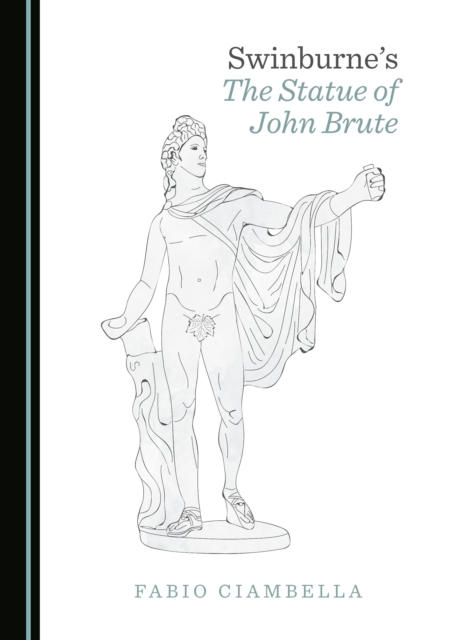
Swinburne's the Statue of John Brute
Wrongly believed to be a parodic divertissement by the nineteenth-century English poet Algernon Charles Swinburne, The Statue of John Brute reveals itself as a highly interesting intertextual universe where echoes from Shakespeare, the Restauration drama, Beckford, Gothic fiction, and many other sources of inspiration mix together in an extremely short but explosive text.At the heart of this volume is an absolutely original analysis of this relatively unknown text, meant to acknowledge its paramount importance as Oscar Wilde's source for his well-known The Picture of Dorian Gray. While trying to confute the hypotheses put forward by critics from the 1920s and 1930s who believed The Statue to be a fin-de-siècle parody of Wilde's Aesthetic masterpiece, this study anticipates its date of composition by almost twenty years - through an accurate bio-literary and corpus-stylistic analysis - thus recognising it not as a parody, but as a possible hypotext of Dorian Gray.
eBook

Trans Sapphism
This essay examines a trans literary history within nineteenth-century British reception of Sappho. Preceding and complicating the sexological language of inversion, Algernon Charles Swinburne's Poems and Ballads, First Series (1866) inaugurated an indexical relation between Sapphism and gender variance, which came to entail a complex practice of intertextual signaling and allusion organized around Sappho's poetry. This practice of trans Sapphism, which persists in Swinburne's later writings, was taken up later in the Victorian period by writers like Walter Pater, Michael Field, and Vernon Lee, becoming a signature for a literary subculture invested in exposing the tenuous conditions of gender through trans possibilities.
Journal Article
The Dualist Project and the Remote-Control Objection
Substance dualism says that all thinking beings are immaterial. This sits awkwardly with the fact that thinking requires an intact brain. Many dualists say that bodily activity is causally necessary for thinking. But if a material thing can cause thinking, why can’t it think? No argument for dualism, however convincing, answers this question, leaving dualists with more to explain than their opponents.
Journal Article

A Compensatory Response to the Problem of Evil: Revisited
In this essay, I revisit the univocity thesis, Sterba’s analogy between God and a leader of a politically liberal society, and, most fundamentally, whether the existence of horrendous evils is logically compatible with the existence of a good God. I concede that the typical appeals to free will and greater goods defenses to block the logical problem of evil are not sufficient because they do not adequately address the horrendous evils that are all too much a feature of human existence. While acknowledging that a compensatory response to the problem of evil is suggested by several important philosophers, I rely most centrally on the work of Marilyn McCord Adams. In so doing, I defend the thesis that the existence of a good God is logically compatible with the existence of horrendous evils, given God’s capacity to absorb, defeat, or engulf it.
Journal Article

Swinburne’s Are We Bodies or Souls?
Richard Swinburne’s Are We Bodies or Souls? presents a sustained case for a view concerning the nature of persons that can be classified as a form of either Cartesian dualism or emergent dualism. This paper comments on two important arguments developed in the book and concludes by considering the problem of the origin of souls.
Journal Article

“Ruined at Root”: “The Triumph of Time,” “Anactoria,” and Swinburne’s Poetics of Waste
The question of what poetry should be used for was rife throughout the middle of the nineteenth century. This essay examines one poet’s response to what poetry is and why it should matter: Algernon Charles Swinburne. Swinburne is a particularly interesting case study because of the excessive and immoderate reactions his work provoked in his admirers and his critics alike, and because his poetry is often thematically, stylistically, and formally concerned with waste, a word often applied as the antithesis of “useful.” Memorably, his contemporaries responded to his early poetry by describing him “tuning his lyre in a stye” and deeming him “rose graftings set in dung.” I argue that, for Swinburne, waste functions in his poems as both a mode of relation and a theory of poetics, and the two dovetail in my reading of “The Triumph of Time” and “Anactoria.” What is at stake for Swinburne in his investigation is poetry’s capacity for creating and evolving alternate forms of intimacy. I end by speculating about how his poetry encourages us to rethink or challenge an investment in voice originating in a human speaker.
Journal Article
No Work for a Theory of Personal Identity
A main element in Richard Swinburne’s (2019) argument for substance dualism concerns the conditions of a person’s continued existence over time. In this commentary I aim to question two things: first, whether the kind of imaginary cases that Swinburne relies on to make his case should be accorded the kind of weight he supposes; and second, whether philosophers should be concerned to give any substantial theory, of the sort that dualism and its competitors are apparently meant to provide, to explain the conditions of personal identity after all. My suggestion, instead, will be that the concept of a person’s continued existence is better taken as philosophically unanalyzable.
Journal Article