
Catalogue Search | MBRL


Are you sure you want to remove the book from the shelf?

{{itemTitle}}
14,146
result(s) for
"Sykes"
Sort by:
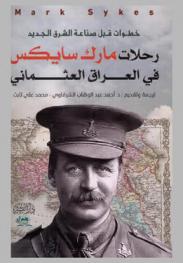

Redrawing the Middle East
The Sykes-Picot Agreement was one of the defining moments in the history of the modern Middle East. Yet its co-creator, Sir Mark Sykes, had far more involvement in British Middle East strategy during World War I than the Agreement for which he is now most remembered. Between 1915 and 1916, Sykes was Lord Kitchener's agent at home and abroad, operating out of the War Office until the war secretary's death at sea in 1916. Following that, from 1916 to 1919 he worked at the Imperial War Cabinet, the War Cabinet Secretariat and, finally, as an advisor to the Foreign Office. The full extent of Sykes's work and influence has previously not been told. Moreover, the general impression given of him is at variance with the facts. Sykes led the negotiations with the Zionist leadership in the formulation of the Balfour Declaration, which he helped to write, and promoted their cause to achieve what he sought for a pro-British post-war Middle East peace settlement, although he was not himself a Zionist. Likewise, despite claims he championed the Arab cause, there is little proof of this other than general rhetoric mainly for public consumption. On the contrary, there is much evidence he routinely exhibited a complete lack of empathy with the Arabs. In this book, Michael Berdine examines the life of this impulsive and headstrong young British aristocrat who helped formulate many of Britain's policies in the Middle East that are responsible for much of the instability that has affected the region ever since.
eBook
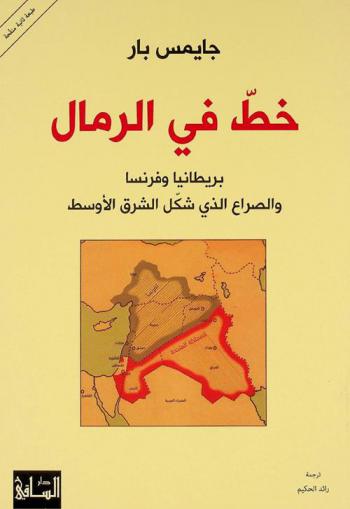
خط في الرمال : بريطانيا وفرنسا والصراع الذي شكل الشرق الأوسط
عام 1916، اتفق رجلان سرا على تقسيم الشرق الأوسط بينهما. كان السير مارك سايكس سياسيا رؤيويا، وفرانسوا جورج بيكو ديبلوماسيا ناقما. رسما خطا في الرمال من البحر المتوسط وصولا إلى الحدود الفارسية، وأعادا معا رسم خريطة الشرق الأوسط بإقرار \"انتداب\" بريطاني على فلسطين وشرق الأردن والعراق، وفرنسي على لبنان وسوريا.على مر السنوات الثلاثين التي تلت، انكشفت قصة دنيئة محبوكة بالعنف والمناورات السياسية السرية، تروى لنا هنا على لسان مجموعة مميزة من السياسيين والديبلوماسيين والجواسيس والجنود، من بينهم توماس إدوارد لورانس وونستون تشرتشل وشارل ديغول.بالاستناد إلى ملفات من أرشيفات البريطانيين والفرنسيين رفعت عنها السرية أخيرا، يصف جايمس بار بوضوح الحرب السرية القاتلة التي حيكت بالدسائس وعمليات التجسس بين بريطانيا وفرنسا للسيطرة على الشرق الأوسط.
BOOK

Healthcare Access and Quality Index based on mortality from causes amenable to personal health care in 195 countries and territories, 1990–2015: a novel analysis from the Global Burden of Disease Study 2015
National levels of personal health-care access and quality can be approximated by measuring mortality rates from causes that should not be fatal in the presence of effective medical care (ie, amenable mortality). Previous analyses of mortality amenable to health care only focused on high-income countries and faced several methodological challenges. In the present analysis, we use the highly standardised cause of death and risk factor estimates generated through the Global Burden of Diseases, Injuries, and Risk Factors Study (GBD) to improve and expand the quantification of personal health-care access and quality for 195 countries and territories from 1990 to 2015.
We mapped the most widely used list of causes amenable to personal health care developed by Nolte and McKee to 32 GBD causes. We accounted for variations in cause of death certification and misclassifications through the extensive data standardisation processes and redistribution algorithms developed for GBD. To isolate the effects of personal health-care access and quality, we risk-standardised cause-specific mortality rates for each geography-year by removing the joint effects of local environmental and behavioural risks, and adding back the global levels of risk exposure as estimated for GBD 2015. We employed principal component analysis to create a single, interpretable summary measure–the Healthcare Quality and Access (HAQ) Index–on a scale of 0 to 100. The HAQ Index showed strong convergence validity as compared with other health-system indicators, including health expenditure per capita (r=0·88), an index of 11 universal health coverage interventions (r=0·83), and human resources for health per 1000 (r=0·77). We used free disposal hull analysis with bootstrapping to produce a frontier based on the relationship between the HAQ Index and the Socio-demographic Index (SDI), a measure of overall development consisting of income per capita, average years of education, and total fertility rates. This frontier allowed us to better quantify the maximum levels of personal health-care access and quality achieved across the development spectrum, and pinpoint geographies where gaps between observed and potential levels have narrowed or widened over time.
Between 1990 and 2015, nearly all countries and territories saw their HAQ Index values improve; nonetheless, the difference between the highest and lowest observed HAQ Index was larger in 2015 than in 1990, ranging from 28·6 to 94·6. Of 195 geographies, 167 had statistically significant increases in HAQ Index levels since 1990, with South Korea, Turkey, Peru, China, and the Maldives recording among the largest gains by 2015. Performance on the HAQ Index and individual causes showed distinct patterns by region and level of development, yet substantial heterogeneities emerged for several causes, including cancers in highest-SDI countries; chronic kidney disease, diabetes, diarrhoeal diseases, and lower respiratory infections among middle-SDI countries; and measles and tetanus among lowest-SDI countries. While the global HAQ Index average rose from 40·7 (95% uncertainty interval, 39·0–42·8) in 1990 to 53·7 (52·2–55·4) in 2015, far less progress occurred in narrowing the gap between observed HAQ Index values and maximum levels achieved; at the global level, the difference between the observed and frontier HAQ Index only decreased from 21·2 in 1990 to 20·1 in 2015. If every country and territory had achieved the highest observed HAQ Index by their corresponding level of SDI, the global average would have been 73·8 in 2015. Several countries, particularly in eastern and western sub-Saharan Africa, reached HAQ Index values similar to or beyond their development levels, whereas others, namely in southern sub-Saharan Africa, the Middle East, and south Asia, lagged behind what geographies of similar development attained between 1990 and 2015.
This novel extension of the GBD Study shows the untapped potential for personal health-care access and quality improvement across the development spectrum. Amid substantive advances in personal health care at the national level, heterogeneous patterns for individual causes in given countries or territories suggest that few places have consistently achieved optimal health-care access and quality across health-system functions and therapeutic areas. This is especially evident in middle-SDI countries, many of which have recently undergone or are currently experiencing epidemiological transitions. The HAQ Index, if paired with other measures of health-system characteristics such as intervention coverage, could provide a robust avenue for tracking progress on universal health coverage and identifying local priorities for strengthening personal health-care quality and access throughout the world.
Bill & Melinda Gates Foundation.
Journal Article


Derivation of High-Resolution Bathymetry from Multispectral Satellite Imagery: A Comparison of Empirical and Optimisation Methods through Geographical Error Analysis
The high importance of bathymetric character for many processes on reefs means that high-resolution bathymetric models are commonly needed by marine scientists and coastal managers. Empirical and optimisation methods provide two approaches for deriving bathymetry from multispectral satellite imagery, which have been refined and widely applied to coral reefs over the last decade. This paper compares these two approaches by means of a geographical error analysis for two sites on the Great Barrier Reef: Lizard Island (a continental island fringing reef) and Sykes Reef (a planar platform reef). The geographical distributions of model residuals (i.e., the difference between modelled and measured water depths) are mapped, and their spatial autocorrelation is calculated as a basis for comparing the performance of the bathymetric models. Comparisons reveal consistent geographical properties of errors arising from both models, including the tendency for positive residuals (i.e., an under-prediction of depth) in shallower areas and negative residuals in deeper areas (i.e., an over-prediction of depth) and the presence of spatial autocorrelation in model errors. A spatial error model is used to generate more reliable estimates of bathymetry by quantifying the spatial structure (autocorrelation) of model error and incorporating this into an improved regression model. Spatial error models improve bathymetric estimates derived from both methods.
Journal Article

Plate tectonics and great earthquakes : 50 years of earth-shaking events
The theory of plate tectonics transformed earth science. The hypothesis that the earth's outermost layers consist of mostly rigid plates that move over an inner surface helped describe the growth of new seafloor, confirm continental drift, and explain why earthquakes and volcanoes occur in some places and not others. Lynn R. Sykes played a key role in the birth of plate tectonics, conducting revelatory research on earthquakes. In this book, he gives an invaluable insider's perspective on the theory's development and its implications. Sykes combines lucid explanation of how plate tectonics revolutionized geology with unparalleled personal reflections. He entered the field when it was on the cusp of radical discoveries. Studying the distribution and mechanisms of earthquakes, Sykes pioneered the identification of seismic gaps--regions that have not ruptured in great earthquakes for a long time--and methods to estimate the possibility of quake recurrence. He recounts the various phases of his career, including his antinuclear activism, and the stories of colleagues around the world who took part in changing the paradigm. Sykes delves into the controversies over earthquake prediction and their importance, especially in the wake of the giant 2011 Japanese earthquake and the accompanying Fukushima disaster. He highlights geology's lessons for nuclear safety, explaining why historic earthquake patterns are crucial to understanding the risks to power plants. Plate Tectonics and Great Earthquakes is the story of a scientist witnessing a revolution and playing an essential role in making it.
Book

War and Punishment
What makes wars drag on and why do they end when they do? Here H. E. Goemans brings theoretical rigor and empirical depth to a long-standing question of securities studies. He explores how various government leaders assess the cost of war in terms of domestic politics and their own postwar fates. Goemans first develops the argument that two sides will wage war until both gain sufficient knowledge of the other's strengths and weaknesses so as to agree on the probable outcome of continued war. Yet the incentives that motivate leaders to then terminate war, Goemans maintains, can vary greatly depending on the type of government they represent. The author looks at democracies, dictatorships, and mixed regimes and compares the willingness among leaders to back out of wars or risk the costs of continued warfare.
Democracies, according to Goemans, will prefer to withdraw quickly from a war they are not winning in order to appease the populace. Autocracies will do likewise so as not to be overthrown by their internal enemies. Mixed regimes, which are made up of several competing groups and which exclude a substantial proportion of the people from access to power, will likely see little risk in continuing a losing war in the hope of turning the tide. Goemans explores the conditions and the reasoning behind this \"gamble for resurrection\" as well as other strategies, using rational choice theory, statistical analysis, and detailed case studies of Germany, Britain, France, and Russia during World War I. In so doing, he offers a new perspective of the Great War that integrates domestic politics, international politics, and battlefield developments.
eBook

Redrawing the Middle East : Sir Mark Sykes, imperialism and the Sykes-Picot Agreement
\"The Sykes-Picot Agreement [official name: Asia Minor Agreement] was one of the defining moments in the history of the modern Middle East. Yet its co-creator, Sir Mark Sykes, had far more involvement in British Middle East strategy during World War I than the Agreement for which he is now most remembered. In this book, Michael Berdine examines the life of this impulsive and headstrong young British aristocrat who helped formulate many of Britain's policies in the Middle East\"-- Provided by publisher.
Book

Ellen Tanner’s Persia: A Museum Legacy Rediscovered
Ellen Georgiana Tanner (1847–1937) was among the first British women to travel solo in Persia and Mesopotamia. A published author elected to the Royal Geographical Society (RGS) in 1913, this article examines Tanner’s reputation in her day versus her subsequent lack of recognition. In 1894, aged forty-seven, Tanner began an intrepid journey on the caravan route through Persia on horseback, accompanied only by local guides, visiting bazaars and collecting Persian handicrafts. Tanner later donated the objects acquired during these travels to museums in the West Country, including a collection of eighty-five Persian objects to the Holburne Museum, Bath. This article examines the context of British activity in Persia in the late nineteenth century, discussing Tanner’s unpublished journal, ‘By Road and River’ (1895) in the context of a growing literature on Persia by British travellers including George Curzon and other women including Isabella Bird Bishop, Gertrude Bell, and Ella Sykes. It outlines the biographical details of Tanner’s life, exploring the factors that set Tanner apart from her contemporaries and her perspectives on Persia as a somewhat enigmatic observer. The article discusses the recognition of Tanner and other women by the RGS. It discusses the history of collecting Qajar art for Britain’s museums, particularly of Robert Murdoch Smith and his role in growing the V&A’s holdings of Persian art. It outlines Tanner’s collecting of Persian handicrafts from Isfahan, Yezd, Shiraz, and other centres of production for the Holburne. It explores what we know of her impetus to collect, her particular interest in textiles, and the growth of interest in historic Persia, including Tanner’s part in the wholesale purchasing of historic Persian artefacts. The final section explores Tanner’s forgotten legacy at the Holburne Museum in the context of a renewed interest in rediscovering the stories of the women whose collections shaped late Victorian and early Edwardian museum collections. It argues that Tanner’s identity and the contents of her collections may account for her subsequent disappearance from institutional memory until a 2018 research project.
Journal Article