
Catalogue Search | MBRL


Are you sure you want to remove the book from the shelf?

{{itemTitle}}
1,675
result(s) for
"Synesthesia"
Sort by:


Why we are not all synesthetes (not even weakly so)
A little over a decade ago, Martino and Marks (Current Directions in Psychological Science 10:61–65,
2001
) put forward the influential claim that cases of intuitive matchings between stimuli in different sensory modalities should be considered as a weak form of synesthesia. Over the intervening years, many other researchers have agreed—at the very least, implicitly—with this position (e.g., Bien, ten Oever, Goebel, & Sack NeuroImage 59:663–672,
2012
; Eagleman Cortex 45:1266–1277,
2009
; Esterman, Verstynen, Ivry, & Robertson Journal of Cognitive Neuroscience 18:1570–1576,
2006
; Ludwig, Adachi, & Matzuzawa Proceedings of the National Academy of Sciences of the United States of America 108:20661–20665,
2011
; Mulvenna & Walsh Trends in Cognitive Sciences 10:350–352,
2006
; Sagiv & Ward
2006
; Zellner, McGarry, Mattern-McClory, & Abreu Chemical Senses 33:211–222:
2008
). Here, though, we defend the
separatist view
, arguing that these cases are likely to form distinct kinds of phenomena despite their superficial similarities. We believe that crossmodal correspondences should be studied in their own right and not assimilated, either in terms of the name used or in terms of the explanation given, to synesthesia. To conflate these two phenomena is both inappropriate and potentially misleading. Below, we critically evaluate the evidence concerning the descriptive and constitutive features of crossmodal correspondences and synesthesia and highlight how they differ. Ultimately, we wish to provide a general definition of crossmodal correspondences as acquired, malleable, relative, and transitive pairings between sensory dimensions and to provide a framework in which to integrate the nonsystematic cataloguing of new cases of crossmodal correspondences, a tendency that has increased in recent years.
Journal Article

Synaesthesia and individual differences
\"Synaesthesia is a fascinating cognitive phenomenon where one type of stimulation evokes the sensation of another. For example, synaesthetes might perceive colours when listening to music, or tastes in the mouth when reading words. This book provides an insight into the idiosyncratic nature of synaesthesia by exploring its relationships with other dimensions of individual differences. Many characteristics of linguistic-colour synaesthetes are covered including personality, temperament, intelligence, creativity, emotionality, attention, memory, imagination, colour perception, body lateralization and gender. Aleksandra Rogowska proposes that linguistic-colour synaesthesia can be considered as an abstract form of a continuous variable in the broader context of cross- and intra-modal associations. There has been a resurgence of interest in synaesthesia and this book will appeal to students and scientists of psychology, cognitive science and social science, and to those who are fascinated by unusual states of mind\"-- Provided by publisher.
Book

Trait phenomenological control predicts experience of mirror synaesthesia and the rubber hand illusion
In hypnotic responding, expectancies arising from imaginative suggestion drive striking experiential changes (e.g., hallucinations) — which are experienced as involuntary — according to a normally distributed and stable trait ability (hypnotisability). Such experiences can be triggered by implicit suggestion and occur outside the hypnotic context. In large sample studies (of 156, 404 and 353 participants), we report substantial relationships between hypnotisability and experimental measures of experiential change in mirror-sensory synaesthesia and the rubber hand illusion comparable to relationships between hypnotisability and individual hypnosis scale items. The control of phenomenology to meet expectancies arising from perceived task requirements can account for experiential change in psychological experiments.
The authors present large sample studies showing substantial relationships between measures of embodiment (the rubber hand illusion and mirror synaesthesia) and trait imaginative suggestibility in the hypnotic context. These measures of striking experiential change may therefore be confounded by suggestion effects.
Journal Article

Wednesday is indigo blue : discovering the brain of synesthesia
\"In Wednesday Is Indigo Blue, pioneering researcher Richard Cytowic and distinguished neuroscientist David Eagleman explain the neuroscience and genetics behind synesthesia's multisensory experiences.\"--Page 4 of cover.
Book

Investigating genetic links between grapheme–colour synaesthesia and neuropsychiatric traits
Synaesthesia is a neurological phenomenon affecting perception, where triggering stimuli (e.g. letters and numbers) elicit unusual secondary sensory experiences (e.g. colours). Family-based studies point to a role for genetic factors in the development of this trait. However, the contributions of common genomic variation to synaesthesia have not yet been investigated. Here, we present the SynGenes cohort, the largest genotyped collection of unrelated people with grapheme–colour synaesthesia ( n = 723). Synaesthesia has been associated with a range of other neuropsychological traits, including enhanced memory and mental imagery, as well as greater sensory sensitivity. Motivated by the prior literature on putative trait overlaps, we investigated polygenic scores derived from published genome-wide scans of schizophrenia and autism spectrum disorder (ASD), comparing our SynGenes cohort to 2181 non-synaesthetic controls. We found a very slight association between schizophrenia polygenic scores and synaesthesia (Nagelkerke's R 2 = 0.0047, empirical p = 0.0027) and no significant association for scores related to ASD (Nagelkerke's R 2 = 0.00092, empirical p = 0.54) or body mass index ( R 2 = 0.00058, empirical p = 0.60), included as a negative control. As sample sizes for studying common genomic variation continue to increase, genetic investigations of the kind reported here may yield novel insights into the shared biology between synaesthesia and other traits, to complement findings from neuropsychology and brain imaging. This article is part of a discussion meeting issue ‘Bridging senses: novel insights from synaesthesia'.
Journal Article

The Chimes
The world around Simon sings, each movement a pulse of rhythm, each object weaving its own melody, music ringing in every drop of air. Welcome to the world of The Chimes. Here, life is orchestrated by a vast musical instrument that renders people unable to form new memories. The past is a mystery, each new day feels the same as the last, and before is blasphemy. But slowly, inexplicably, Simon is beginning to remember. He emerges from sleep each morning with a pricking feeling, and sense there is something he urgently has to do. In the city Simon meets Lucien, who has a gift for hearing, some secrets of his own, and a theory about the danger lurking in Simon's past. A stunning debut composed of memory, music, love and freedom, The Chimes pulls you into a world that will captivate, enthrall and inspire.
BOOK

Reduced perceptual narrowing in synesthesia
Synesthesia is a neurologic trait in which specific inducers, such as sounds, automatically elicit additional idiosyncratic percepts, such as color (thus “colored hearing”). One explanation for this trait—and the one tested here—is that synesthesia results from unusually weak pruning of cortical synaptic hyperconnectivity during early perceptual development. We tested the prediction from this hypothesis that synesthetes would be superior at making discriminations from nonnative categories that are normally weakened by experience-dependent pruning during a critical period early in development—namely, discrimination among nonnative phonemes (Hindi retroflex /d̪a/ and dental /ɖa/), among chimpanzee faces, and among inverted human faces. Like the superiority of 6-mo-old infants over older infants, the synesthetic groups were significantly better than control groups at making all the nonnative discriminations across five samples and three testing sites. The consistent superiority of the synesthetic groups in making discriminations that are normally eliminated during infancy suggests that residual cortical connectivity in synesthesia supports changes in perception that extend beyond the specific synesthetic percepts, consistent with the incomplete pruning hypothesis.
Journal Article
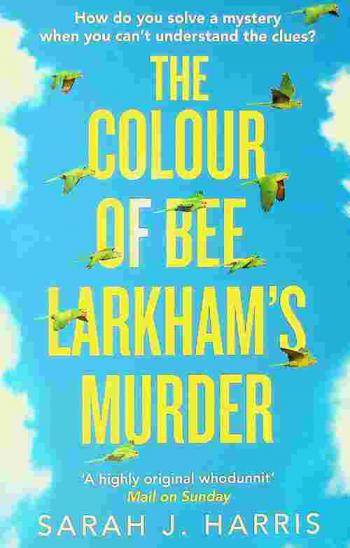
The colour of Bee Larkham's murder
How do you solve a mystery when you don't understand the clues? There are three things you need to know about Jasper. 1. He sees the world completely differently. 2. He can't recognise faces not even his own.3. He is the only witness to the murder of his neighbour, Bee Larkham. But it's hard to catch a murderer when you can't recognise their face. An extraordinary and compelling debut which will make you see the world in a way you've never seen it before.

Testing for Individual Differences in Anomalous Interactions with Objects (Psychometry)
The current study seeks to explore how differences in tendencies to experience the Autonomous Sensory Meridian Response (or ASMR) relate to performance on a psychometry task. ASMR has yet to be explored in relation to psi but seems to be promising as an anomaly-prone variable, given its association with traits that are associated with increased connectivity and tendencies to report exceptional experiences. Assessing individual variation in personality and empathy traits in self-reported autonomous sensory meridian response.
Journal Article