
Catalogue Search | MBRL


Are you sure you want to remove the book from the shelf?

{{itemTitle}}
55
result(s) for
"Syriac language History."
Sort by:

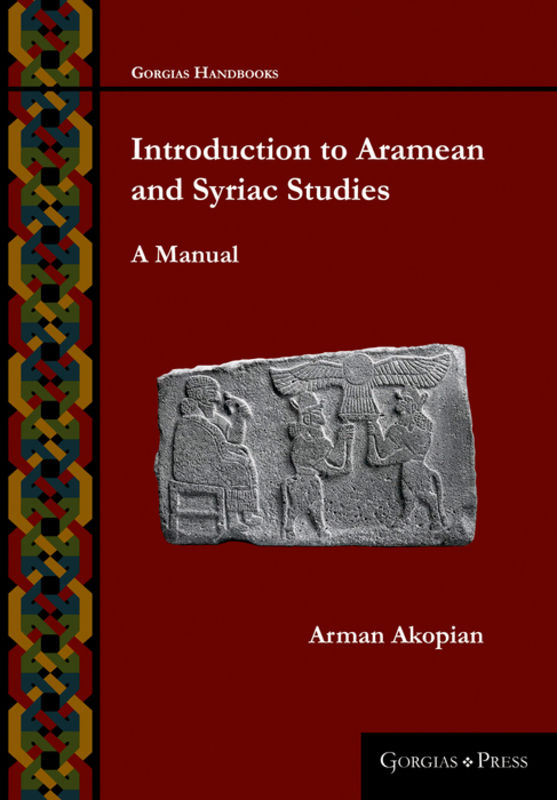
Introduction to Aramean and Syriac Studies
An English translation of Arman Akopian's comprehensive Introduction to Aramean and Syriac Studies, from the earliest appearances of Arameans in the historical record, through to the modern day.
eBook

Language change in the wake of empire : Syriac in its Greco-Roman context
\"Although it is widely acknowledged that Syriac was influenced by Greek, the specific contours of this interaction remain unclear. This study aims to present a new analysis of contact-induced changes in Syriac due to Greek. More specifically, the study intends to show that Syriac is the outcome of a particular socio-linguistic situation in which inherited Aramaic material was augmented and adapted through contact with Greek. To demonstrate this, Butts examines the place of Greek loanwords in Syriac as well as the way that Syriac-speakers replicated inherited Aramaic material on Greek, the latter being considered \"grammatical replication.\" \"-- Provided by publisher
Book


A Corpus of Syriac Incantation Bowls
In A Corpus of Syriac Incantation Bowls, Marco Moriggi assembles and reedits forty-nine previously published Syriac incantation bowls, with accompanying introductions, translations, philological notes, photographs and glossaries, as well as an analysis of the scripts with accompanying script charts.
eBook
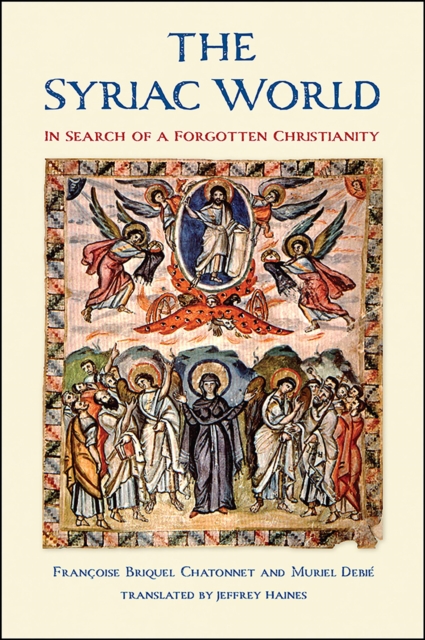
The Syriac World
BA comprehensive survey of Syriac Christianity over three thousand years/BBR / BR / Syriac is often referred to as the third main language of Christianity, along with Latin and Greek, and it remains a foundational classical, literary, and religious language throughout the world. Originating in Mesopotamia along the Roman and Parthian frontiers, it was never the language of a powerful state or ethnic group, but with the coming of Christianity it developed into a rich religious and cultural tradition. At the same time that Christianity was making its way through Europe, Syriac missionaries were founding churches from the Mediterranean coast to Persia, converting the Turkic tribes of Central Asia, and building communities in India and China.BR / BR / This comprehensive work tells the underexplored story of the Syriac world over three thousand years, from its pre-Christian roots in the Aramaic tribes and the ancient Near East to its vibrant expressions in modern diaspora churches. Enhanced with images, songs, poems, and important primary texts, this book shows the importance of Syriac history, theology, and literature in the twenty-first century.
eBook

From Taso to Erke’ün: The Transformation of East Syriac Christian Designations in China (Tang to Yuan Periods)
The historical evolution of two designations for East Syriac Christians in China—taso (達娑, including its variants) and erke’ün (也里可溫)—from the Tang to the Yuan dynasty is examined. Analyses of historical records and Old Uighur Christian manuscripts reveal their usage patterns, referents, and historical development. Taso and its variants served as both self-referential and externally applied designations from West Asia to East Asia before and during the early Mongol–Yuan period. Erke’ün, initially an official title for East Syriac Church leaders under Mongol–Yuan rule, replaced Taso and expanded to denote Christians in general. This terminological shift reflects significant transformations in the community’s identity and institutional standing within China. The findings offer new perspectives on the transmission and adaptation of East Syriac Christianity in the Chinese context.
Journal Article

Gog and Magog in early eastern Christian and Islamic sources : Sallam's quest for Alexander's wall
An important contribution to the discussion about Christian Syriac influence on Koran and Early Muslim Tradition, this volume studies Eastern Christian and Islamic views on the Biblical and Koranic Gog and Magog. Connected with this theme is the quest for Alexander's wall.
eBook

The complexity of the relationship of vocalisation signs of Semitic pointing systems
This article has a few goals. The first goal is to discover the development of Semitic pointing systems such as Babylonian Hebrew (both simple and complex), Tiberian Hebrew, Palestinian Hebrew, Samaritan Hebrew, Syriac (both Western [Jacobite] and Eastern [Nestorian]) and Arabic. The second goal is to propose the possible development because of the interaction between those languages in the past. In this article, the comparative method will be used as the methodology. A general observation of these signs and a proposition regarding the possible development amongst those languages will be presented.Contribution: This article traces the synchronic and diachronic development of Semitic languages’ vocalisation systems and proposes a possible development between them.
Journal Article

Everyday writing in the graeco-roman east
Most of the everyday writing from the ancient world—that is, informal writing not intended for a long life or wide public distribution—has perished. Reinterpreting the silences and blanks of the historical record, leading papyrologist Roger S. Bagnall convincingly argues that ordinary people—from Britain to Egypt to Afghanistan—used writing in their daily lives far more extensively than has been recognized. Marshalling new and little-known evidence, including remarkable graffiti recently discovered in Smyrna, Bagnall presents a fascinating analysis of writing in different segments of society. His book offers a new picture of literacy in the ancient world in which Aramaic rivals Greek and Latin as a great international language, and in which many other local languages develop means of written expression alongside these metropolitan tongues.
eBook