
Catalogue Search | MBRL


Are you sure you want to remove the book from the shelf?

{{itemTitle}}
5,433
result(s) for
"System analysis Philosophy."
Sort by:

Complexity science in air traffic management
\"Air traffic management (ATM) comprises a highly complex socio-technical system that keeps air traffic flowing safely and efficiently, worldwide, every minute of the year. Over the last few decades, several ambitious ATM performance improvement programmes have been undertaken. Such programmes have mostly delivered local technological solutions, whilst corresponding ATM performance improvements have fallen short of stakeholder expectations. In hindsight, this can be substantially explained from a complexity science perspective: ATM is simply too complex to address through classical approaches such as system engineering and human factors. In order to change this, complexity science has to be embraced as ATM's 'best friend'. The applicability of complexity science paradigms to the analysis and modelling of future operations is driven by the need to accommodate long-term air traffic growth within an already-saturated ATM infrastructure\"--Provided by publisher.
Book

Flourishing in the Age of Climate Change
Flourishing in the Age of Climate
Change explores skills we need to
successfully navigate the distinctive environmental, social, and
economic challenges of the twenty-first century. Our
inability to address increasing resource constraints, social
conflict, and ecological decline lead many toward a deep pessimism
that saps motivation for change.
Drawing on research from environmental science, ethics,
psychology, sociology and educational theory, William M. Throop
shows why cultivating underdeveloped skills involved in
collaboration, humility, frugality and systems thinking can enable
flourishing within our context. He also illustrates how we can
strengthen such skills individually and how education can scale up
their cultivation, which will be essential for achieving
sustainability.
Flourishing in the Age of Climate Change is a hopeful,
practical resource for readers passionate about creating a world
where we can thrive, and where flourishing is widespread.
eBook


Empirical assessment of published effect sizes and power in the recent cognitive neuroscience and psychology literature
We have empirically assessed the distribution of published effect sizes and estimated power by analyzing 26,841 statistical records from 3,801 cognitive neuroscience and psychology papers published recently. The reported median effect size was D = 0.93 (interquartile range: 0.64-1.46) for nominally statistically significant results and D = 0.24 (0.11-0.42) for nonsignificant results. Median power to detect small, medium, and large effects was 0.12, 0.44, and 0.73, reflecting no improvement through the past half-century. This is so because sample sizes have remained small. Assuming similar true effect sizes in both disciplines, power was lower in cognitive neuroscience than in psychology. Journal impact factors negatively correlated with power. Assuming a realistic range of prior probabilities for null hypotheses, false report probability is likely to exceed 50% for the whole literature. In light of our findings, the recently reported low replication success in psychology is realistic, and worse performance may be expected for cognitive neuroscience.
Journal Article

Solving the Black Box Problem: A Normative Framework for Explainable Artificial Intelligence
Many of the computing systems programmed using Machine Learning are opaque: it is difficult to know why they do what they do or how they work. Explainable Artificial Intelligence aims to develop analytic techniques that render opaque computing systems transparent, but lacks a normative framework with which to evaluate these techniques’ explanatory successes. The aim of the present discussion is to develop such a framework, paying particular attention to different stakeholders’ distinct explanatory requirements. Building on an analysis of “opacity” from philosophy of science, this framework is modeled after accounts of explanation in cognitive science. The framework distinguishes between the explanation-seeking questions that are likely to be asked by different stakeholders, and specifies the general ways in which these questions should be answered so as to allow these stakeholders to perform their roles in the Machine Learning ecosystem. By applying the normative framework to recently developed techniques such as input heatmapping, feature-detector visualization, and diagnostic classification, it is possible to determine whether and to what extent techniques from Explainable Artificial Intelligence can be used to render opaque computing systems transparent and, thus, whether they can be used to solve the Black Box Problem.
Journal Article

The new holism: P4 systems medicine and the medicalization of health and life itself
The emerging concept of systems medicine (or ‘P4 medicine’—predictive, preventive, personalized and participatory) is at the vanguard of the post-genomic movement towards ‘precision medicine’. It is the medical application of systems biology, the biological study of
wholes
. Of particular interest, P4 systems medicine is currently promised as a revolutionary new biomedical approach that is
holistic
rather than reductionist. This article analyzes its concept of
holism
, both with regard to methods and conceptualization of health and disease. Rather than representing a medical holism associated with basic humanistic ideas, we find a
technoscientific holism
resulting from altered technological and theoretical circumstances in biology. We argue that this holism, which is aimed at disease prevention and health optimization, points towards an expanded form of medicalization, which we call ‘
holistic medicalization
’: Each person’s whole life process is defined in biomedical, technoscientific terms as quantifiable and controllable and underlain a regime of medical control that is holistic in that it is
all
-
encompassing
. It is directed at all levels of functioning, from the molecular to the social, continual throughout life and aimed at managing the whole continuum from cure of disease to optimization of health. We argue that this medicalization is a very concrete materialization of a broader trend in medicine and society, which we call ‘
the medicalization of health and life itself
’. We explicate this holistic medicalization, discuss potential harms and conclude by calling for preventive measures aimed at avoiding eventual harmful effects of overmedicalization in systems medicine (quaternary prevention).
Journal Article
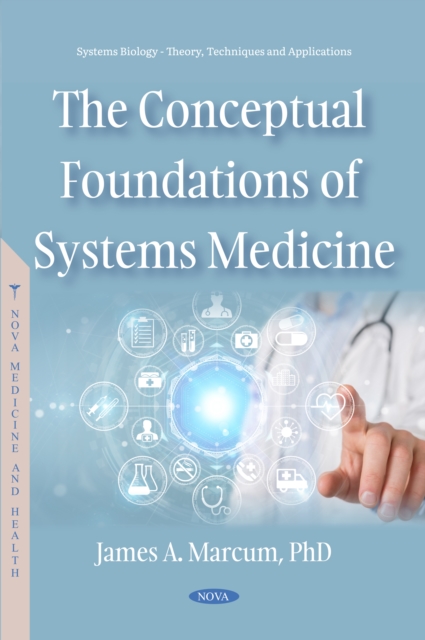
The Conceptual Foundations of Systems Medicine
\"Medicine is facing several significant challenges as the twenty-first century unfolds, which represent barriers or limitations that threaten to cripple the advancement of medicine and its practice. One of the responses to these challenges is the emergence of systems medicine. And one of the more pertinent challenges is identifying and clarifying systems medicine's conceptual and theoretical foundations. The present book represents a sustained effort to examine this challenge and to map the terrain by which to engage it and to pursue possible solutions. This conceptual and theoretical challenge in particular needs to be addressed to ensure the future success of systems medicine. To that end the book explores the conceptual and theoretical foundations of systems medicine, including the major concepts of organicism, emergence, and robustness, and contrasts these concepts to those for biomedicine, including mechanism, resultant, and homeos
eBook

The Structure and Dynamics of Networks
From the Internet to networks of friendship, disease transmission, and even terrorism, the concept--and the reality--of networks has come to pervade modern society. But what exactly is a network? What different types of networks are there? Why are they interesting, and what can they tell us? In recent years, scientists from a range of fields--including mathematics, physics, computer science, sociology, and biology--have been pursuing these questions and building a new \"science of networks.\" This book brings together for the first time a set of seminal articles representing research from across these disciplines. It is an ideal sourcebook for the key research in this fast-growing field.
The book is organized into four sections, each preceded by an editors' introduction summarizing its contents and general theme. The first section sets the stage by discussing some of the historical antecedents of contemporary research in the area. From there the book moves to the empirical side of the science of networks before turning to the foundational modeling ideas that have been the focus of much subsequent activity. The book closes by taking the reader to the cutting edge of network science--the relationship between network structure and system dynamics. From network robustness to the spread of disease, this section offers a potpourri of topics on this rapidly expanding frontier of the new science.
eBook

The impact of chronic kidney disease on developed countries from a health economics perspective: A systematic scoping review
Chronic kidney disease (CKD) affects over 10% of the global population and poses significant challenges for societies and health care systems worldwide. To illustrate these challenges and inform cost-effectiveness analyses, we undertook a comprehensive systematic scoping review that explored costs, health-related quality of life (HRQoL) and life expectancy (LE) amongst individuals with CKD. Costs were examined from a health system and societal perspective, and HRQoL was assessed from a societal and patient perspective. Papers published in English from 2015 onward found through a systematic search strategy formed the basis of the review. All costs were adjusted for inflation and expressed in US$ after correcting for purchasing power parity. From the health system perspective, progression from CKD stages 1-2 to CKD stages 3a-3b was associated with a 1.1-1.7 fold increase in per patient mean annual health care cost. The progression from CKD stage 3 to CKD stages 4-5 was associated with a 1.3-4.2 fold increase in costs, with the highest costs associated with end-stage renal disease at $20,110 to $100,593 per patient. Mean EuroQol-5D index scores ranged from 0.80 to 0.86 for CKD stages 1-3, and decreased to 0.73-0.79 for CKD stages 4-5. For treatment with renal replacement therapy, transplant recipients incurred lower costs and demonstrated higher HRQoL scores with longer LE compared to dialysis patients. The study has provided a comprehensive updated overview of the burden associated with different CKD stages and renal replacement therapy modalities across developed countries. These data will be useful for the assessment of new renal services/therapies in terms of cost-effectiveness.
Journal Article
Algorithmic Accountability and Public Reason
The ever-increasing application of algorithms to decision-making in a range of social contexts has prompted demands for algorithmic accountability. Accountable decision-makers must provide their decision-subjects with justifications for their automated system’s outputs, but what kinds of broader principles should we expect such justifications to appeal to? Drawing from political philosophy, I present an account of algorithmic accountability in terms of the democratic ideal of ‘public reason’. I argue that situating demands for algorithmic accountability within this justificatory framework enables us to better articulate their purpose and assess the adequacy of efforts toward them.
Journal Article