
Catalogue Search | MBRL


Are you sure you want to remove the book from the shelf?

{{itemTitle}}
7,121,691
result(s) for
"TAXES"
Sort by:


Business in a changing climate : explaining industry support for carbon pricing
\"Climate change skeptics and business pundits alike are convinced that any public policy instruments used to curtail environmental degradation are antithetical to the interests of the corporate community. However, many companies have actually come out in favour of carbon pricing. In Business in a Changing Climate, Kaija Belfry Munroe examines this counterintuitive action and, in doing so, explains how large firms determine their preferences for public policy options. Her analysis of thirteen industrial associations and seventeen firms from industries such as petrochemical, forestry, mining, and steel, reveals that, despite the higher costs, these industries prefer carbon pricing over voluntary agreements. Based on enlightening interviews with executives, government, and NGO officials, Belfry Munroe argues that the acceptance of climate change policy by companies is determined by the risks posed to capital investments and investor concern.\"-- Provided by publisher.
Book


Carbon tax
\"Taxing carbon emissions, which contribute to global warming, is one method governments are using to help decrease or control climate change. This informative title looks at the costs and benefits of this sometimes controversial tax and how different jurisdictions are implementing them\"-- Provided by publisher.
Book


Comprehensive tax reform
This paper analyzes particular areas of tax policy that have concerned the Colombian authorities during the 1990s, while comprising a comprehensive approach to tax reform over time. It is intended to allow the reader to view in technical detail the type of analysis conducted in a representative tax reform study carried out by the IMF
Book
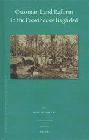
Ottoman land reform in the province of Baghdad
\"In Ottoman Land Reform in the Province of Baghdad, Keiko Kiyotaki traces the Ottoman reforms of tax farming and land tenure and establishes that their effects were the key ingredients of agricultural progress. These modernizing reforms are shown to be effective because they were compatible with local customs and tribal traditions, which the Ottoman governors worked to preserve. Ottoman rule in Iraq has previously been considered oppressive and blamed with failure to develop the country. Since the British mandate government's land and tax policies were little examined, the Ottoman legacy has been left unidentified. This book proves that Ottoman land reforms led to increases in agricultural production and tax revenue, while the hasty reforms enacted by the mandate government ignoring indigenous customs caused new agricultural and land problems\"-- Provided by publisher.
Book

The Role of Allocation in a Globalized Corporate Income Tax
The internationalization of business activity has created significant pressures on national corporate tax systems. Rather than abandon the corporate tax field, this paper predicts that governments will develop arrangements to further globalize the corporate income tax. The paper assesses the merits and limitations of allocation methods for attributing income to different jurisdictions according to formulas measuring business activity. Such methods are being used as part of transfer pricing regimes and are likely to be enhanced over time. Whatever international arrangements develop in the future, there is a role for new institutions to improve cooperative discussions among governments.
Journal Article