
Catalogue Search | MBRL


Are you sure you want to remove the book from the shelf?

{{itemTitle}}
64
result(s) for
"TRAGEDIA GRECA"
Sort by:

FOLKLORICA V (EUR. ALC. 947; ION 1189-1193; CYCL. 327-328; AR. NUB. 292-294)
Reading through the lens of Southern Italian folklore has lead to new interpretations of the following passages: in Eur. Alc. 947 Admetus' mention of \"dirty floors\" following the disappearance of Alcestis is to be linked to a specific mourning practice. In Ion 1189-1193 Ion calls for dropping some wine over the floor. This gesture is explained through the belief that spilled wine bodes well for the future and is functional to counteract a 'blasphemous' expression of ill omen. Cycl. 327-328 and Ar. Nub. 292-294 recall the propitiatory practice of breaking wind in the event of a thunder to dispel the coming of a storm.
Journal Article
UNA (TRASCURATA) AUTOCITAZIONE SOFOCLEA
This paper discusses two almost monosyllabic iambic trimeters (OT 370 and OC 787) which appear to have the same word shape; it is highly probable that in his last play Sophocles was consciously quoting an earlier passage of his production, since the two verses are pronounced by the same character (Oedipus) in similar dramatic circumstances.
Journal Article
IL FIGLIO LA DONNA DEL PADRE. RAFFRONTI PER L'EPISODIO DI ERACLE, IOLE E ILLO NEL FINALE DELLE \TRACHINIE\
In the controversial final scene of Women of Trachis, before he dies, Herakles as for Hyllus, the eldest son by Deianira, to marry his concubine, Iole. Is this a (semi-incestuous marriage? And is it possible to find any other trace of a similar practice in ancient Greece? In this article, I try to answer these questions, in the light of the notion of incest \"of the second type\", and by considering, in particular, the episode of Telegony where Telegonus marries Penelope and Telemachu marries Circe (compared with the wedding of Iolaus, the nephew of Heracles, and Megara).
Journal Article
MÉGARA ENTRE RETÓRICA Y FOLCLORE (EUR. \HF\ 451-496)
The presence of folkloric motifs in the configuration of Euripides' drama is a welldocumented fact, from Alcestis to Hippolytus and from Medea to the satyr drama Cyclops. The influence of folklore on Euripides' texts has mainly been analysed through separate identification of certain motifs. My intention, however, is to show how a strongly rhetorized passage such as the pathetic rhesis of Megara about her sons about to be murdered in Heracles' absence, consists of a series of \"intertextual\" echoes from several different folklore motifs: popular tale, wedding song (including the motif of the combination of wedding and death), and funeral ritual, with the insertion of some characteristic images and finally the deconstruction of a proverbialized phrase.
Journal Article
SOPH. \ANT\. 782 Y LOS MOTIVOS AMATORIOS DE \PRAEDA AMORIS\ Y EPΩMANIA
The reading χτήμασι must be kept in the text of Soph. Ant. 892, as it introduces the amatory motif of the plundering army whose loot is the sanity of the person it attacks (praeda amoris). The erotic topos of praeda amoris, so dear to Latin elegiac poets, is thus attested first in Soph. Ant. 782.
Journal Article
AIAS IN ATHENS: THE WORLDS OF THE PLAY AND THE AUDIENCE
Athenian tragic poets were careful to separate the 'heroic' world from the world of their fifth-century audience, and they did so by deploying the twin dynamic of 'distance and difference'. This dynamic encoded cultural lessons and allowed the audience to sympathise with the dilemmas facing the characters on stage, and thus to evaluate and understand the way they went about dealing with those dilemmas. The Aias of Sophocles is used to make the point, demonstrating that the playwright attempted to construct a unity from his character's rather mixed history, in doing so to appeal to his audience's sense of their own place in the world.
Journal Article

Money and the Early Greek Mind
How were the Greeks of the sixth century BC able to invent philosophy and tragedy? In this book Richard Seaford argues that a large part of the answer can be found in another momentous development, the invention and rapid spread of coinage which produced the first ever thoroughly monetised society. By transforming social relations, monetisation contributed to the ideas of the universe as an impersonal system (presocratic philosophy) and of the individual alienated from his own kin and from the gods (in tragedy). Seaford argues that an important precondition for this monetisation was the Greek practice of animal sacrifice, as represented in Homeric Epic, which describes a premonetary world on the point of producing money. This book combines social history, economic anthropology, numismatics and the close reading of literary, inscriptional, and philosophical texts. Questioning the origins and shaping force of Greek philosophy, this is a major book with wide appeal.
eBook


Rebel Women
Presents essays by leading writers and academics examining the stagingof Greek drama. This book presents a collection of twelve essays byleading academics, writers and theatre practitioners examining therepresentation of ancient Greek heroines in their original contexts.
eBook
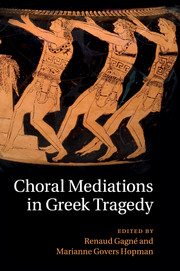
Choral Mediations in Greek Tragedy
This volume explores how the choruses of Greek tragedy creatively combined media and discourses to generate their own specific forms of meaning. The contributors analyse choruses as fictional, religious and civic performers; as combinations of text, song and dance; and as objects of reflection in themselves, in relation and contrast to the choruses of comedy and melic poetry. Drawing on earlier analyses of the social context of Greek drama, the non-textual dimensions of tragedy, and the relations between dramatic and melic choruses, the chapters explore the uses of various analytic tools in allowing us better to capture the specificity of the tragic chorus. Special attention is given to the physicality of choral dancing, musical interactions between choruses and actors, the trajectories of reception, and the treatment of time and space in the odes.
eBook