
Catalogue Search | MBRL


Are you sure you want to remove the book from the shelf?

{{itemTitle}}
35,485
result(s) for
"TRANSPORTATION / General."
Sort by:
Sustainable Urban Transport
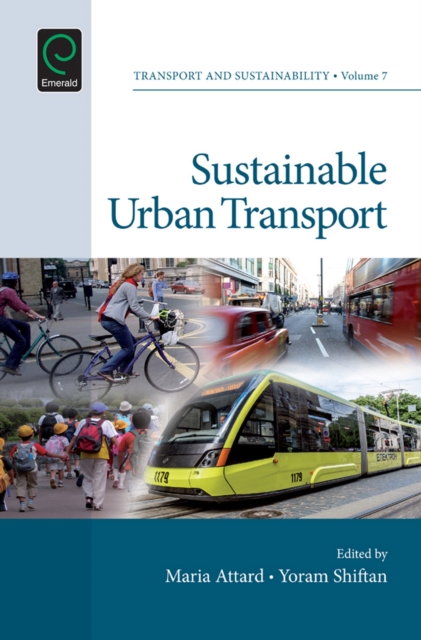
The requirement for sustainable transport in urban areas has become more onerous in the past decade due to a number of negative externalities which have been increasingly associated with growing mobility and the advances made in the technology and available options for sustainable transport. However, whilst on one hand technology has supported the reduction of environmental impacts of increased (car) mobility, other policies and actions influencing behaviour have been identified as key contributors to reduce the impact of transport. While the intentions behind particular policies point towards sustainability goals, attitudes towards mode choice are proving more difficult to shift. Specific actions are driving best practice in reducing car dependence by providing alternative means of car sharing and public transport use, whilst others look at promoting non-motorized forms of transport. This publication brings together an international group of researchers and presents work from different countries dealing with issues related to transport policy, attitudes and mode choice, car sharing and alternative modes of transport, and discusses the future of non-motorized modes of transport.
eBook

The Future of Biofuels in an Electrifying Global Transportation Sector
Low carbon alternatives are an imperative for decarbonizing the transportation sector. There is growing interest in electrification of transportation but even with aggressive growth in sales, a significant share of transportation is expected to rely on liquid fuel by midcentury. Biofuels are appealing as low carbon fuels butthose produced from food crops generate a food vs. fuel dilemma. We discuss the prospects for expanding biofuels, while mitigating the competition with food production though a transition to second generation biofuels from biomass as well as the potential for biotechnology to transform the agricultural sector globally to increase crop productivity and make biofuels and food production complementary. We highlight the role for policy, technological innovations, and institutions to achieve increased food and biofuel production.
Journal Article

Emergence of hierarchy in cost-driven growth of spatial networks
One of the most important features of spatial networks—such as transportation networks, power grids, the Internet, and neural networks—is the existence of a cost associated with the length of links. Such a cost has a profound influence on the global structure of these networks, which usually display a hierarchical spatial organization. The link between local constraints and large-scale structure is not elucidated, however, and we introduce here a generic model for the growth of spatial networks based on the general concept of cost–benefit analysis. This model depends essentially on a single scale and produces a family of networks that range from the star graph to the minimum spanning tree and are characterized by a continuously varying exponent. We show that spatial hierarchy emerges naturally, with structures composed of various hubs controlling geographically separated service areas, and appears as a large-scale consequence of local cost–benefit considerations. Our model thus provides the basic building blocks for a better understanding of the evolution of spatial networks and their properties. We also find that, surprisingly, the average detour is minimal in the intermediate regime as a result of a large diversity in link lengths. Finally, we estimate the important parameters for various world railway networks and find that, remarkably, they all fall in this intermediate regime, suggesting that spatial hierarchy is a crucial feature for these systems and probably possesses an important evolutionary advantage.
Journal Article

Sustainable Transport for Chinese Cities
The volume is based on papers presented at a workshop on the green transport agenda and its implications for Chinese cities, organised by the World Conference on Transport Research Society in September 2010. The five sections of this volume review the challenges facing urban transport internationally and in China. It considers approaches to policy formulation, the challenge of urban mobility and the development of green sustainable transportation, by reviewing best practice in objective setting, strategy analysis and policy selection, and comparing these with current practice in China. The authors examine passenger transport, and considers a number of current policy interventions in China and compare these with western experience with demand management and new vehicle technologies. Topics include 5D land-use transport model for a high density, rapidly growing city and Contextual requirements for electric vehicles in developed and developing countries. Finally freight and logistics is addressed, including the role of freight villages and milk run strategies, and challenges and policy recommendations for road freight in Shanghai.
eBook

Informing macrologistics connectivity in emerging economies through a triangulated research approach: the case of Uzbekistan
Uzbekistan has the potential to become a regional hub linking Southeast Asia, South Asia, the Commonwealth of Independent States and Europe. In order to inform the implementation of Uzbekistan’s Strategy for the Development of the Transport System, a triangulated research approach was followed to develop a spatially and commodity-level freight flow model for the country. The model outputs highlight that freight flow distribution is heavily skewed towards the East, that the country has significant exposure to freight risks beyond the borders due to the inordinate long distances of cross-border flows, and that demand for transport, and logistics costs, are high relative to gross domestic product. Transport policy, infrastructure development and the role of transport and logistics in development planning should therefore be prioritised as a strategic input into economic growth and development success, including the intelligence that enables these activities. There seem to be opportunities for domestic and regional consolidation, which can lead to the improved use of rail and intermodal solutions and support the development of effective special economic zones. These outputs can be refined with access to more detailed data.
Journal Article

Principles of Global Supply Chain Management
Supply chain management is a cornerstone of the competitive strategies of many present-day organizations and has evolved from the operational to the strategic level. Understanding this, ‘Managing Global Supply Chains’ offers a comprehensive insight into the global supply chain sector – analysing the strategic, operational and financial aspects of the industry, and addressing the key elements in the management of global supply chains. The book is based on four principles, namely, clarity (which makes it simple for readers to comprehend); richness (which identifies questions from various academic experiences and disciplines to encourage readers to find out possible unexplored research or key issues); innovations (which prompts readers to reflect on changing traditional, day-to-day operations for enhancement); and practicality (which equips learners with the skills and knowledge to work in the real world).
eBook

Bias in Transport Efficiency Estimates Caused by Misspecified DEA Models
One of the assumptions of Data Envelopment Analysis (DEA) in transportation studies is the substitutability/transformation of inputs/outputs. In this paper we examine three transport modes that frequently have employed DEA to measure technical efficiency. We ascertain whether input substitutions and output transformations are present in the transport data, and the impact on transport DEA scores when substitutions or transformations are not present. We then propose methods for correcting substitution and transformation specification errors. Future transport DEA studies should test for substitution and transformation in their data, to avoid biased DEA scores and spurious second-stage regression results.
Journal Article

How do government regulations and policies respond to the growing online-enabled transportation service (OETS) in Indonesia, the Philippines, and Taiwan?
PurposeThis paper aims to explore the dynamic context of the sharing economy in the transportation sector. This paper looks into the development of government regulations on the growing business of transportation network companies in Indonesia, the Philippines (represented as middle-income countries) and Taiwan (high-income country). How do government regulations and policies respond to the growing online-enabled transportation service (OETS) in Indonesia, the Philippines and Taiwan?Design/methodology/approachThis study is qualitative-comparative research. Data on the transportation sector of each country have been gathered from reputable online sources.FindingsAuthors found evidence that the policy responses made by the Governments of Indonesia, Philippines and Taiwan to the sharing economy in the transportation sector are incremental and trial-error based policies.Research limitationsThis paper has not addressed the policy issues’ relationship between driver and platform companies.Practical implicationsThe future of the relationship between sharing firms and local governments suggests that the focus should be on stronger consumer protections, deeper economic redistribution and achievement of other policy aims (Rauch and Schleicher, 2015).Originality/valueThis is a comparative study on different levels of economy, particularly between low- or middle-income and high-income country.
Journal Article

OPTIMAL TRANSPORT NETWORKS IN SPATIAL EQUILIBRIUM
We study optimal transport networks in spatial equilibrium. We develop a framework consisting of a neoclassical trade model with labor mobility in which locations are arranged on a graph. Goods must be shipped through linked locations, and transport costs depend on congestion and on the infrastructure in each link, giving rise to an optimal transport problem in general equilibrium. The optimal transport network is the solution to a social planner’s problem of building infrastructure in each link. We provide conditions such that this problem is globally convex, guaranteeing its numerical tractability. We also study cases with increasing returns to transport technologies in which global convexity fails. We apply the framework to assess optimal investments and inefficiencies in the road networks of European countries.
Journal Article
Sustainable Aviation Futures
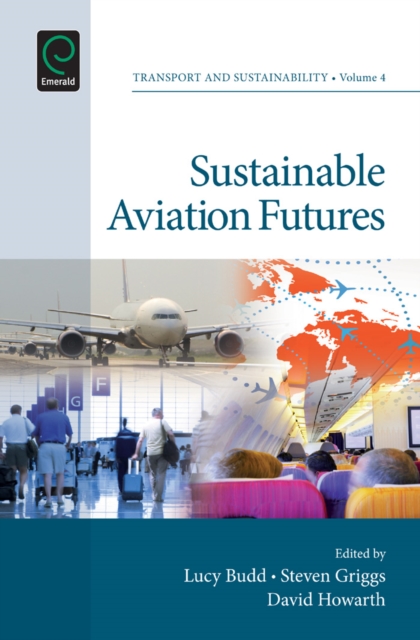
This volume brings together some of the leading names in global aviation policy research to provide a unique and ground breaking synthesis of current debates on sustainable aviation. Unlike previous edited works, this volume is inter-disciplinary and international in nature, drawing on the work of social scientists, transport specialists, and policy experts working in the domains of academia, direct action, and regulation to inform understandings of the prospects for sustainable aviation. Uniquely, the title explores the context of the challenge and examines both scenarios and coalitions for change.
eBook