
Catalogue Search | MBRL


Are you sure you want to remove the book from the shelf?

{{itemTitle}}
153
result(s) for
"TRUE CRIME - Murder - Mass Murder."
Sort by:

The Amish wife : unraveling the lies, secrets, and conspiracy that let a killer go free
\"In 1977, in an Ohio Amish community, pregnant wife and mother Ida Stutzman perished during a barn fire. The coroner's report: natural causes. Ida's husband, Eli, was never considered a suspect. But when he eventually rejected the faith and took his son, Danny, with him, murder followed. What really happened to Ida? The dubious circumstances of the tragic blaze were willfully ignored and Eli's shifting narratives disregarded. Could Eli's subsequent cross-country journey of death--including that of his own son--have been prevented if just one person came forward with what they knew about the real Eli Stutzman? The questions haunted Gregg Olsen and Ida's brother Daniel Gingerich for decades. At Daniel's urging, Olsen now returns to Amish Country and to Eli's crimes first exposed in Olsen's Abandoned Prayers, one of which has remained a mystery until now. With the help of aging witnesses and shocking long-buried letters, Olsen finally uncovers the disturbing truth--about Ida's murder and the conspiracy of silence and secrets that kept it hidden for forty-five years\"-- Provided by publisher.
BOOK

'My favourite genre is missing people': Exploring how listeners experience true crime podcasts in Australia
In Australia, the public is increasingly accessing stories about crime, violence and harm via true crime podcasts (TCPs). Despite the proliferation of these sources, TCPs have received limited attention in criminological media research. To address this gap, this article outlines findings from a recent research project that examined Australian listeners' perspectives of TCPs. To explore how listeners relate to TCPs and the factors shaping the podcasts they gravitate towards, this vignette study asked participants to read two podcast summaries, choose which they would prefer to listen to and write about what informed their decision. The analysis of these accounts presented in this article provides insight into which TCP narratives listeners recognise as meaningful and how these texts produce and entrench different ways of experiencing and understanding crime.
Journal Article

When Women Kill
Why are we so reluctant to believe that women can mean to kill? Based on case-studies from the US, UK and Australia, this book looks at the ways in which female killers are constructed in the media, in law and in feminist discourse almost invariably as victims rather than actors in the crimes they commit. Morrissey argues that by denying the possibility of female agency in crimes of torture, rape and murder, feminist theorists are, with the best of intentions, actually denying women the full freedom to be human. Case studies cover among others the battered wife, Pamela Sainsbury, who garrotted her husband as he slept, the serial killer, Aileen Wournos, who killed seven middle-aged men in Florida between 1989 and 1990, Tracey Wiggington, the so-called \"lesbian vampire killer\", and Karla Homolka who helped her husband kill two teenage girls in St. Catherines Ontario in 1993.
1. Traumatised Discourses: Narrations of Violent Female Subjectivities 2. Versions of the Self: Narrating the Subjectivities of Women Who Kill 3. Inconceivable Survivors: Battered Women Who Kill 4. Cultural Anxiety and Vampiric Voracity: Tracey Wigginton's 'Hunger' 5. Beyond Villainy: The 'Limit' Cases of Karla Homolka and Valmae Beck Conclusion: An Odyssey around Violent Female Subjects Bibliography
eBook

Intimate Yet Exploitative: Representations of Gender-Based Violence in Platformed True Crime Narratives
True crime is a highly controversial yet successful entertainment genre that is widely available on streaming, video, and podcast platforms. The content often includes visual depictions of victims and survivors of gender-based violence, as well as depictions of the acts of violence themselves, such as surveillance footage, police or court videos, or photographs. Additionally, producers and account holders on social media platforms frequently use stereotypical, clichéd, and even eroticized representations of violence. True crime formats rarely address neither the structural causes and backgrounds which lead to crimes, nor the impact on victims, survivors, and their relatives. To address these issues, we apply audio-visual content analysis, focusing on the YouTube channel of Bailey Sarian and her content combination of narrating true crime stories while doing her makeup. Drawing on communication and media studies, we explore the dual tenor of subversive-empowering versus voyeuristic-exploitative representations in the context of narratives of gender-based violence. Our analysis highlights that the unreflective and voyeuristic tone of commercialized true crime narratives can lead to the unethical exploitation of real events and the people affected. The Murder, Mystery & Makeup Monday series exemplifies a dual approach, blending affective storytelling, which fosters viewer intimacy, with sensationalistic portrayals that often simplify and stigmatize those involved in criminal cases. Although some empowering and informative voices regarding gender-based violence exist online, they are frequently overshadowed by the sensationalism typical of commercial true crime. The series underscores a tension between intimate engagement and ethical responsibility, shaped by platform-driven pressures that prioritize engagement over quality. Our findings emphasize the need for platforms to actively enable nuanced, balanced portrayals that foster a more informed and empathetic media environment.
Journal Article

\No One Helped\
In\"No One Helped\"Marcia M. Gallo examines one of America's most infamous true-crime stories: the 1964 rape and murder of Catherine \"Kitty\" Genovese in a middle-class neighborhood of Queens, New York. Front-page reports in the New York Times incorrectly identified thirty-eight indifferent witnesses to the crime, fueling fears of apathy and urban decay. Genovese's life, including her lesbian relationship, also was obscured in media accounts of the crime. Fifty years later, the story of Kitty Genovese continues to circulate in popular culture. Although it is now widely known that there were far fewer actual witnesses to the crime than was reported in 1964, the moral of the story continues to be urban apathy.\"No One Helped\"traces the Genovese story's development and resilience while challenging the myth it created.
\"No One Helped\"places the conscious creation and promotion of the Genovese story within a changing urban environment. Gallo reviews New York's shifting racial and economic demographics and explores post-World War II examinations of conscience regarding the horrors of Nazism. These were important factors in the uncritical acceptance of the story by most media, political leaders, and the public despite repeated protests from Genovese's Kew Gardens neighbors at their inaccurate portrayal. The crime led to advances in criminal justice and psychology, such as the development of the 911 emergency system and numerous studies of bystander behaviors. Gallo emphasizes that the response to the crime also led to increased community organizing as well as feminist campaigns against sexual violence. Even though the particulars of the sad story of her death were distorted, Kitty Genovese left an enduring legacy of positive changes to the urban environment.
In\"No One Helped\"Marcia M. Gallo examines one of America's most infamous true-crime stories: the 1964 rape and murder of Catherine \"Kitty\" Genovese in a middle-class neighborhood of Queens, New York. Front-page reports in theNew York Timesincorrectly identified thirty-eight indifferent witnesses to the crime, fueling fears of apathy and urban decay. Genovese's life, including her lesbian relationship, also was obscured in media accounts of the crime. Fifty years later, the story of Kitty Genovese continues to circulate in popular culture. Although it is now widely known that there were far fewer actual witnesses to the crime than was reported in 1964, the moral of the story continues to be urban apathy. \"No One Helped\" traces the Genovese story's development and resilience while challenging the myth it created.\"No One Helped\"places the conscious creation and promotion of the Genovese story within a changing urban environment. Gallo reviews New York's shifting racial and economic demographics and explores post-World War II examinations of conscience regarding the horrors of Nazism. These were important factors in the uncritical acceptance of the story by most media, political leaders, and the public despite repeated protests from Genovese's Kew Gardens neighbors at their inaccurate portrayal. The crime led to advances in criminal justice and psychology, such as the development of the 911 emergency system and numerous studies of bystander behaviors. Gallo emphasizes that the response to the crime also led to increased community organizing as well as feminist campaigns against sexual violence. Even though the particulars of the sad story of her death were distorted, Kitty Genovese left an enduring legacy of positive changes to the urban environment.
eBook

In Search of Sacco and Vanzetti
It was a bold and brutal crime—robbery and murder in broad daylight on the streets of South Braintree, Massachusetts, in 1920. Tried for the crime and convicted, two Italian-born laborers, anarchists Nicola Sacco and Bartolomeo Vanzetti, went to the electric chair in 1927, professing their innocence. Journalist Susan Tejada has spent years investigating the case, sifting through diaries and police reports and interviewing descendants of major figures. She discovers little-known facts about Sacco, Vanzetti, and their supporters, and develops a tantalizing theory about how a doomed insider may have been coerced into helping professional criminals plan the heist.
Tejada's close-up view of the case allows readers to see those involved as individual personalities. She also paints a fascinating portrait of a bygone era: Providence gangsters and Boston Brahmins; nighttime raids and midnight bombings; and immigration, unionism, draft dodging, and violent anarchism in the turbulent early years of the twentieth century. In many ways this is as much a cultural history as a true-crime mystery or courtroom drama. Because the case played out against a background of domestic terrorism, in a time that echoes our own, we have a new appreciation of the potential connection between fear and the erosion of civil liberties and miscarriages of justice.
eBook
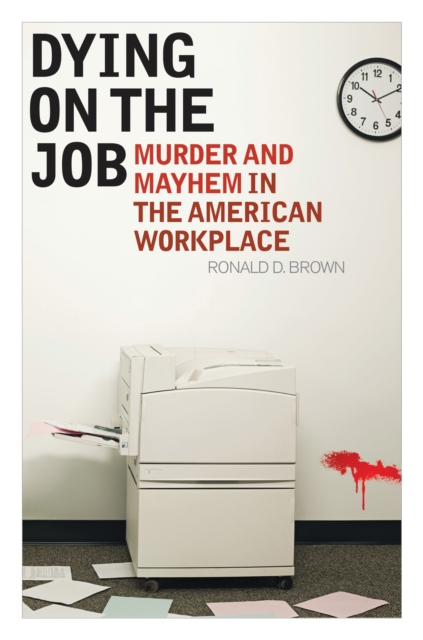
Dying on the job
Dying on the Job is the first book on workplace violence to focus exclusively on workplace murder. While some perpetrators are certainly mentally impaired, many workplace murders are committed by people considered to be “normal.” Brown explores the various motives and drives that spark workplace murder, and answers hundreds of questions that are usually asked only after a workplace murder rampage has already occurred. Are men or women more likely to commit workplace homicide? How can people more easily spot those likely to commit workplace murder? What are some of the warning signs? How often is \"suicide\" used as workplace revenge? The answers to these questions and more are based on more than 350 actual cases of workplace murder, and the answers are often surprising. Brown also addresses different areas of prevention, counseling, and rehabilitation, and analyzes different approaches to gun control for both management and employees to make their job a safer place to work.
eBook

Transitional Justice
How do societies come to terms with the aftermath of genocide and mass violence, and how might the international community contribute to this process? Recently, transitional justice mechanisms such as tribunals and truth commissions have emerged as a favored means of redress. Transitional Justice, the first edited collection in anthropology focused directly on this issue, argues that, however well-intentioned, transitional justice needs to more deeply grapple with the complexities of global and transnational involvements and the local on-the-ground realities with which they intersect.Contributors consider what justice means and how it is negotiated in different localities where transitional justice efforts are underway after genocide and mass atrocity. They address a variety of mechanisms, among them, a memorial site in Bali, truth commissions in Argentina and Chile, First Nations treaty negotiations in Canada, violent youth groups in northern Nigeria, the murder of young women in post-conflict Guatemala, and the gacaca courts in Rwanda.
eBook

Murder Made in Italy
Looking at media coverage of three very prominent murder cases,
Murder Made in Italy explores the cultural issues raised by the
murders and how they reflect developments in Italian civil society
over the past 20 years. Providing detailed descriptions of each
murder, investigation, and court case, Ellen Nerenberg addresses
the perception of lawlessness in Italy, the country's geography of
crime, and the generalized fear for public safety among the Italian
population. Nerenberg examines the fictional and nonfictional
representations of these crimes through the lenses of moral panic,
media spectacle, true crime writing, and the abject body. The
worldwide publicity given the recent case of Amanda Knox, the
American student tried for murder in a Perugia court, once more
drew attention to crime and punishment in Italy and is the subject
of the epilogue.
eBook
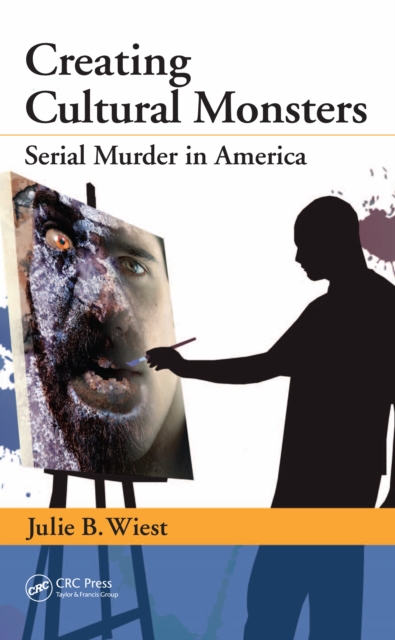
Creating Cultural Monsters
This volume explains connections between American culture and the incidence of serial murder, including reasons why most identified serial murderers are white, male Americans. Presenting empirically supported arguments that have the potential to revolutionize how serial murder is understood, this volume includes an illustrated model that explains how people utilize cultural values to construct lines of action according to their cultural competencies. It demonstrates how the American cultural milieu fosters serial murder and the creation of white male serial murderers and provides a critique of the American mass media's role in the notoriety of serial murder.
eBook