
Catalogue Search | MBRL


Are you sure you want to remove the book from the shelf?

{{itemTitle}}
1,260
result(s) for
"TURKMENISTAN"
Sort by:

Tribal nation
On October 27, 1991, the Turkmen Soviet Socialist Republic declared its independence from the Soviet Union. Hammer and sickle gave way to a flag, a national anthem, and new holidays. Seven decades earlier, Turkmenistan had been a stateless conglomeration of tribes. What brought about this remarkable transformation?
Tribal Nationaddresses this question by examining the Soviet effort in the 1920s and 1930s to create a modern, socialist nation in the Central Asian Republic of Turkmenistan. Adrienne Edgar argues that the recent focus on the Soviet state as a \"maker of nations\" overlooks another vital factor in Turkmen nationhood: the complex interaction between Soviet policies and indigenous notions of identity. In particular, the genealogical ideas that defined premodern Turkmen identity were reshaped by Soviet territorial and linguistic ideas of nationhood. The Soviet desire to construct socialist modernity in Turkmenistan conflicted with Moscow's policy of promoting nationhood, since many Turkmen viewed their \"backward customs\" as central to Turkmen identity.
Tribal Nationis the first book in any Western language on Soviet Turkmenistan, the first to use both archival and indigenous-language sources to analyze Soviet nation-making in Central Asia, and among the few works to examine the Soviet multinational state from a non-Russian perspective. By investigating Soviet nation-making in one of the most poorly understood regions of the Soviet Union, it also sheds light on broader questions about nationalism and colonialism in the twentieth century.
eBook
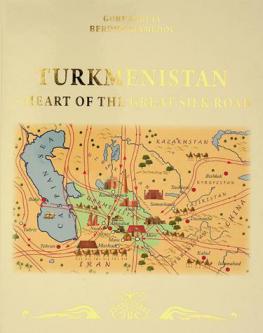

Turkmenistan
This book is the first comprehensive introduction to contemporary Turkmenistan in English.
eBook


Asia’s shrinking glaciers protect large populations from drought stress
About 800 million people depend in part on meltwater from the thousands of glaciers in the high mountains of Asia. Water stress makes this region vulnerable to drought, but glaciers are a uniquely drought-resilient source of water. Here I show that seasonal glacier meltwater is equivalent to the basic needs of 221 ± 59 million people, or most of the annual municipal and industrial needs of Pakistan, Afghanistan, Tajikistan, Turkmenistan, Uzbekistan and Kyrgyzstan. During drought summers, meltwater dominates water inputs to the upper Indus, Aral and Chu/Issyk-Kul river basins. This reduces the risk of social instability, conflict and sudden migrations triggered by water scarcity, which is already associated with the large, rapidly growing populations and hydro-economies of these basins. Regional meltwater production is, however, unsustainably high—at 1.6 times the balance rate—and is expected to increase in future decades before ultimately declining. These results update and reinforce a previous publication in
Nature
on this topic, which was retracted after an inadvertent error was discovered.
Glaciers in the high mountains of Asia provide a uniquely drought-resilient source of water, supplying summer meltwater sufficient for the basic needs of around 200 million people.
Journal Article

Central Asia in a reconnecting Eurasia
Today, with combat operations in Afghanistan winding down, U.S. policy toward the states of Central Asia is transitioning to a third era. The United States now has an opportunity to refashion its approach to the region. In doing so, it should capitalize on trends already underway, in particular the expansion of trade and transit linkages, to help integrate Central Asia more firmly into the global economy, while also working to overcome tensions both within the region itself and among the major neighboring powers with interests in Central Asia. Central Asia in a Reconnecting Eurasia: Kyrgyzstan's Evolving Foreign Economic and Security Interests, part of a five volume series, examines the full scope of U.S. national interests in Kyrgyzstan and puts forward the broad outlines of a strategy for U.S. engagement over the coming years\"--Publisher's web site.
eBook


Global rangeland production systems and livelihoods at threat under climate change and variability
Rangelands are one of the Earth's major ice-free land cover types. They provide food and support livelihoods for millions of people in addition to delivering important ecosystems services. However, rangelands are at threat from climate change, although the extent and magnitude of the potential impacts are poorly understood. Any declines in vegetation biomass and fluctuations in grazing availability would be of concern for food production and ecosystem integrity and functionality. In this study, we use a global rangeland model in combination with livestock and socio-economic datasets to identify where and to what extent rangeland systems may be at climatic risk. Overall, mean herbaceous biomass is projected to decrease across global rangelands between 2000 and 2050 under RCP 8.5 (−4.7%), while inter- (year-to-year) and intra- (month-to-month) annual variabilities are projected to increase (+21.3% and +8.2%, respectively). These averaged global estimates mask large spatial heterogeneities, with 74% of global rangeland area projected to experience a decline in mean biomass, 64% an increase in inter-annual variability and 54% an increase in intra-annual variability. Half of global rangeland areas are projected to experience simultaneously a decrease in mean biomass and an increase in inter-annual variability-vegetation trends both potentially harmful for livestock production. These regions include notably the Sahel, Australia, Mongolia, China, Uzbekistan and Turkmenistan and support 376 million people and 174 million ruminant Tropical Livestock Units. Additionally, the rangeland communities currently the most vulnerable (here, with the lowest livestock productivities and economic development levels and with the highest projected increases in human population densities) are projected to also experience the most damaging vegetation trends for livestock production. Although the capacity of rangeland systems to adapt is highly complex, analyses such as these generate some of the information required to inform options to facilitate pastoral system mitigation and adaptation strategies under climate change.
Journal Article