
Catalogue Search | MBRL


Are you sure you want to remove the book from the shelf?

{{itemTitle}}
16,277
result(s) for
"TYPOLOGY"
Sort by:


Social-ecological systems as complex adaptive systems: organizing principles for advancing research methods and approaches
The study of social-ecological systems (SES) has been significantly shaped by insights from research on complex adaptive systems (CAS). We offer a brief overview of the conceptual integration of CAS research and its implications for the advancement of SES studies and methods. We propose a conceptual typology of six organizing principles of CAS based on a comparison of leading scholars’ classifications of CAS features and properties. This typology clusters together similar underlying organizing principles of the features and attributes of CAS, and serves as a heuristic framework for identifying methods and approaches that account for the key features of SES. These principles can help identify appropriate methods and approaches for studying SES. We discuss three main implications of studying and engaging with SES as CAS. First, there needs to be a shift in focus when studying the dynamics and interactions in SES, to better capture the nature of the organizing principles that characterize SES behavior. Second, realizing that the nature of the intertwined social-ecological relations is complex has real consequences for how we choose methods and practical approaches for observing and studying SES interactions. Third, engagement with SES as CAS poses normative challenges for problem-oriented researchers and practitioners taking on real-world challenges.
Journal Article

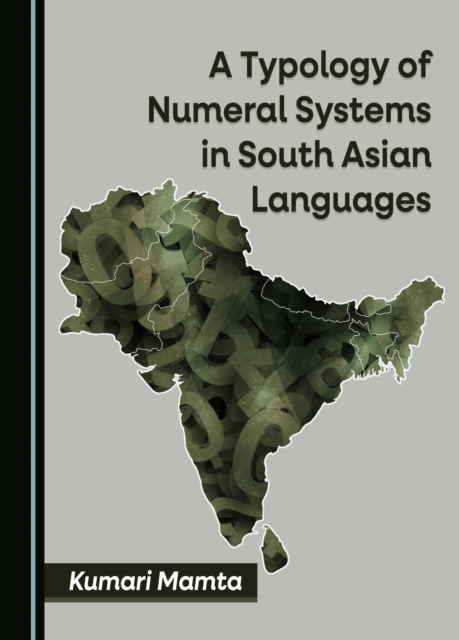
A Typology of Numeral Systems in South Asian Languages
This book takes a journey into the fascinating world of numerical systems in South Asian languages, offering a unique exploration of the intricate patterns, cultural nuances, and historical significance embedded within the numerical frameworks of the given languages. It blends the discovery of new facts with the reinterpretation of existing ones, while developing a methodology for investigating number systems that can be applied to languages around the world.It is a groundbreaking study that unveils the complex linguistic patterns and socio-cultural significance of numerical systems in South Asian languages, offering valuable insights for researchers, linguists, anthropologists, and language enthusiasts alike. By bridging the gap between linguistics, anthropology, cultural studies, and mathematics, this book encourages interdisciplinary dialogue and collaboration by examining numeral systems from multiple angles.
eBook


Typometrics: From Implicational to Quantitative Universals in Word Order Typology
This paper develops the concept of word order universals based on a data analysis of the Universal Dependencies project, which proposes treebanks of more than 90 languages encoded with the same annotation scheme. The nature of the data we work on allows us to extract rich details for testing well-known typological implicational universals and, further, explore new kinds of universals that we call quantitative universals. We show how such quantitative universals are in essence different from implicational universals, including statistical universals, by the fact that they no longer lay down any claims on categorical statements, but rather on continuous parameters, opening a new field of research we propose to call typometrics.
Journal Article

Mainland Southeast Asian languages : a concise typological introduction
\"This highly accessible introduction explores the core systems and subsystems of the languages of mainland Southeast Asia, applying the main concepts of language typology, phonology, morphology, syntax, sociolinguistics, language variation, and language contact, to this diverse language area. Written by a leading expert in the languages of this region, N.J. Enfield draws upon nearly a thousand data examples from over a hundred languages from Cambodia, China, Laos, Malaysia, Myanmar, Thailand, and Vietnam to show the many ways in which these languages resemble each other, and differ from each other, in the context of what is known globally about the diversity of human language. The book highlights the diversity of the area's languages, with a special emphasis on the minority languages, which outnumber the national languages by nearly a hundred to one\"-- Provided by publisher.
Book

The forms and meanings of grammatical markers support efficient communication
Functionalist accounts of language suggest that forms are paired with meanings in ways that support efficient communication. Previous work on grammatical marking suggests that word forms have lengths that enable efficient production, and work on the semantic typology of the lexicon suggests that word meanings represent efficient partitions of semantic space. Here we establish a theoretical link between these two lines of work and present an information-theoretic analysis that captures how communicative pressures influence both form and meaning. We apply our approach to the grammatical features of number, tense, and evidentiality and show that the approach explains both which systems of feature values are attested across languages and the relative lengths of the forms for those feature values. Our approach shows that general information-theoretic principles can capture variation in both form and meaning across languages.
Journal Article


What word-prosodic typology is missing: Motivating foot structure as an analytical tool for syllable-internal prosodic oppositions
A notoriously contested subarea of phonological typology is word-prosodic typology, which governs suprasegmental structure (such as tone, syllable structure and stress) at the word level. Within word-prosodic typology, it is widely recognized that some languages have so-called stress systems while others have lexical-tone systems. Other languages appear to have intermediate systems, with properties of both stress and lexically contrastive tone. Certain types of such intermediate systems are at the core of ongoing theoretical debates on the nature of word- prosodic systems, viz. language varieties with contrasts between two word tones that are restricted to the main-stressed syllables of a word, a phenomenon that is often descriptively referred to as tonal accent. In this paper, we aim to show that exploring tone-accent systems in detail has the potential to significantly contribute to word-prosodic typology, specifically concerning the foot as a tool for the analysis of syllable-internal prosodic contrasts. The phonology of tonal accent in Franconian (a variety of West Germanic spoken in parts of Belgium, Germany, and the Netherlands) will be the main piece of evidence supporting our claims, with a focus on predictable interactions between segmental structure and accentuation. A central implication of our analysis is that tonal contrasts within syllables can sometimes derive from two types of feet being active in the same prosodic system. We support the Franconian evidence with analogous tone-segment interactions in Estonian and discuss the relevance of our claims in the broader context of word-prosodic typology.
Journal Article