
Catalogue Search | MBRL


Are you sure you want to remove the book from the shelf?

{{itemTitle}}
214
result(s) for
"Tailoring History."
Sort by:

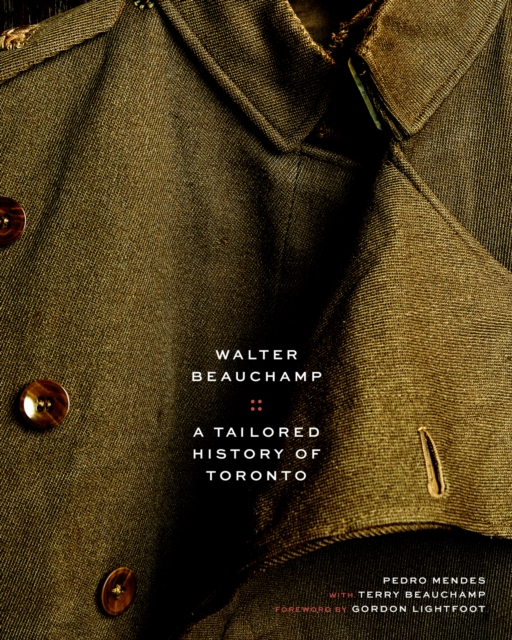
Walter Beauchamp
As one of the Canada's oldest custom tailors, Walter Beauchamp Tailors has nurtured a unique civilian and military tailoring business for over a century. Owned and operated by three generations of the Beauchamp family since 1908, the company appeared on the brink of permanent closure in 2014, but its renaissance was ensured by a bold business move. Now the story behind the success of this iconic brand is captured in an engaging book that takes us on a fascinating tour through the building of a celebrated family business, and into the lives of its devoted clientele.Told from the intimate perspective of a custom tailor, here are the stories of officers and soldiers, as well as prime ministers, mayors and judges, artists and explorers, and men and women. Along the way, the book reveals an intriguing history of Toronto through the twentieth century and its rapid growth into a globally renowned city from the vantage point of the Beauchamp shop windows.Walter Beauchamp: A Tailored History of Toronto is a lively tale of how this renowned company has survived the effects of world wars and the Great Depression, store relocations and the wrecking ball, as well as the fickle face of fashion retail, with grace, elegance, and always discretion.
eBook

Dress, fashion, and technology : from prehistory to the present
\"Technology has been an essential factor in the production of dress and the cultures of fashion throughout human history. Structured chronologically from pre-history to the present day, this is the first broad study of the complex relationship between dress and technology. Over the course of human history, dress-making and fashion technology has changed beyond recognition: from needles and human hands in the ancient world to complex 20th century textile production machines, it has now come to include the technologies that influence dress styles and the fashion industry, such as the media and printing presses. In the last century, new technologies have helped not just to produce but to define fashion: the creation of automobiles prompted a decline in long skirts for women while the beginnings of space travel caused people to radically rethink the function of dress. In many ways, technology has itself created avant garde and contemporary fashions. Through an impressive range of international case studies, the book challenges the perception that fashion is unique to western dress and outlines the many ways in which dress and technology intersect. Dress, Fashion and Technology is ideal reading for students and scholars of fashion studies, textile history, anthropology and cultural studies\"-- Provided by publisher.
Book

Patternmaking History and Theory
Fashion design is increasingly gaining attention as an important form of cultural expression. However, scholarship has largely focused on specific designers and their finished products. This collection reveals the crucial foundational art and craft of patternmaking design, with essays that explore the practice in specific historical and cultural contexts. Probing the theoretical underpinnings that inform patternmaking, Patternmaking History and Theory interrogates topics that span cultures and time periods, ranging from high fashion to home sewing. Taking the reader from women’s making and mending for victory during World War Two, to Jamaican dress history and today’s complex 3D pattern cutting software, the book examines the creative aspect of a culturally rich skill. Beautifully illustrated and rooted in original research, Patternmaking History and Theory brings together a group of leading international scholars to provide a range of perspectives on a key but often overlooked aspect of design.
eBook


Pattern cutting for men's costume
Pattern Cutting for Men's Costume is a practicalguide featuring patterns for the most important garments worn by menbetween the 16th and 19th centuries. Easy-to-follow instructionsexplain how to cut patterns for 'average' and individual measurements -with expert advice on how to adapt patterns to fit men of all shapesand sizes.Introductions to each section describe the major developments inmen's dress - revealing how garments evolved - and patterns for periodgarments for which there are no actual examples are based oncontemporary paintings. Illustrated throughout with hundreds ofdiagrams, this is a much-awaited and valuable addition to the libraryof costume-makers in all fields.Features a new system of drafting patterns for men's period costume.Includes patterns for the most important non-fashionable garments(worn from the 16th to the 19th centuries) plus clothes in vogue fromthe middle of the 16th to the end of the 18th centuries.Illustrated with hundreds of diagrams accompanied by step-by-stepinstructions for period garments, plus a few versatile theatricaldesigns.
eBook

London sartorial : men's style from street to bespoke
The new looks, updated traditions, and influential designers defining men's fashion today, from the world's capital of gentlemen's style. Combining the unique heritage of gentlemen's tailoring with a progressive approach to street style, London is fast becoming the world's capital of men's fashion.
Book

A History of the Paper Pattern Industry
Sewing patterns have been the principle blueprint for making garments in the home for centuries. From their origins in the tailoring manuals of the 16th century to the widely produced pamphlets of the 18th and 19th centuries, through to the full size packet patterns of today, their history and development has reflected major changes in technology (such as the advent of the sewing machine), retailing and marketing practices (the fashion periodical), and shifts in social and cultural influences. This accessible book explores this history, outlining innovations in patternmaking by the companies who produced patterns and how these reflected the fashions and demands of the market. Showcasing beautiful illustrations from original pattern pamphlets, packets and ads, as well as 9 complete patterns from which readers can reproduce vintage garments of different eras, the book provides a unique visual guide to homemade fashions as well as essential exploration of the industry that produced them.
eBook

Henry Poole & Co. : the first tailor of Savile Row
Known as the founding tailor of Savile Row, Henry Poole & Co. has been dressing the world's most important men and women for over two centuries. Their craft of bespoke tailoring has been meticulously documented through the generations in a complete set of ledgers. Telling the story of Poole's most colourful characters in six chapters, this fascinating account distills Sherwood's research into sixty iconic customers, men and women. Each client is profiled with details of their signature garment and connections with Poole's. From artists and writers, such as Henri de Toulouse-Lautrec and Wilkie Collins, to financiers J.P. Morgan and Baron Ferdinand de Rothschild, this book offers a unique window into an establishment at the very heart of 19th- and 20th-century public life. Illustrated with historic portraits and atmospheric photography of the premises as they are today, this intimate glimpse into the private lives of some of history's most influential figures is essential reading for anyone interested in Savile Row, the relationship between power and being well-dressed, and the evolution of style.
Book
Dressing à la Turque
Exploring the significant influences of Turkish dress on French fashion
While French fashion has historically set the bar across the Western world, the cultural influences that inspired it are often obscured. Dressing à la Turque examines the theatrical depictions of Ottoman costumes, or Turkish dress, and demonstrates the French fascination for this foreign culture and its clothing. The impact, however, went far beyond costumes worn for art and theater, as Ottoman-inspired fashions became the most prominent and popular themes in French women's fashion throughout the 18th century.
The newly invented fashion press used Ottoman-inspired styles to reconcile fashion consumption with Enlightenment dress reforms. At the same time, Turkish-inspired fashions were increasingly associated with long-criticized ideas about luxury, stereotypes about the connection between a woman's interest in fashion and \"lascivious\" behavior, and French perceptions of the Ottoman Empire. This backlash is epitomized by the public criticism of Queen Marie-Antoinette, who popularized Turkish-inspired fashion, embraced a lifestyle of excess, and is still remembered for her singular sense of style.
Kendra Van Cleave includes numerous detailed images and dress patterns, enhancing her rich discussion of French styles during this important era.
eBook