
Catalogue Search | MBRL


Are you sure you want to remove the book from the shelf?

{{itemTitle}}
15
result(s) for
"Tales Morocco"
Sort by:
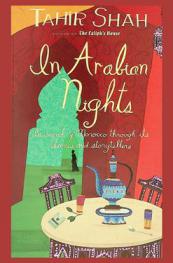
In Arabian nights : in search of Morocco, through its stories and storytellers
Steeped in history, Morocco is a kingdom of rich textures, aromatic spices and magical beliefs - a vibrant bridge between the Orient and the Occident. And arriving there can be like stepping into the world of A Thousand and One Nights: a place ruled by ancient codes of honour, duty, chivalry, respect - values that have been handed down from generation to generation through the telling of stories. Long fascinated by this, Tahir Shah explores his adoptive country in a way that has never been done before: observing it from the inside out, through this ancient use of stories as teaching tools.
Book

Jewish Moroccan folk narratives from Israel
Jewish Moroccan Folk Narratives focuses on two central elements: textual research to examine the aesthetic qualities of the narrative, their division into genres, the various versions and their parallels, and acculturation in Israel, as well as contextual research to examine the performance art of the narrator and the role of the narrative as a communicative process in the narrating society. The collection includes twenty-one narratives by twelve storytellers; an account of the narrators' lives and a commentary have been applied to each. In contrast to most anthologies of Jewish folktales, the texts in this book were recorded in the natural context of narration and in the language of origin (Judaeo-Arabic), meeting the most vigorous standards of current folklore scholarship.
eBook

The Last Storytellers
Marrakech is the heart and lifeblood of Morocco's ancient storytelling tradition. For nearly a thousand years, storytellers have gathered in the Jemaa el Fna, the legendary square of the city, to recount ancient folktales and fables to rapt audiences. But this unique chain of oral tradition that has passed seamlessly from generation to generation is teetering on the brink of extinction. The competing distractions of television, movies and the internet have drawn the crowds away from the storytellers and few have the desire to learn the stories and continue their legacy. Richard Hamilton has witnessed at first hand the death throes of this rich and captivating tradition and, in the labyrinth of the Marrakech medina, has tracked down the last few remaining storytellers, recording stories that are replete with the mysteries and beauty of the Maghreb.Moroccan tales have a huge educational, religious and moral impact on their audience, offering timeless values and guidance to all who listen. With their passing we risk losing something of Morocco's national psyche and also part of the world's intangible heritage. Those who have seen the storytellers of Marrakech at first hand have witnessed something that is no longer part of this world, a treasure as precious as the planet's most endangered species and of immeasurable importance to humanity.
eBook
The False Vizier: A Berber Folk Tale from Morocco
In this Moroccan folk tale, the vizier (chief royal advisor) tries to kill the Queen after she refuses to marry him. Queen Zaide finds a clever way to reveal his traitorous act to the King.
Magazine Article

Jewish Moroccan Folk Narratives from Israel
Jewish Moroccan Folk Narratives focuses on two central elements: textual research to examine the aesthetic qualities of the narrative, their division into genres, the various versions and their parallels, and acculturation in Israel, as well as contextual research to examine the performance art of the narrator and the role of the narrative as a communicative process in the narrating society. The collection includes twenty-one narratives by twelve storytellers; an account of the narrators' lives and a commentary have been applied to each. In contrast to most anthologies of Jewish folktales, the texts in this book were recorded in the natural context of narration and in the language of origin (Judaeo-Arabic), meeting the most vigorous standards of current folklore scholarship.
eBook

The Portrayal of Muslims and Christians in the Traditional Sephardic Tales of Northern Morocco
The article analyzes the representation of Muslims and Christians in the folktales of the Sephardic Jews of northern Morocco. The stories are selected from the collection of Arcadio de Larrea Palacín, Cuentos populares de los judíos del norte de Marruecos, published in 1952 and 1953. A very brief historical background of Moroccan Jews will be given in order to better understand the perception that the Jews, as a minority group, had of their Muslim and Christian neighbours. This perception is based on the historical and emotional memory of the Jews as well as their daily coexistence with the other religious groups. We also examine how the tales fulfill an essential function of folklore, which is to preserve and reinforce the collective identity and moral values of the narrating group.
Journal Article

Beyond disbelief: A confession of religion, technology and academic conceit
My professional life has been built on taking a position of apostasy, or the rejection of belief, toward many if not all of the major articles of faith within the fields of literacy studies, teacher education, and instructional technology. I justified my stance and my research practices through my reading of Pierre Bourdieu's analysis of the relation between belief and practice, and was successful for many years in getting published in top academic journals. My disbelief was shaken, however, after a trip to a university in Morocco and subsequent efforts to bring students in the US and myself into direct exchange with Arab/Islamic culture. These experiences provide the basis for re-examining the efficacy of apostasy as an epistemological stance, and through the critique of Jacques Rancière speak to the power of intimacy, empathy, and redefined forms of believing and belonging as paths of insight into one's own and others' cultures.
Journal Article

The Mizrahi Sociolect in Israel: Origins and Development
This article examines the Hebrew of a bilingual female speaker, a native of Morocco, who recounts a folktale in Hebrew on the theme “charity rescues from death”. Analyzed here are features from her native Judeo-Arabic, both overt and covert, that appear in the text. Clearly discernible influences of Judeo-Arabic on her Hebrew are found in the spheres of lexicon and semantics, syntax, and phonology. Seen as the first stage in the development of a distinct Israeli Hebrew sociolect, these features have parallels in the speech of native Israelis, the second-, third-, and fourth-generations of the immigration to Israel from Morocco who reside mainly in the Israeli periphery, and mark their spoken Hebrew as a separate Israeli Hebrew sociolect.
Journal Article