
Catalogue Search | MBRL


Are you sure you want to remove the book from the shelf?

{{itemTitle}}
14
result(s) for
"Tamazight language"
Sort by:

Agreement, pronominal clitics and negation in Tamazight Berber : a unified analysis
This book presents a study of various important aspects of Tamazight Berber syntax within the generative tradition. Work on Berber linguistics from a generative perspective remains in many ways uncharted territory. There has been hardly any published research on this language and its different dialects, especially in English -- this book fills.
eBook
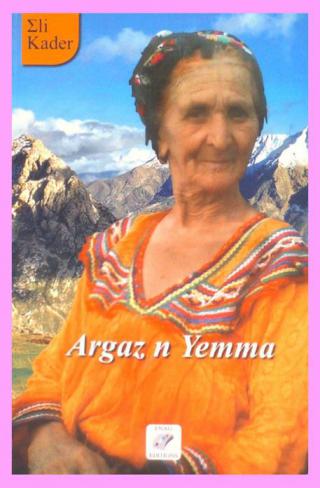




Stylizing Tamazight (Berber)-Influenced Moroccan Arabic in a Moroccan Stand-Up Comedy
Elaborating on the concept of heteroglossic stylization, this paper examines how a Moroccan comedian—Zakaria Ouarssam—stylizes Tamazight (Berber)-influenced Moroccan Arabic (MA) in order to evoke comedic personae associated with the country’s Middle Atlas region. Our analysis focuses on Ouarssam’s on-stage performances to document the complex multilingual repertoire that allows him to (i) create contrasts between a supposedly unmarked MA and a stylized Tamazight-influenced MA and (ii) evoke comedic stances that associate the latter with stereotypes of his home region. Particular attention is given to Ouarssam’s use of code switching between Tamazight-influenced MA and untranslated Tamazight as a novel and potentially boundary-pushing practice when considered in the context of its live performance on national television. The paper argues that Ouarssam’s stylized performances contribute to the construction and valorization of an alternative expression of Amazigh and regional pride, even as they reproduce certain linguistic hierarchies and ideologies.
Journal Article

ever'where … wherever you look
This article explores John Steinbeck's positive impact on Algerian culture, apparent from frequent references to his work in literary, academic, journalistic, and popular publications in Algeria. For example, The Pearl (1947) was integrated into the national Algerian school curriculum in the 1990s when an excerpt from the novella was included in a French-language textbook for seventh-grade students. In addition, stylistic and thematic echoes of Steinbeck's works can be discerned in modern Algerian literature. One notable instance of this is Mohamed Dib's 1954 novel L'incendie (French for “The Fire”), modeled on The Grapes of Wrath (1939). And not infrequently, Algerian newspapers dedicate space to issues related to Steinbeck's work, such as Fayçal Métaoui's article on the Algerian martyr Ahmed Zabana's impressions of Viva Zapata! (1952). But perhaps the most impressive evidence of Steinbeck's influence on Algerian culture to date remains Arezki Boudif's translations of The Pearl, Of Mice and Men (1937), and The Grapes of Wrath into Tamazight, a Berber language spoken by the Kabyle people in the north and northeast regions of Algeria.
Journal Article