
Catalogue Search | MBRL


Are you sure you want to remove the book from the shelf?

{{itemTitle}}
17
result(s) for
"Tamil Nadu (India) -- Social life and customs"
Sort by:

The right spouse : preferential marriages in Tamil Nadu
The Right Spouse is an engaging investigation into Tamil (South Indian) preferential close kin marriages, so-called Dravidian Kinship. This book offers a description and an interpretation of preferential marriages with close kin in South India, as they used to be arranged and experienced in the recent past and as they are increasingly discontinued in the present. Clark-Decès presents readers with a focused anthropology of this waning marriage system: its past, present, and dwindling future. The book takes on the main pillars of Tamil social organization, considers the ways in which Tamil intermarriage establishes kinship and social rank, and argues that past scholars have improperly defined \"Dravidian\" kinship. Within her critique of past scholarship, Clark-Decès recasts a powerful and vivid image of preferential marriage in Tamil Nadu and how those preferences and marital rules play out in lived reality. What Clark-Decès discovers in her fieldwork are endogamous patterns and familial connections that sometimes result in flawed relationships, contradictory statuses, and confused roles. The book includes a fascinating narration of the complex terrain that Tamil youth currently navigate as they experience the complexities and changing nature of marriage practices and seek to reconcile their established kinship networks to more individually driven marriages and careers.
eBook
No One Cries for the Dead
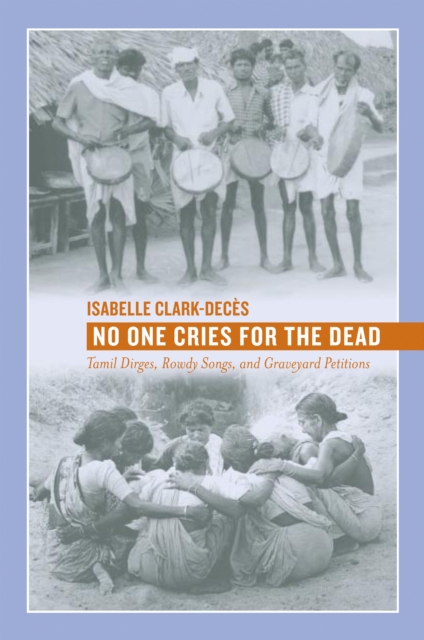
At South Indian village funerals, women cry and lament, men drink and laugh, and untouchables sing and joke to the beat of their drums. No One Cries for the Dead offers an original interpretation of these behaviors, which seem almost unrelated to the dead and to the funeral event. Isabelle Clark-Decès demonstrates that rather than mourn the dead, these Tamil funeral songs first and foremost give meaning to the caste, gender, and personal experiences of the performers.
eBook


Making Merit: The Indian Institutes of Technology and the Social Life of Caste
The politics of meritocracy at the Indian Institutes of Technology illuminates the social life of caste in contemporary India. I argue that the IIT graduate's status depends on the transformation of privilege into merit, or the conversion of caste capital into modern capital. Analysis of this process calls for a relational approach to merit. My ethnographic research on the southeastern state of Tamilnadu, and on IIT Madras located in the state capital of Chennai, illuminates claims to merit, not simply as the transformation of capital but also as responses to subaltern assertion. Analyzing meritocracy in relation to subaltern politics allows us to see the contextual specificity of such claims: at one moment, they are articulated through the disavowal of caste, at another, through caste affiliation. This marking and unmarking of caste suggests a rethinking of meritocracy, typically assumed to be a modernist ideal that disclaims social embeddedness and disdains the particularisms of caste and race. I show instead that claims to collective belonging and to merit are eminently commensurable, and become more so when subaltern assertion forces privilege into the foreground. Rather than the progressive erasure of ascribed identities in favor of putatively universal ones, we are witnessing the re-articulation of caste as an explicit basis for merit and the generation of newly consolidated forms of upper-casteness.
Journal Article

Companionate marriage in India: the changing marriage system in a middle-class Brahman subcaste
The Eighteen-Village Vattimas are a Tamil Brahman subcaste. They were formerly rural landlords, but today they mostly belong to the urban middle class. In recent decades, the Vattimas' marriage system has changed markedly. Child marriage has ended and the age of marriage has since risen further. Close-kin marriage is no longer preferred, although subcaste endogamy remains the norm. Nevertheless, the education and employment of individuals, and their personal compatibility, have now become crucial criteria, and young men and women are involved in arranging their own marriages. Among the Vattimas (like other Indians), a form of arranged, endogamous companionate marriage has now developed, which plays a fundamental role in reproducing both caste and the middle class in contemporary India. /// Les Vattimas des Dix-huit Villages forment une sous-caste de brahmanes tamouls. Ces anciens propriétaires terriens ruraux sont aujourd'hui pour la plupart intégrés à la middle class urbaine. Depuis quelques dizaines d'années, leur système matrimonial a considérablement évolué. On ne marie plus les enfants et l'âge du mariage ne cesse de reculer. Le mariage entre proches parents n'est plus privilégié, bien que l'endogamie au sein de la sous-caste reste la norme. En tout état de cause, l'éducation, l'occupation professionnelle et la compatibilité personnelle des futurs époux sont devenus des critères essentiels, et les jeunes gens des deux sexes s'impliquent dans l'arrangement de leur propre mariage. Parmi les Vattimas, comme chez d'autres Indiens, on voit apparaître une forme d'endogamie arrangée, qui joue un rôle fondamental dans la reproduction de la caste aussi bien que de la classe moyenne dans l'Inde contemporaine.
Journal Article
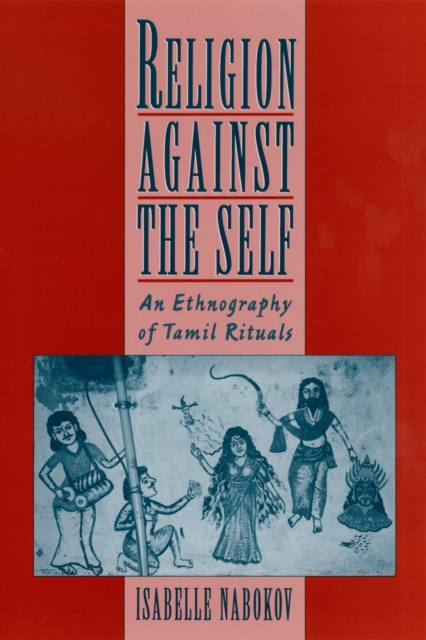
Religion against the self : an ethnography of Tamil Rituals
This study, based on the author's fieldwork among rural Tamil villagers in South India, focuses on the ways in which people in this society interact with the supernatural beings who play such a large role in their personal and corporate lives. Isabelle Navokov looks at a spectrum of ritualized contexts in which the boundaries between the natural and spiritual worls are penetrated and communication takes place. Throughout, Nabokov's meticulous analysis sheds new light on this hiterto almost unkown domain - and entire range of fascinating phenomena basic to South Indian religion as it is really lived.
eBook