
Catalogue Search | MBRL


Are you sure you want to remove the book from the shelf?

{{itemTitle}}
3,544
result(s) for
"Tamil people"
Sort by:

The right spouse : preferential marriages in Tamil Nadu
The Right Spouse is an engaging investigation into Tamil (South Indian) preferential close kin marriages, so-called Dravidian Kinship. This book offers a description and an interpretation of preferential marriages with close kin in South India, as they used to be arranged and experienced in the recent past and as they are increasingly discontinued in the present.
Clark-Decès presents readers with a focused anthropology of this waning marriage system: its past, present, and dwindling future. The book takes on the main pillars of Tamil social organization, considers the ways in which Tamil intermarriage establishes kinship and social rank, and argues that past scholars have improperly defined \"Dravidian\" kinship. Within her critique of past scholarship, Clark-Decès recasts a powerful and vivid image of preferential marriage in Tamil Nadu and how those preferences and marital rules play out in lived reality. What Clark-Decès discovers in her fieldwork are endogamous patterns and familial connections that sometimes result in flawed relationships, contradictory statuses, and confused roles.
The book includes a fascinating narration of the complex terrain that Tamil youth currently navigate as they experience the complexities and changing nature of marriage practices and seek to reconcile their established kinship networks to more individually driven marriages and careers.
eBook

In My Mother's House
In May 2009, the Sri Lankan army overwhelmed the last stronghold of the Liberation Tigers of Tamil Eelam-better known as the Tamil Tigers-officially bringing an end to nearly three decades of civil war. Although the war has ended, the place of minorities in Sri Lanka remains uncertain, not least because the lengthy conflict drove entire populations from their homes. The figures are jarring: for example, all of the roughly 80,000 Muslims in northern Sri Lanka were expelled from the Tamil Tiger-controlled north, and nearly half of all Sri Lankan Tamils were displaced during the course of the civil war. Sharika Thiranagama'sIn My Mother's Houseprovides ethnographic insight into two important groups of internally displaced people: northern Sri Lankan Tamils and Sri Lankan Muslims. Through detailed engagement with ordinary people struggling to find a home in the world, Thiranagama explores the dynamics within and between these two minority communities, describing how these relations were reshaped by violence, displacement, and authoritarianism. In doing so, she illuminates an often overlooked intraminority relationship and new social forms created through protracted war.In My Mother's Houserevolves around three major themes: ideas of home in the midst of profound displacement; transformations of familial experience; and the impact of the political violence-carried out by both the Tamil Tigers and the Sri Lankan state-on ordinary lives and public speech. Her rare focus on the effects and responses to LTTE political regulation and violence demonstrates that envisioning a peaceful future for post-conflict Sri Lanka requires taking stock of the new Tamil and Muslim identities forged by the civil war. These identities cannot simply be cast away with the end of the war but must be negotiated anew.
eBook
Pal̲antamil̲c camutāyamum varalār̲um = Pazhanthamil samuthayamum varalarum
History of ancient Tamils.
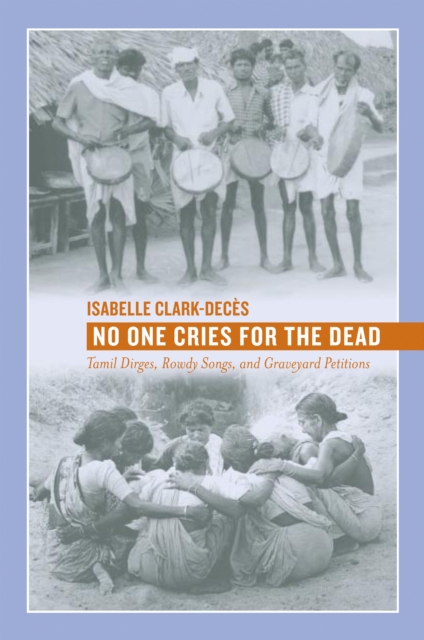
No One Cries for the Dead
At South Indian village funerals, women cry and lament, men drink and laugh, and untouchables sing and joke to the beat of their drums. No One Cries for the Dead offers an original interpretation of these behaviors, which seem almost unrelated to the dead and to the funeral event. Isabelle Clark-Decès demonstrates that rather than mourn the dead, these Tamil funeral songs first and foremost give meaning to the caste, gender, and personal experiences of the performers.
eBook

Ayya's Accounts
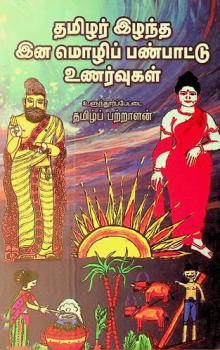
Ayya's Accounts explores the life of an ordinary man-orphan, refugee, shopkeeper, and grandfather-during a century of tremendous hope and upheaval. Born in colonial India into a despised caste of former tree climbers, Ayya lost his mother as a child and came of age in a small town in lowland Burma. Forced to flee at the outbreak of World War II, he made a treacherous 1,700-mile journey by foot, boat, bullock cart, and rail back to southern India. Becoming a successful fruit merchant, Ayya educated and eventually settled many of his descendants in the United States. Luck, nerve, subterfuge, and sorrow all have their place along the precarious route of his advancement. Emerging out of tales told to his American grandson, Ayya's Accounts embodies a simple faith-that the story of a place as large and complex as modern India can be told through the life of a single individual.
eBook

The saint in the banyan tree
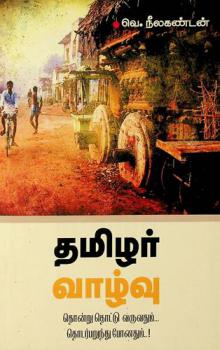
The Saint in the Banyan Tree is a nuanced and historically persuasive exploration of Christianity's remarkable trajectory as a social and cultural force in southern India. Starting in the seventeenth century, when the religion was integrated into Tamil institutions of caste and popular religiosity, this study moves into the twentieth century, when Christianity became an unexpected source of radical transformation for the country's 'untouchables' (dalits). Mosse shows how caste was central to the way in which categories of 'religion' and 'culture' were formed and negotiated in missionary encounters, and how the social and semiotic possibilities of Christianity lead to a new politic of equal rights in South India. Skillfully combining archival research with anthropological fieldwork, this book examines the full cultural impact of Christianity on Indian religious, social and political life. Connecting historical ethnography to the preoccupations of priests and Jesuit social activists, Mosse throws new light on the contemporary nature of caste, conversion, religious synthesis, secularization, dalit politics, the inherent tensions of religious pluralism, and the struggle for recognition among subordinated people.
eBook