
Catalogue Search | MBRL


Are you sure you want to remove the book from the shelf?

{{itemTitle}}
48
result(s) for
"Tamil poetry History and criticism."
Sort by:
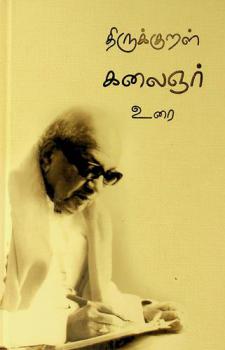
Tirukkur̲aḷ : kalaiñar urai
Text and explanation of Tirukkur̲aḷ, an ancient Tamil didactic verse work, by Tiruvaḷḷuvar.

Girls for Sale
First staged in 1892, the South Indian play Girls for Sale (Kanyasulkam) is considered the greatest modern work of Telugu literature and the first major drama written in an Indian language that critiqued British colonialism's effects on Indian society. Filled with humor, biting social commentary, parody, and masquerade, the plot revolves around a clever courtesan, a young widow, and a very old man who wants to buy as his wife a very young girl. Velcheru Narayana Rao has prepared the first idiomatic English translation, with notes and a critical essay. Itself a masterpiece of Indian literature in translation, this edition makes Apparao's work available to new audiences.
eBook

Śiva's Demon Devotee
The Hindu poet-saint Kāraikkāl Ammaiyār describes herself as a demon, accompanying the god Śiva as he dances in the cremation grounds. She is believed to be the first to write devotional poetry to Śiva in the Tamil language and is considered the first of the sixty-three Tamil poet-saints. Written in the sixth or seventh century, her beautiful poetry presents the path of love and service that brings liberation. In Śiva's Demon Devotee, Elaine Craddock provides a historical, literary, and ethnographic exploration of Kāraikkāl Ammaiyār and her work. An annotated translation of the poet-saint's 143 verses is included along with an introduction to the Tamil literary tradition. Craddock's analysis of this poetry in its ancient context and of the narrative tradition that developed around the life of Kāraikkāl Ammaiyār centuries later reveals cultural tensions concerning women's roles and the devotional path.
eBook
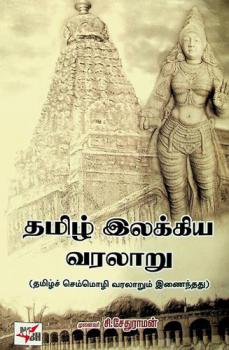
Tamil̲ ilakkiya varalār̲u : (Tamil̲c cemmol̲i varalār̲um iṇaintatu)
History of Tamil literature from the Sangam period to Independence.


Manuscript, Print and Memory
The ancient Tamil poetic corpus of the Ca?am (\"The Academy\") is a national treasure for Tamilians and a battle-ground for linguists and historians of politics, culture and literature. Going back to oral predecessors probably dating back to the beginning of the first millennium, it has had an extremely rich and variegated history. Collected into anthologies and endowed with literary theories and voluminous commentaries, it became the centre-piece of the Tamil literary canon, associated with the royal court of the Pandya dynasty in Madurai. Its decline began in the late middle ages, and by the late 17th century it had fallen into near oblivion, before being rediscovered at the beginning of the print era. The present study traces the complex historical process of its transmission over some 2000 years, using and documenting a wide range of sources, in particular surviving manuscripts, the early prints, the commentaries of the literary and grammatical traditions and a vast range of later literature that creates a web of inter-textual references and quotations.
eBook