
Catalogue Search | MBRL


Are you sure you want to remove the book from the shelf?

{{itemTitle}}
42
result(s) for
"Tannaim"
Sort by:
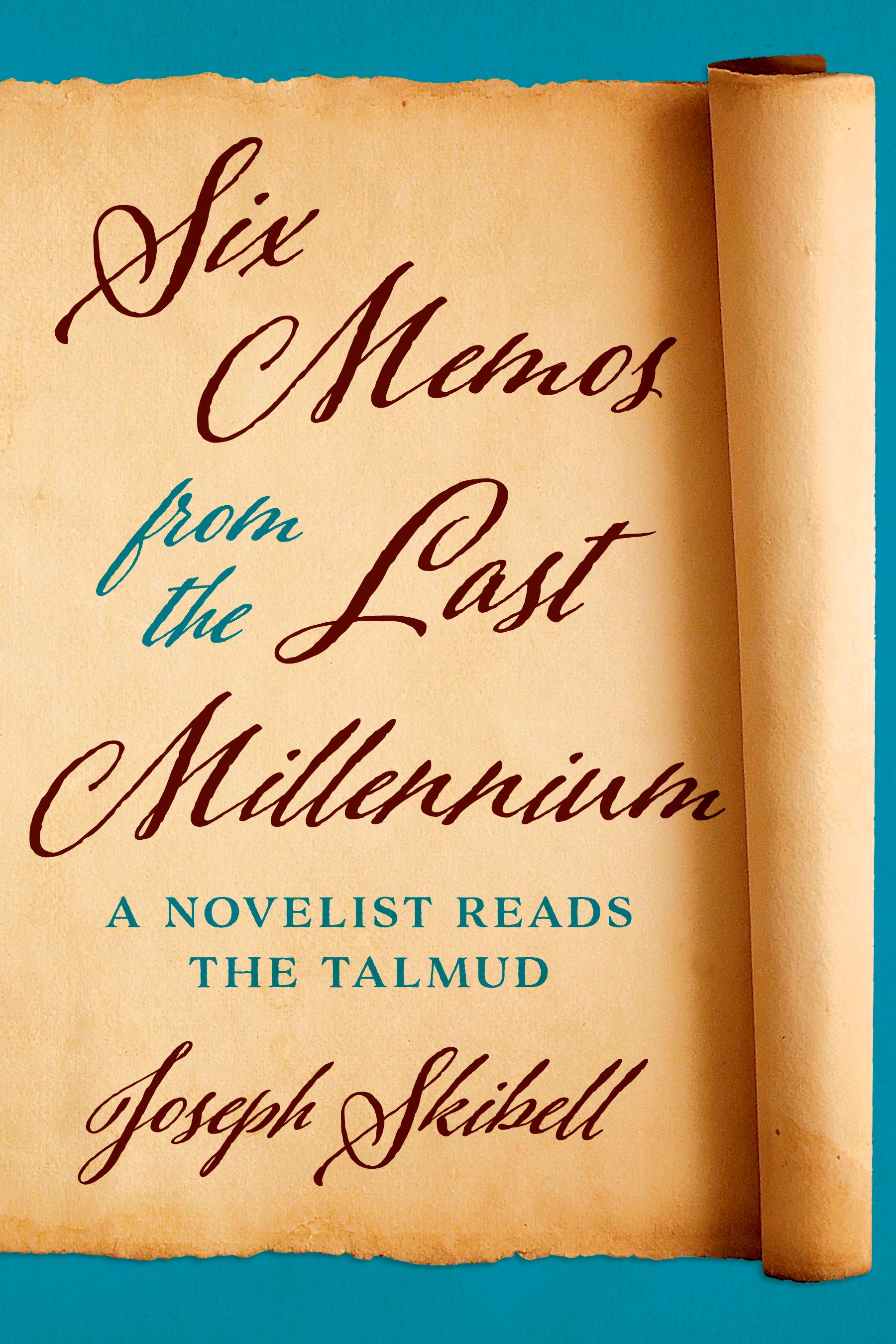
Six Memos from the Last Millennium
A thief-turned-saint, killed by an insult. A rabbi burning down his world in order to save it. A man who lost his sanity while trying to fathom the origin of the universe. A beautiful woman battling her brother’s and her husband’s egos to preserve their family. Stories such as these enliven the pages of the Talmud, the great repository of ancient wisdom that is one of the sacred texts of the Jewish people. Comprised of the Mishnah, the oral law of the Torah, and the Gemara, a multigenerational metacommentary on the Mishnah dating from between 3950 and 4235 (190 and 475 CE), the Talmud presents a formidable challenge to understand without scholarly training and study. But what if one approaches it as a collection of tales with surprising relevance for contemporary readers? In Six Memos from the Last Millennium, critically acclaimed novelist Joseph Skibell reads some of the Talmud’s tales with a storyteller’s insight, concentrating on the lives of the legendary rabbis depicted in its pages to uncover the wisdom they can still impart to our modern age. He unifies strands of stories that are scattered throughout the Talmud into coherent narratives or “memos,\" which he then analyzes and interprets from his perspective as a novelist. In Skibell’s imaginative and personal readings, this sacred literature frequently defies our conventional notions of piety. Sometimes wild, rude, and even bawdy, these memos from the last millennium pursue a livable transcendence, a way of fusing the mundane hours of earthly life with a cosmic sense of holiness and wonder.
eBook

The Rhetorical Self in Tannaitic Halakha
Abstract
The halakhic practice does more than regulating the inner world; it takes part in forming it, generating a unique legal subject. But is there a unique halakhic Self? This article examines this question in the context of Tannaitic halakha, both Mishnaic and Midrashic. More specifically I ask whether one can speak of subjectivity in Tannaitic halakha. I study the relationship between anonymous halakhic rulings and specific positions presented in the name of individual sages or argued with the force of personal commitment. Through analyzing the \"I\" language in Tannaitic literature, in comparison with the rhetoric of prerabbinic halakha, I wish to advance the ongoing search for the rabbinic Self.
Journal Article

Pax Tannaitica
When the Tannaim first emerged in Palestine in the second century C.E., they were surfacing from decades of brutal warfare. The first and second centuries were marked by endemic violence, among different groups of Jews and between Jews and their imperial masters, punctuated by a series of devastating revolts against the empire in 66, 115, and 132 C.E. It is no accident, then, that one of the most memorable formation myths of the tannaitic movement imagines it arising from a war that intertwined the civil and revolutionary: recall the story of Rabban Yohanan ben Zakkai, who, upon his escape from a Jerusalem held siege by the Roman army and flowing with the blood of civil discord, informed then-general Vespasian that the survival of Judaism required only three things--prayer, teaching, and the performance of \"every commandment.\" This apparently modest request was granted. Here, Dohrmann looks at some implications of the normative rabbinic project in a particular historical and imperial context.
Journal Article

MIDRASH-PESHER
This article points to a method of interpretation found only in the Dead Sea Scrolls, Paul’s letter to the Romans (Rom 10:6–8), and rabbinic texts. This rhetoric of scriptural interpretation, which this article refers to as midrash-pesher, splits a passage into building blocks and laces the interpretation through the citation. The lemmata and their interpretations are connected only by a pronoun. This technique has not been studied as a phenomenon that appears across these three corpora. What follows is intended to fill this lacuna, describe the midrash-pesher technique, and explain how it operates hermeneutically in its different contexts. Ultimately, this article problematizes and nuances the scholarly practice to label relevant interpretations from Qumran as well as Paul’s interpretation in Rom 10:6–8 as “midrash” or “midrash-like.” The Dead Sea Scrolls, Paul, and the Tannaim use the same interpretation method in different ways and for different ends.
Journal Article

\How Great Is Peace\: Tannaitic Thinking on Shalom and the Pax Romana
Abstract
Tannaitic compositions include midrashim that focus on shalom (peace) and its significance. Since the word shalom appears in numerous contexts in the Tanak, the sages were able to develop various ideas, depending on their preferences, from an array of biblical verses. Despite having been composed under Roman rule, these shalom midrashim make no mention of Rome. Thus, scholars who have studied these sources have given scant attention to this broader framework. However, peace played a crucial role in Roman imperial ideology, where Rome is presented bringing peace to the empire. In this article, I analyze these midrashim and other Tannaitic passages and examine their relationship with Roman notions of peace. I show that this material conveys a latent dialogue with the ideology related to pax Romana and how the Roman conceptualization of peace appears to have influenced rabbinic approaches to shalom.
Journal Article
\Avot\ Reconsidered: Rethinking Rabbinic Judaism
The opening passage of tractate Avot and its claim that all of the rabbinic tradition goes back to the revelation to Moses at Sinai is frequently seen as the manifesto of rabbinic Judaism. In this paper I seek to challenge this widespread view by suggesting that Avot stems from one circle of rabbinic Judaism, which was related to Rabbi Eliezer or his followers, and it reflects specifically the ideology of that group. Indeed, a close reading of the opening passage of the Tosefta, tractate Eduyot, may suggest that the claim that all of the rabbinic tradition is rooted in Sinai was rejected by the “mainstream” of rabbinic circles in second century Palestine, that is, the rabbinic circles that produced the Mishnah and the Tosefta.
Journal Article

Akiva
The legendary Akiva ben Yosef has fascinated Jews for centuries. Arguably the most important of the Tannaim, or early Jewish sages, Akiva lived during a crucial era in the development of Judaism as we know it today, and his theology played a major part in the development of Rabbinic Judaism. Reuven Hammer details Akiva's life as it led to a martyr's death and he delves into the rich legacy Akiva left us.
That legacy played an extraordinarily important role in helping the Jewish people survive difficult challenges to forge a vibrant religious life anew, and it continues to influence Jewish law, ethics, and theology even today. Akiva's contribution to the development of Oral Torah cannot be overestimated, and in this first book written in English about the sage since 1936 Hammer reassesses Akiva's role from the period before the destruction of the Temple in 70 CE until the Bar Kokhba revolt in 135 CE. He also assesses new findings about the growth of early Judaism, the reasons why Akiva was so outspoken about \"Christian Jews,\" the influence of Hellenism, the Septuagint, and the canonization of the Hebrew Bible. Ultimately Hammer shows that Judaism without Akiva would be a very different religion.
eBook

“For Mark was Peter’s Tannaʾ”: Tradition and Transmission in Papias and the Early Rabbis
The fragments and testimonia of Papias’s Expositions of the Sayings of the Lord contain a number of terms whose precise meaning remains elusive, among them auditor , presbuteroi , hermēneutēs , and parakoloutheō . These terms, and the oral-traditional ideology in which they occur, are illuminated by comparison with the terminology associated with the Pharisees and preserved in early rabbinic writings. More broadly, the ideology of received tradition preserved in the latter sources offers a better analogue to Papias’s enterprise than does Hellenistic historiography, as Bauckham has influentially argued. In addition, Papias’s explanation that he set out to collect and order the sayings of the Lord from certified tradents, marks him as an important but heretofore largely unrecognized precursor to the rabbinic establishment of the Mishnah.
Journal Article

Tradition and the Formation of the Talmud
Tradition and the Formation of the Talmudoffers a new perspective on perhaps the most important religious text of the Jewish tradition. It is widely recognized that the creators of the Talmud innovatively interpreted and changed the older traditions on which they drew. Nevertheless, it has been assumed that the ancient rabbis were committed to maintaining continuity with the past. Moulie Vidas argues on the contrary that structural features of the Talmud were designed to produce a discontinuity with tradition, and that this discontinuity was part and parcel of the rabbis' self-conception. Both this self-conception and these structural features were part of a debate within and beyond the Jewish community about the transmission of tradition.
Focusing on the Babylonian Talmud, produced in the rabbinic academies of late ancient Mesopotamia, Vidas analyzes key passages to show how the Talmud's creators contrasted their own voice with that of their predecessors. He also examines Zoroastrian, Christian, and mystical Jewish sources to reconstruct the debates and wide-ranging conversations that shaped the Talmud's literary and intellectual character.
eBook
Inscriptions, Synagogues and Rabbis in Late Antique Palestine
The numerous works of \"rabbinic\" literature composed in Palestine in Late Antiquity, all of which are preserved only in medieval manuscripts, offer immense possibilities for the historian, but also present extremely perplexing problems. What are their dates, and when did each come to be expressed in a consistent written form? If we cannot be sure about the attribution of sayings to individual named rabbis, how can we relate the material to any intelligible period or social context? In this situation, it is natural and right to turn to contemporary evidence, archaeological, iconographic and epigraphic. The primary archaeological evidence is provided by the large (and increasing) number of excavated synagogues. But, it has been argued, rabbinic texts are not centrally concerned with synagogues or the congregations which met in them. So perhaps \"rabbinic Judaism\" and \"synagogal Judaism\" are two separate systems. Alternatively, the epigraphic evidence attests individuals who are given the title \"rabbi,\" and these inscriptions, on stone or mosaic, include some which derive from synagogues. But perhaps \"rabbi,\" in this context, was merely a current honorific term, and these are not the \"real\" rabbis of the texts? It will be argued that this distinction is gratuitous, and that in any case the largest and most important synagogue-inscription, that from Rehov, both is \"rabbinic\" in itself and mentions rabbis as religious experts.
Journal Article