
Catalogue Search | MBRL


Are you sure you want to remove the book from the shelf?

{{itemTitle}}
115
result(s) for
"Tanner, Duncan."
Sort by:

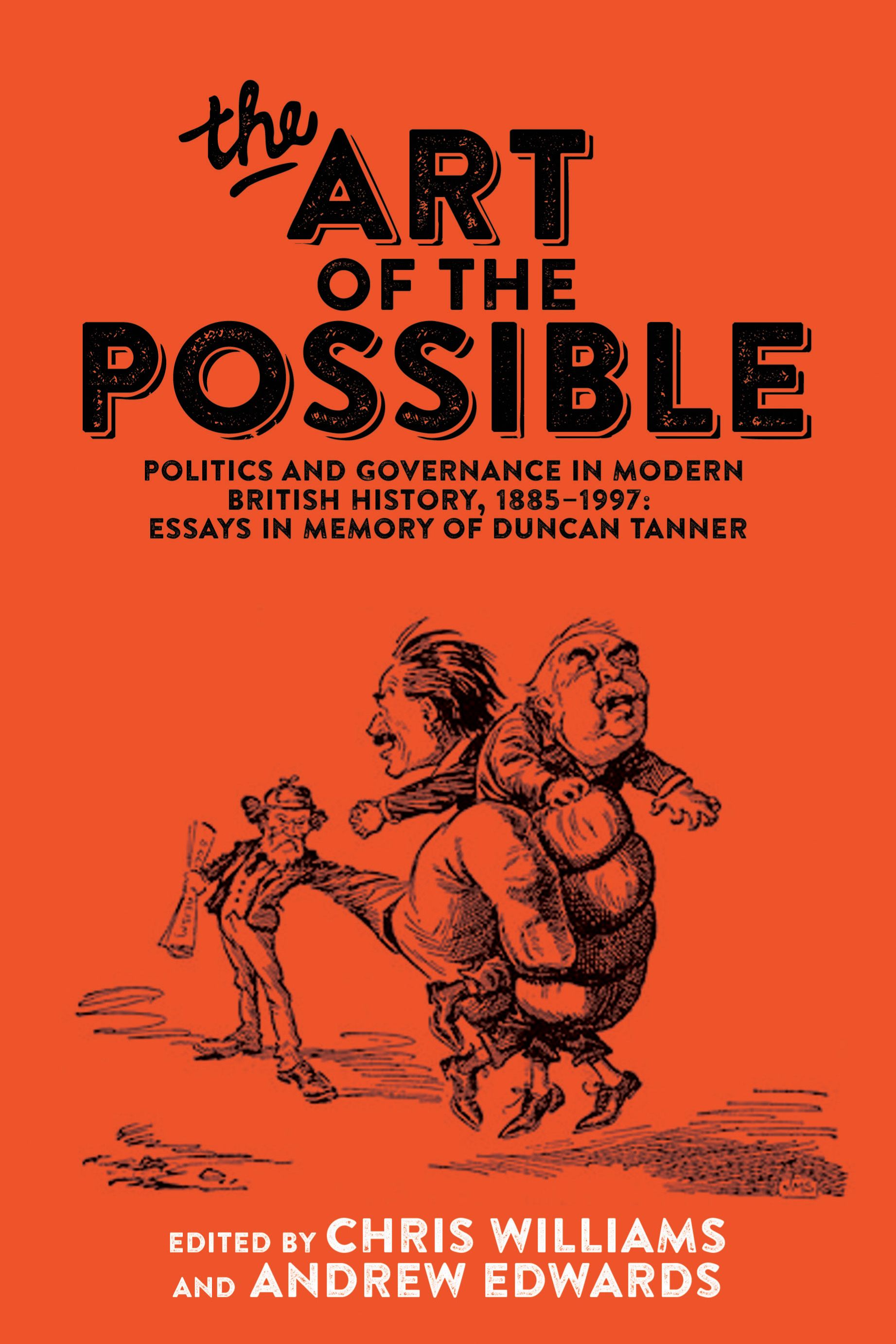
The art of the possible
This volume explores some of the major transitions, opportunities and false dawns of modern British political history. It engages with the scholarly legacy of Professor Duncan Tanner (1958–2010) whose work was focused on the political process and on politics in government. Chronologically its span runs from the first general election to be conducted under the terms of the Third Reform Act through to the 1997 referenda in favour of devolved assemblies in Scotland and Wales. This was the period in which British politicians most obviously addressed a mass, British-wide electorate, seeking national approval for policies and programmes to be enacted on a UK-wide basis. Aimed at scholars and students of modern British history this volume will also interest the general reader who wishes to get to grips with some of the latest thinking about British politics.
eBook

Art of the possible
Explores some of the major transitions, opportunities and false dawns of modern British political history. It engages with the scholarly legacy of Professor Duncan Tanner (1958-2010) whose work was focused on the political process and on politics in government.
eBook
Sudden death of professor aged just 51
The cause of his death is currently unknown, though it was revealed he suffered from a pre-existing heart condition. Bangor University vice-chancellor Merfyn Jones said: \"[Duncan Tanner] was a highly regarded academic as well as an extremely popular and well-liked friend and colleague to many at Bangor and beyond. \"In addition to being a Professor of History at Bangor, he was also a Director of Research at the University. \"His death is an immense loss to the university and to historical research.\" Mr [Peter Hain] said: \"Professor Tanner was a distinguished political historian.
Newspaper Article
Devolution deal is flawed but the best is yet to come
When asked to name the \"founding fathers\" of devolution, he said, \"Harold Wilson, as he set up the Royal Commission which got devolution under way; John Smith, because he put it on the Labour Party agenda in the 1990s; Margaret Thatcher, because she undermined the belief that British government would cure Welsh ills and did more to swell support for devolution than anyone else; Tony Blair, because decisions made by his government made all the difference between victory and defeat.\" Though he believes devolution's greatest achievement \"remains to be seen\", he still looks at the enterprise with optimism. The creation of the Assembly, he believes, has given Wales the \"capacity to develop ideas and policies which suit Welsh needs and to use and retain Welsh talents\".: Strengthening of powers 'won't be held back':Nerys Evans was too young to vote in the 1997 referendum but is now a Plaid AM for Mid and West Wales. She said, \"I was only 17 at the time, and was helping out at the Carmarthen count, so I really did appreciate the closeness of the vote.\" Ms Evans believes the number of Welsh MPs in Westminster should be cut: \"We are already seeing farcical situations emerging such as when many Welsh MPs voted in favour of top-up fees for England by the smallest of margins, while the Assembly has since unanimously voted against their introduction in Wales,\" she said. \"This should not be allowed to continue.\" The person she would most like to see join the Assembly is Adam Price, the Carmarthen East and Dinefwr MP.
Newspaper Article

Introduction
Duncan Tanner’s work was overwhelmingly focused on the political process and on politics in government. He reached back into the late Victorian era, and forward to the very recent past. He was interested in organisations, parties and systems, but also in the people who worked in organisations and parties, and who were affected by (especially electoral) systems. He was a truly British historian, in that he engaged not only with politics at the highest (Westminster and Whitehall) levels, but also with operations on the ground in constituencies across the breadth of mainland Britain. He wanted to find out about MPs, agents, party loyalists, and also about voters in general. And in his approach to the politics of the past Duncan was, essentially, a pragmatist. Rather than condemn historical figures for failing to match up to an often ahistorical standard of ideological purity, he preferred to comprehend the varied pressures under which they operated, and how the decisions they made usually represented a rational (if not always correct) response to the need to reconcile policy ambitions and political realities. This chapter introduces Duncan Tanner’s approach to the politics and governance of modern Britain.
Book Chapter
So where do your sporting loyalties lie?
Professor Duncan Tanner, of the University of Wales, Bangor, said across the UK devolution has intensified our sense of Welshness or Scottishness. But our increasing sense of Welshness has not undermined our sense of Britishness, he said. 'Nor do I find it at all difficult to see myself as Welsh, British and European or at the same time be from South Wales and live in North Wales.' 'The mining valleys of South Wales and north east England have as much in common as South and North Wales,' Prof Tanner said.
Newspaper Article
roundup: Open secrets
A NORTH Wales historian will discuss freedom of information at the British Academy in London next weekend.
Newspaper Article

Obituary: Duncan Tanner: Leading historian of the Labour party
Born in Newport, south Wales, [Duncan Martin Tanner] went from his local state school to Royal Holloway College, University of London, where he obtained a first-class degree in modern history and politics in 1979, followed by a PhD at University College London. After research fellowships at the Institute of Historical Research, London, and St Catharine's College, Cambridge, he secured a lectureship at Bangor in 1989, and within seven years had risen to become head of the school of history and Welsh history. Recognised for his managerial talents, he became director of research at Bangor in 2008. Throughout these busy years, he published widely on inter-war Labour history. He co-edited two important volumes marking the centenary of the Labour party, The Labour Party in Wales, 1900-2000 (2000) and Labour's First Century (2000), and a further volume of wide-ranging essays, The Strange Survival of Liberal England (2007). A passionate Welsh rugby supporter, he even found time for thoughtful work on sport and national identity in Wales. The full recognition that he deserved did not come overnight, perhaps because his findings were never reiterated with hyperbolic salesmanship. He made us all wait for his big book, Political Change and the Labour Party 1900-1918, which deftly and patiently illuminated Liberal-Labour relations. Rather than attributing Labour's ultimate success to the novelty of its appeal, Duncan showed that, paradoxically, it often had roots in a common culture shared with liberalism.
Newspaper Article
National pride ... in a game most don't play
He has looked at what he calls the 'myth' of rugby being Wales's favourite sport. \"On a typical Saturday afternoon in winter you'd find more Welshmen out walking, playing football, and even more playing golf than you'd find playing rugby,\" he said in his academic paper entitled \"Are the Welsh obsessed with rugby\". He pointed out that in New Zealand more than twice as many men play rugby than do in Wales. Fair point Professor, fair point. They also strongarm in every South Sea islander they can persuade to become New Zealandish, but after our own rum record in grandfathering in players with dubious, well non-existent, Welsh ancestry, I guess we can't cast too many aspersions.
Newspaper Article