
Catalogue Search | MBRL


Are you sure you want to remove the book from the shelf?

{{itemTitle}}
165
result(s) for
"Tantric"
Sort by:

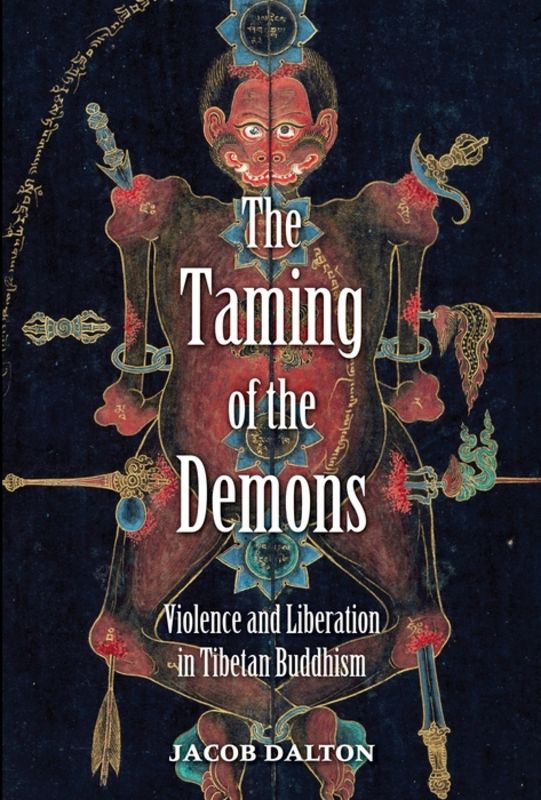
The Taming of the Demons
The Taming of the Demonsexamines mythic and ritual themes of violence, demon taming, and blood sacrifice in Tibetan Buddhism. Taking as its starting point Tibet's so-called age of fragmentation (842 to 986 C.E.), the book draws on previously unstudied manuscripts discovered in the \"library cave\" near Dunhuang, on the old Silk Road. These ancient documents, it argues, demonstrate how this purportedly inactive period in Tibetan history was in fact crucial to the Tibetan assimilation of Buddhism, and particularly to the spread of violent themes from tantric Buddhism into Tibet at the local and the popular levels. Having shed light on this \"dark age\" of Tibetan history, the second half of the book turns to how, from the late tenth century onward, the period came to play a vital symbolic role in Tibet, as a violent historical \"other\" against which the Tibetan Buddhist tradition defined itself.
eBook

The mother mantra : the ancent shamanic yoga of non-duality
\"An initiate's guide to the healing practices, spiritual exercises, and secret rites of the Mother Mantra tradition\"-- Provided by publisher.
Book
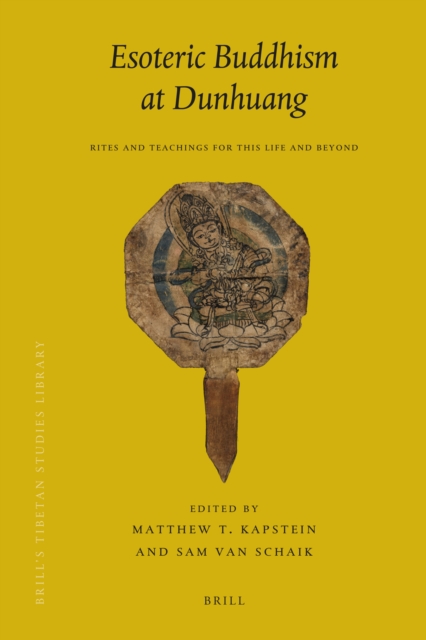
Esoteric Buddhism at Dunhuang
Drawing a wide variety of texts and images from Dunhuang, the six original contributions to this collection advance our understanding of the development of Esoteric Buddhism in late first millennium Tibet and China. Ritual, philosophy, and mortuary practice are among the topics considered.
eBook


The Siddha with a Thousand Faces: Non-Tantric and Tantric Elements in the Construction of the Buddhist Siddha in Jñānākara’s ICommentary to the Introduction to the Path of Mantra/I
This paper is a continuation of an earlier study published by the current author dedicated to the virtually unexplored tantric Buddhist scholar of the phyi dar period, *Jñānākara (11th century), through the textual analysis of his masterpiece, the Introduction to the [Path of] Mantra (Skt. *Mantrāvatāra), now available only in the Tibetan translation as Gsang sngags ‘jug pa. In the previous paper, I have discussed the broader historical framework of the eleventh-century Indo-Tibetan world and *Jñānākara’s role in establishing, what I called, the “orthodoxy of tantric practice”. I have also provided a critical edition of the root text, the *Mantrāvatāra, accompanied by an English translation. While the previous study focused mainly on the debatable and highly controversial issue of tantric sexual initiations adopted by the monastics and hermeneutical tools employed by *Jñānākara to refute the literal interpretation of tantric scriptures, the current paper will concentrate on the exposition of tantric practice understood as the accumulation of causes and conditions (hetu-pratyaya) leading to the status of the siddha. This paper will trace tantric and non-tantric elements in *Jñānākara’s construction of the Buddhist siddha that integrated the kāya doctrine of the Yogācāra. My analysis will be based on *Jñānākara’s auto-commentary to his root text, the Commentary to the Introduction to the [Path of] Mantra (Skt. *Mantrāvatāravṛtti, Tib. Gsang sngags ‘jug pa ‘grel pa) which has not received any scholarly attention so far. Special attention will be paid to the intertextual dimension of his discourse that integrates the Mahāyāna models of the bodhisattva path.
Journal Article

Gyuto : monastic life
The Tibetan monks of the Gyuto Monastery in Dharamsala, northwestern India, are well-known for their strict discipline and their maintenance and practice of the tantric tradition as transmitted within the Gelugpa order. The monastery itself was founded in 1474 by a disciple of the founder of the Gelugpa order, and is thus representative of a special lineage. Over the centuries, its systems of tantric ritual have spread to thousands of monasteries within Tibet, Mongolia, Ladhak and elsewhere. In this beautiful clothbound volume, Australian photographer Tobi Wilkinson portrays the life of this monastery. Wilkinson's color and black-and-white photographs focus on monastic rituals, the movements and the objects of those movements: the draping of a monk's robe; the preparation of food; prayer, meditation, offerings and chanting; votive objects and their care. Gyuto includes a foreword from the Dalai Lama that underscores the importance of this monastery.
Book
Ornament of Reality: Language Ideology in a Tantric Śākta Text
The Mahānayaprakāśa of Śitikaṇṭha is an understudied text within Kashmir Śaivism, notable for its rich description of the inner structure of consciousness vis-à-vis the body and the natural world, and esotericization of Left-Handed Tantric Practice. Furthermore, it is also significant in its form; like the Buddhist dohākoṣas it consists of Apabhraṃśa verses with accompanying Sanskrit commentary. However, in the sporadic scholarship on this text it is consistently portrayed as an early attestation of “Old Kashmiri,” and siloed off into obscurity. This article demonstrates that these verses are definitively composed in Apabhraṃśa, and argues that they should be examined alongside their Buddhist counterparts, which also articulate a mystical cosmology of the sacred realm Uḍḍiyāna located within the body. Afterwards the fourth chapter of this text is translated and presented, in which the human body takes center stage as the pīṭha, the pilgrimage destination and practice space of Tantric ritual. Ultimately this article argues that within medieval Tantric traditions the Apabhraṃśa verse form served as a privileged vehicle of esoteric teachings, and that it commands a unique linguistic value by indexing mystical states of consciousness.
Journal Article


Two Faces of the Hindu Great Goddess
The paper presents the multifaceted identity of the Hindu goddess Mahādevī, the dynamic feminine absolute of the religious tradition Śāktism, whose philosophical foundations have shaken several assumptions of established religious and social norms. Śāktism remains an integral part of the philosophical-religious landscape of the complex totality of Hinduism, while also stretching beyond narrow religious contexts and critically examines normative patterns of patriarchal social reality. In the first chapter, the paper outlines the origins of the formation of the goddess cult, from the earliest period of Indian civilization to the Purāṇas, and then introduces the key ideas of the goddess myth in the Devīmāhātmya, where, for the first time in the spiritual history of India, a goddess is defined as the Supreme Reality, who reconciles all opposites within herself. The interpretation of the most significant segments of the goddess myth is built on the basis of an analysis of the changes in metaphysics, specifically the transition from the pre-Tantric dualistic metaphysical system to the non-dualistic one in Tantra. This is followed by an outline of the two branches of Śāktism that were formed out of the two seemingly incompatible poles of the identity of the Supreme Goddess: on the one hand, as a benevolent mother and obedient wife, and on the other as a fierce, ruthless and independent female, which is discussed in more detail in the last chapter through a case study of two goddesses, Lakṣmī and Kālī.
Journal Article