
Catalogue Search | MBRL


Are you sure you want to remove the book from the shelf?

{{itemTitle}}
29,658
result(s) for
"Tarantino, Quentin"
Sort by:

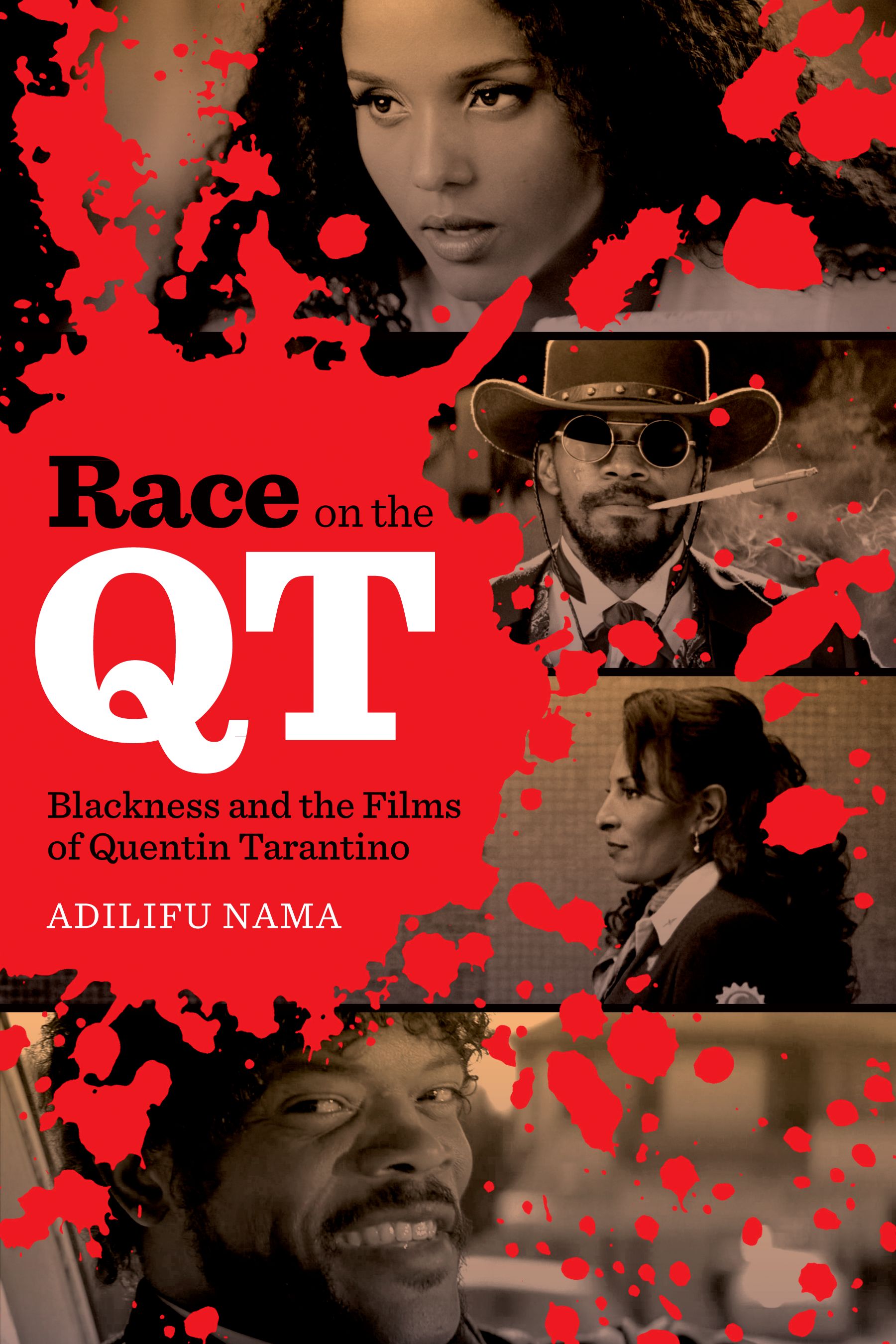
Race on the QT
Known for their violence and prolific profanity, including free use of the n-word, the films of Quentin Tarantino, like the director himself, chronically blurt out in polite company what is extremely problematic even when deliberated in private. Consequently, there is an uncomfortable and often awkward frankness associated with virtually all of Tarantino’s films, particularly when it comes to race and blackness. Yet beyond the debate over whether Tarantino is or is not racist is the fact that his films effectively articulate racial anxieties circulating in American society as they engage longstanding racial discourses and hint at emerging trends. This radical racial politics—always present in Tarantino’s films but kept very much on the quiet—is the subject of Race on the QT. Adilifu Nama concisely deconstructs and reassembles the racial dynamics woven into Reservoir Dogs, True Romance, Pulp Fiction, Jackie Brown, Kill Bill: Vol. 1, Kill Bill: Vol. 2, Death Proof, Inglourious Basterds, and Django Unchained, as they relate to historical and current racial issues in America. Nama’s eclectic fusion of cultural criticism and film analysis looks beyond the director’s personal racial attitudes and focuses on what Tarantino’s filmic body of work has said and is saying about race in America symbolically, metaphorically, literally, impolitely, cynically, sarcastically, crudely, controversially, and brilliantly.
eBook

فهم دراسات الأفلام من هتشكوك إلى تارانتينو
\"فهم دراسات الأفلام من هتشكوك إلى تارانتينو\" هو كتاب من تأليف وارن بكلاند، يهدف إلى تقديم تحليل شامل لدراسات الأفلام عبر استكشاف أعمال اثنين من أكثر المخرجين تأثيرا في تاريخ السينما : ألفريد هتشكوك وكوينتين تارانتينو. الكتاب موجه لكل من يرغب في فهم تطور النقد السينمائي وكيفية تحليل الأفلام من منظور أكاديمي وفني، يبدأ الكتاب بتقديم مقدمة عامة عن دراسات الأفلام، موضحا أهميتها كفرع أكاديمي وتطوره عبر الزمن. يشرح المؤلف كيف أن تحليل الأفلام يساعد على فهم أعمق للأبعاد الفنية والثقافية والسياسية التي تحتويها، يركز هذا الجزء على أعمال هتشكوك، مخرج الإثارة الشهير. يناقش بكلاند التقنيات السينمائية التي استخدمها هتشكوك، مثل التلاعب بالمشاعر والتشويق، ويقدم تحليلا مفصلا لبعض من أشهر أفلامه مثل \"النافذة الخلفية\" و\"فيرتيغو\". يوضح كيف أن هتشكوك أسس العديد من القواعد التي أصبحت لاحقا من أساسيات صناعة الأفلام.
Book

The American Historical Imaginary
In The American Historical Imaginary: Contested Narratives of the Past in Mass Culture Caroline Guthrie examines the American relationship to versions of the past that are known to be untrue and asks why do these myths persist, and why do so many people hold them so dear? To answer these questions, she examines popular sites where fictional versions of history are formed, played through, and solidified. From television's reality show winners and time travelers, to the Magic Kingdom in Walt Disney World, to the movies of Quentin Tarantino, this book examines how mass culture imagines and reimagines the most controversial and painful parts of American history. In doing so, Guthrie explores how contemporary ideas of national identity are tied to particular versions of history that valorize white masculinity and ignores oppression and resistance. Through her explanation and analysis of what she calls the historical imaginary, Guthrie offers new ways of attempting to combat harmful myths of the past through the imaginative engagements they have dominated for so long.
eBook
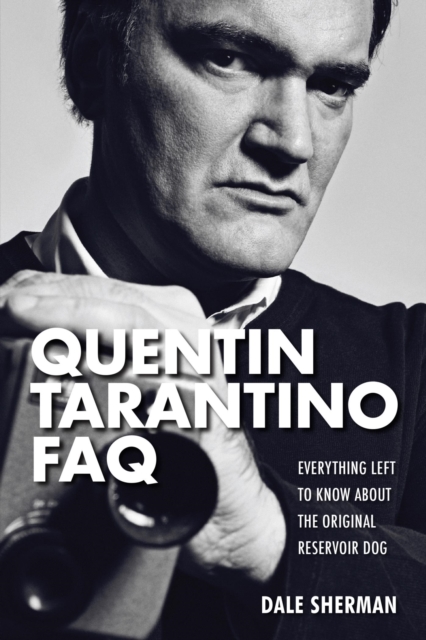
Quentin Tarantino FAQ
Quentin Tarantino is a man who came to Hollywood and didn't break the rules so much as make plain that he didn't even notice them. Making the films he wanted to see, Tarantino broke through with Reservoir Dogs in 1992 and then cemented his reputation in 1994 with the release of Pulp Fiction. As his fame grew, he spread his love for movies that are far from commonplace through his promotion of older films and theaters and by reviving the stalled careers of actors such as John Travolta, Pam Grier, and David Carradine. Quentin Tarantino FAQ examines the movies directed by Tarantino, the influences on his work, and the inspiration he gave to others. There are also chapters on certain recurring elements in his films, from fake \"product placement\" to the music, actors, and even cinematic moments used. The book also reviews his work in television, the articles written about him or by him over the years, his acting career, his public battles, and some of the projects he abandoned along the way. It all comes together to tell the story of a man who forged his own unique path and helped shape the way movies are made today.
eBook

Quentin Tarantino
Here, in his own colorful, slangy words, is the true American
Dream saga of a self-proclaimed \"film geek,\" with five intense
years working in a video store, who became one of the most popular,
recognizable, and imitated of all filmmakers. His dazzling,
movie-informed work makes Quentin Tarantino's reputation, from his
breakout film, Reservoir Dogs (1992), through Kill
Bill: Vol. 1 (2003) and Kill Bill: Vol. 2 (2004), his
enchanted homages to Asian action cinema, to his rousing tribute to
guys-on-a-mission World War II movie, Inglourious Basterds
(2009). For those who prefer a more mature, contemplative cinema,
Tarantino provided the tender, very touching Jackie Brown
(1997). A masterpiece--Pulp Fiction (1994). A delightful
mash of unabashed exploitation and felt social consciousness--his
latest opus, Django Unchained (2012).
From the beginning, Tarantino (b. 1963)--affable, open, and
enthusiastic about sharing his adoration of movies--has been a
journalist's dream. Quentin Tarantino: Interviews, revised
and updated with twelve new interviews, is a joy to read cover to
cover because its subject has so much interesting and provocative
to say about his own movies and about cinema in general, and also
about his unusual life. He is frank and revealing about growing up
in Los Angeles with a single, half-Cherokee mother, and dropping
out of ninth grade to take acting classes. Lost and confused, he
still managed a gutsy ambition: young Quentin decided he would be a
filmmaker.
Tarantino has conceded that Ordell (Samuel L. Jackson), the
homicidal African American con man in Jackie Brown, is an
autobiographical portrait. \"If I hadn't wanted to make movies, I
would have ended up as Ordell,\" Tarantino has explained. \"I
wouldn't have been a postman or worked at the phone company. . . .
I would have gone to jail.\"
eBook

Quentin Tarantino and Philosophy
The films of Quentin Tarantino are ripe for philosophical speculation, raising compelling questions about justice and ethics, violence and aggression, the nature of causality, and the flow of time. In this witty collection of articles, no subject is too taboo for the writers to tackle. From an aesthetic meditation on the use of spraying blood in Kill Bill to the conundrum of translation and reference in Vincent and Jules' discussion about French Big Macs in Pulp Fiction, Tarantino and Philosophy shies away from nothing. Is The Bride a heroic figure, even though she's motivated solely by revenge? How is Tarantino able to create a coherent story when he jumps between past, future, and present? The philosophers in this book take on those questions and more in essays as provocative as the films themselves.
eBook

Estudio de la transtextualidad en el cine de Quentin Tarantino
El cine y la literatura tienen amplias e importantes relaciones prácticas y teóricas. En relación con las últimas, la teoría de la transtextualidad, creada por Gérard Genette, ha jugado un rol fundamental, debido al vasto número de referencias que se han hecho de obras audiovisuales o literarias en otros filmes. En virtud de lo anterior, aplicamos los tipos de transtextualidades de Genette ―junto con las nociones cinematográficas creadas por Robert Stam y otros teóricos partiendo de sus postulados― para analizar y ejemplificar algunas de las relaciones transtextuales más notorias en la filmografía de Quentin Tarantino, realizador notorio actualmente en este campo. Por tanto, encontramos que existe una gran y especial cantidad de conexiones transtextuales en sus largometrajes, lo cual resulta importante para demostrar la relevancia de esto en su autoría y en la mencionada relación entre la literatura y el cine.
Journal Article

On the Translation of Swearing into Spanish
Audiovisual translation has attracted the attention of many researchers in the years since it became recognised as an academic discipline with an established theory of translation. For its part, cinema is one of todays most powerful and influential media, and the vast number of US films translated for Spanish audiences merits particular academic attention. This book presents an analysis of the insults from seven films directed by the North American filmmaker Quentin Tarantino - Reservoir Dog.
eBook

Feminist futures in gender-in-leadership research: self-reflexive approximations to intersectional situatedness
Purpose
This paper introduces intersectional situatedness to develop inclusive analyses of leadership. Intersectional situatedness recognises the contextual and situated nature of experiences and their interaction with socially constructed categories of difference.
Design/methodology/approach
The paper draws on memory work by three feminist academics who situate their understandings and experiences of leadership as part of socio-historical contexts.
Findings
Understandings and experiences of leadership are multifaceted and benefit from being examined in their intersectional situatedness. This way, the simultaneity of visible and invisible disadvantage and privilege, which accumulate, shift and get reconfigured across the life course and are based on particular intersectional identity invocations, can be integrated into narratives about leadership.
Research limitations/implications
Interrogating gender-in-leadership adopting an intersectional situatedness helps to advance the field by embedding the recognition, problematisation and theorisation of situated difference as critical to understand leadership, its meaning and its practice in management and organisations.
Practical implications
In embedding intersectional situatedness in the analysis of leadership, more inclusive understandings of leadership are qualified that recognise differences positively and support changing the narratives around the meaning of “leader” and “good leadership”.
Social implications
Intersectional situatedness helps to identify tangible ways to see how inequalities impact women’s career progression to leadership and enable more nuanced conversations about privilege and disadvantage to advance feminist social justice agendas.
Originality/value
The paper reveals the narrow and restricted understandings of leadership and how this influences who is regarded as a legitimate leader. In addition, it adopts a methodology that is not commonly used in gender-in-leadership research.
Journal Article