
Catalogue Search | MBRL


Are you sure you want to remove the book from the shelf?

{{itemTitle}}
3,573
result(s) for
"Taylor, Edward"
Sort by:

Towards a New Poetics of Puritanism: Edward Taylor's Preparatory Meditations
Heirs of the Renaissance, the Puritans valued the ancient classics, esteemed such moderns as Spenser, Sidney, and later Milton, and of course were in sympathy with the Renaissance belief in the ethical foundation of poetry. With such a tradition behind them, and living intensely in the present, they had a situation favorable to a high order of religious poetry. While occupied with the practical demands of early settlement in the colonial wilderness of North America, the Puritans observed an austere religion founded on the Biblical notion of the original sin. As a 17th-century American Metaphysical poet, Edward Taylor fuses thought and feeling with fresh and tense language. The research attempts to study how Taylor combines the religious meditational traditions and Biblical typology, a conservative sense of parallels between the Old Testament and the New Testament, in his religious poetry, Preparatory Meditations. I argue that Edward Taylor, the pastor and poet, draws on verbal piety as revealed in the universe of his religious poetry to reassert the union of Godhead and manhood in the Word. Besides, Metaphysical wit serves as a delight for the daily life surrounded by dangers and wilderness in North America during early colonial period. Thus, as Hephaestus forges a brave shield for Achilles under the supplication of Thetis, so does Edward Taylor as a pastor-poet forge a new poetics of Puritanism out of colonial barrenness, one that fuses Biblical typology and lyrical poetry. Keywords: Edward Taylor, Preparatory Meditations, Puritanism, Poetics, American colonial period, Anne Bradstreet, Typology, Metaphysical wit, early American literature, religious poetry
Journal Article
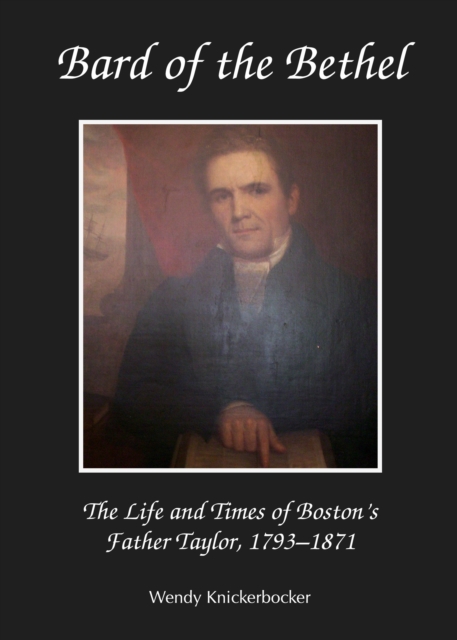
Bard of the Bethel
The Rev Edward T. Taylor (1793-1871), better known as Father Taylor, was a former sailor who became a Methodist itinerant preacher in southeastern New England, and then the acclaimed pastor of Bostons Seamens Bethel. Known for his colorful sermons and temperance speeches, Father Taylor was one of the best-known and most popular preachers in Boston during the 1830s-1850s. A proud Methodist, Father Taylor was active within the New England Annual Conference for over fifty years, and there was.
eBook

Thornton Wilder and the Puritan narrative tradition
Thornton Wilder and the Puritan Narrative Tradition is the first reading of Wilder's life, fiction, drama, and criticism as a product of American culture. Konkle shows that Thornton Wilder, as a literary descendant of Edward Taylor, inherited the best of the Puritans' worldview and drew upon those attributes of the Puritan tradition within American literature that would strike a fundamental chord with his American audience. By providing close readings of Wilder's texts against seventeenth- and eighteenth-century Puritan culture and literature, Konkle demonstrates that Wilder's aesthetic was not just generically allegorical but also typically American and his religious sensibility was not just generally Christian, but specifically Calvinist.
eBook

The Devil’s Mousetrap
The Devil’s Mousetrap approaches the thought of three colonial New England divines--Increase Mather, Jonathan Edwards, and Edward Taylor--from the perspective of literary theory. Author Linda Munk focuses on the background of these men’s ideas and on the sources from which they drew, both directly and indirectly, in framing their theology. She notes that the language used in the pulpit by Mather, Edwards, and Taylor is full of allusions to the Bible and Apocrypha, to Puritan treatises, and to post-biblical exegesis, Jewish and Christian. Munk proceeds to elucidate many allusions that have, for the most part, proved to be unclear to contemporary readers, in order to provide essential insights into the construction of Puritan theology.
eBook

The Marriage of Heaven and Earth: Alchemical Regeneration in the Works of Taylor, Poe, Hawthorne, and Fuller
From the Middle Ages to the close of the 17th century, alchemy was fundamental to Western culture, as scores of experimenters sought to change lead into gold. Though its significance declined with the rise of chemistry, alchemy continued to captivate the imagination of writers and its images still appear in modern creative works. This book examines the literary representation of alchemical theory and the metaphor of alchemical regeneration in the works of Edward Taylor, Edgar Allan Poe, Nathaniel Hawthorne, and Margaret Fuller. While Taylor used alchemical metaphors to illustrate the redeeming grace of God upon the soul, these same metaphors were used by Poe, Hawthorne, and Fuller to depict a broader concept of redemption. These later writers used alchemical imagery to describe both the regeneration of the individual and the possible transformation of society. For Poe, alchemy became a metaphor for the transforming power of imagination; for Hawthorne, it became a means of representing the redeeming power of love; for Fuller, it figured the reconciliation of gender opposites. Thus these four American writers incorporated the idea of regeneration in their works, and the tropes and metaphors of the medieval alchemists provided a fascinating way of imagining the transformative process.
eBook

The Part and the Whole in Early American Literature, Print Culture, and Art
The essays in this pathbreaking collection consider the significance of varied early American fragmentary genres and practices-from diaries and poetry, to almanacs and commonplace books, to sermons and lists, to Indigenous ruins and other material shards and fragments-often overlooked by critics in a scholarly privileging of the \"whole.\" Contributors from literary studies, book history, and visual culture discuss a host of canonical and non-canonical figures, from Edward Taylor and Washington Irving to Mary Rowlandson and Sarah Kemble Knight, offering insight into the many intellectual, ideological, and material variations of \"form\" that populated the early American cultural landscape. As these essays reveal, the casting of the fragmentary as aesthetically eccentric or incomplete was a way of reckoning with concerns about the related fragmentation of nation, society, and self. For a contemporary audience, they offer new ways to think about the inevitable gaps and absences in our cultural and historical archive.
eBook

La ambivalencia endógena de las éticas de la autorrealización. Ayer y hoy
El trabajo pretende esclarecer los motivos filosóficos que subyacen a la ambivalencia endógena que persigue a las éticas de la autorrealización, repasando para ello el debate que suscitó el uso del ideal ético de la «autorrealización» patente en los ensayos «La autorrealización como el ideal moral» (1893), de John Dewey, y «Autorrealización -una crítica» (1896), de Alfred Edward Taylor. Tras revisar las inconsistencias del principio ético de la autorrealización advertidas por estos filósofos en el siglo xix, se busca rastrear las huellas de este ideal moral y su pervivencia en nuestro tiempo presente.
Journal Article

THE SPY WHO LOVED FROGS
Brown's reassessment could prove crucial. Since Taylor's time, taxonomy has become more than just a naming exercise. Amphibian declines, in particular, have made headlines around the world, and the Philippines ranks second only to Sri Lanka for sheer proportions of imperilled species: 79% of Philippine amphibians are found nowhere else on Earth, and 46% are under threat of extinction. At 23, he joined the civil service and became what he called \"a one-man Peace Corps\" in the Philippines - then a US territory - setting up a school for members of a headhunting tribe in central Mindanao, where he collected the parachute gecko among other species.
Journal Article

The poems of Edward Taylor : a reference guide
Edward Taylor (1642-1729) was one of the most influential ministers in Puritan New England. He was also a prolific but unpublished poet. With the discovery of his poetry in 1936 and the publication of a nearly complete volume in 1960, his reputation as the premiere early American poet has grown immensely. His widely anthologized work is taught in most introductory American literature courses and nearly all courses on early American literature. This reference is a convenient guide to his poetry, including a summarization of the current state of scholarship on his work. Beginning with an overview of his life and times, this reference analyzes Taylor's Preparatory Meditations and Gods Determinations, along with his other poems, in light of Puritan doctrine and his thoughts about poetry. The book traces the genesis of his works, their editorial and publication history, and the complex cultural and historical background of his writings. Later chapters discuss his themes, his poetic art, and the reception of his works. A brief bibliographical essay completes the volume.
eBook