
Catalogue Search | MBRL


Are you sure you want to remove the book from the shelf?

{{itemTitle}}
87,840
result(s) for
"Teacher training"
Sort by:


Teaching and Learning through Reflective Practice
Now in its second edition, Teaching and Learning through Reflective Practice is a practical guide to enable all those involved in educational activities to learn through the practices of reflection. The book highlights the power that those responsible for teaching and learning have to appraise, understand and positively transform their teaching. Seeing the teacher as a reflective learner, the book emphasises a strengths-based approach in which positivity, resilience, optimism and high performance can help invigorate teaching, enhance learning and allow the teacher to reach their full potential. This approach busts the myth that reflection on problems and deficits is the only way to better performance.
The approach of this new edition is an ‘appreciative’ one. At its heart is the exploration and illustration of four reflective questions:
What’s working well?
What needs changing?
What are we learning?
Where do we go from here?
With examples drawn from UK primary teacher education, the book reveals how appreciative reflective conversations can be initiated and sustained. It also sets out a range of practical processes for amplifying success. This book will be a must have for undergraduate and PGCE students on initial teacher training programmes. It will also interest practising teachers, teacher educators and those on continuing professional development courses.
Chapter 1. Some major developments in reflective practice Chapter 2. Being a reflective practitioner Chapter 3. Some views of the nature of reflection-on-practice Chapter 4. A strengths-based reflective practice Chapter 5. Reflection-on-values Chapter 6. Voicing concerns and asking questions Chapter 7. Evidence-based reflective practice Chapter 8. Reflection-on-context: Partnership in Practice Chapter 9. Reflections on the Whole: Thinking Again
Tony Ghaye is an expert in positive psychology. He is Director of a not-for-profit social enterprise called Reflective Learning-UK (www.reflectivepractices.co.uk). He has experience as a school teacher, school leader and teacher educator. He is also editor-in-Chief of the international, peer reviewed journal Reflective Practice (Routledge).
eBook


Using conceptual change theory to help preservice teachers understand dyslexia
Recently, many states passed laws requiring pre- and in-service teachers to receive professional development in dyslexia awareness. Even though misconceptions regarding dyslexia are widespread, there is a paucity of research on how to effectively remove misconceptions and replace them with accurate knowledge. The purpose of this study was to determine whether a researcher-created refutation text grounded in conceptual change theory could produce significant conceptual change in preservice teacher knowledge of dyslexia when compared with a control text about dyslexia (
Dyslexia Basics
, International Dyslexia Association; IDA, 2018). A sample of preservice teachers (
n
= 97) was randomly assigned to either the
Dyslexia Basics
text (
n
= 48) or the refutation text (
n
= 49). A one-way repeated ANOVA was used to identify if growth rates from pretest to posttest were differential across conditions. Results suggest that while both texts affect conceptions, the refutation text outperformed the
Dyslexia Basics
text (
n
= 97),
η
2
= 0.33. Effects were maintained at a delayed posttest (
n
= 75),
η
2
= 0.175. Interaction effects suggested that the amount of reading coursework did not moderate conceptual change. Implications for facilitating conceptual change of dyslexia will be discussed.
Journal Article

Out-of-field teaching practices : what educational leaders need to know
Society perceives the role of school leaders as 'fixers'. Yet the author poses some confronting questions: can they fix or manage the out-of-field phenomenon without having in-depth knowledge and understanding? Can educators teach the next generation of teachers and school leaders without appreciating the realities of the workplace? Can policymakers develop effective policies without a deeper understanding of the workforce issues that influence quality education beyond the obvious issues? Many dilemmas face today?s teaching workforce and workplaces. The book takes the reader on a journey as experienced in real life by teachers and school leaders. It aims an extreme global focus on the quality of education and on governments' achievements in providing opportunities to prepare the next generation of students for their future.
Book
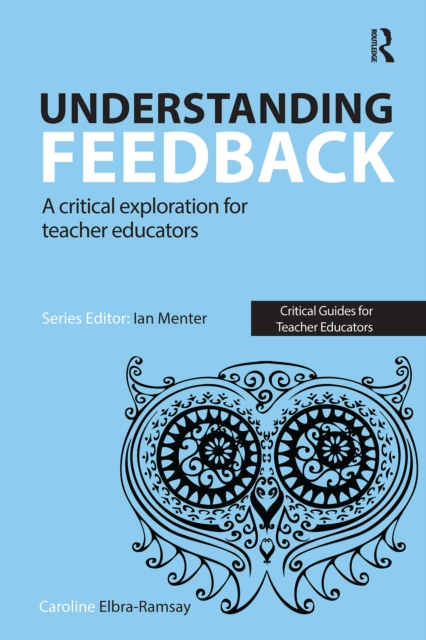
Understanding Feedback
A critical text on feedback and assessment for all teacher educators.
Feedback can be key to learning, but its potential value is not always fulfilled in practice. Developing a more nuanced understanding of feedback is particularly crucial in the ITE sector where ITE students receive feedback as learners but also give feedback to their pupils, and teacher educators need to provide feedback to their students and also guide them to give effective feedback to their pupils.
This book explores what feedback means in the ITE sector and more broadly within education. It discusses the relational, pedagogical and moral dimensions of feedback conceptualized by student teachers, drawing on research data and supporting teacher educators considering the implications for their own practice. It includes discussion of placement and academic assessment / feedback practice as well as referencing the Teachers' Standards, the Core Framework for ITT and recommendations from the Carter Review.
eBook


Building a High-Quality Teaching Profession
This report presents the best current evidence about what can make teacher-oriented reforms effective and points to examples of reforms that have produced specific results, show promise or illustrate imaginative ways of implementing change. Its four chapters cover recruitment and initial preparation of teachers; teacher development, support, careers and employment conditions; teacher evaluation and compensation; and teacher engagement in education reform.
eBook


Self-Study of Language and Literacy Teacher Education Practices
Self-Study in Teacher Education Practices (S-STEP) contribute to teacher education in culturally and linguistically diverse communities and contexts. The chapters reflect the scholarly inquiry of teacher educators dedicated to investigating and improving their practice.
eBook