
Catalogue Search | MBRL


Are you sure you want to remove the book from the shelf?

{{itemTitle}}
23,912
result(s) for
"Teaching Approaches"
Sort by:

Simply stations : partner reading, grades k-4
Literacy stations should be more than just busy work. Simply Stations: Partner Reading shows how to ensure that kids are purposefully and effectively practicing comprehension, deeper thinking, vocabulary, and communication skills every day. Here's everything you need to plan, teach, and refresh the Partner Reading station year-round, including… Step-by-step instructions for launching and maintaining the station; Whole-group lesson plans, based on key literacy standards, to introduce and support partner work; Printable teacher and student tools; On-the-spot assessment ideas and troubleshooting tips; Lists of grade-level specific materials; and Countless real-classroom photos so you see the possibilities first-hand.
eBook

IMPACT OF A SPANISH HIGHER EDUCATION TEACHER DEVELOPMENT PROGRAMME ON APPROACHES TO TEACHING. PSYCHOMETRIC PROPERTIES OF THE S-ATI-20 SCALE
La calidad de la formación de los profesores en las Universidades ha sido un debate inacabado entre las autoridades y los académicos debido a su impacto en el aprendizaje de los estudiantes. Aprender a enseñar en educación superior no es un camino directo, existen pocas oportunidades para aprender cómo enseñar a este nivel antes de entrar a enseñar directamente. Las Universidades deberían monitorizar hasta qué punto los profesores cumplen con sus funciones docentes y se dedican a mejorar sus habilidades y aptitudes docentes, así como sus actitudes y el compromiso hacia sus estudiantes. Siguiendo la línea de investigación sobre enfoques de aprendizaje (SAL), este estudio atiende a la formación docente analizando el impacto de un breve programa de desarrollo en los enfoques de enseñanza a través del uso de un cuestionario en español (S-ATI-20) que no es sino una revisión y validada versión del Approaches to Teaching Inventory (ATI), así como de otra información de corte cualitativo. El diseño es pre-experimental (pretest-postest) sin grupo de control. Se recogió información de 85 profesores a lo largo de tres cursos académicos consecutivos: 2014-2015 (n = 48), 2015-2016 (n = 22) y 2016-2017 (n = 15). Los resultados muestran que los programas de desarrollo cortos tienen un efecto positivo en los enfoques de enseñanza. Además, los resultados corroboran la estructura de dos factores del S-ATI-20, distinguiendo entre profesores que al enseñar se centran en el cambio conceptual y el estudiante (CCSF) o en la transmisión de la información y en el profesor (ITTF). Por último, la discusión teórica del impacto en los enfoques de enseñanza nos anima a (re)pensar la relación entre distintas formas de manejar las responsabilidades docentes. ¿Están los enfoques realmente en un continuo bipolar?, ¿deberíamos pensar en los enfoques como si fuera un modelo basado en una muñeca rusa (matrioshka)?
Journal Article

Approaches to teaching in higher education: the perspective of network analysis using the revised approaches to teaching inventory
Over time, the academics’ approaches to teaching (i.e., content- or learning-focused approach) were intensively studied. Traditionally, studies estimated the shared variance between the items that describe a behavioral pattern (i.e., the psychometric approach), defined as a learning- or content-focused approach to teaching. In this study, we used a different perspective (i.e., network analysis) to investigate academics’ approaches to teaching. We aimed to bring in new insights regarding the interactions between the elements that define academics’ approaches to teaching. We used the Revised Approaches to Teaching Inventory to collect responses from 705 academics (63.97% female) from six Romanian universities. The main results indicated that academics’ conceptions about the subject matter are central to their preferences concerning the adoption of a content-focused or a learning-focused approach to teaching. The estimated network is stable across different sub-samples defined by the academic disciplines, class size, academics’ gender, and teaching experience. We highlighted the implications of these findings for research and teaching practice in higher education. Also, several recommendations for developing pedagogical training programs for academics were suggested. In particular, this study brings valuable insights for addressing academics’ conception about the subject matter and suggests that this could be a new topic for pedagogical training programs dedicated to university teachers.
Journal Article
Co-creation in learning and teaching
There is a wide range of activity in the higher education sector labelled ‘students as partners’ and ‘co-creation in learning and teaching’. Several frameworks have been proposed to map and categorise existing partnership and co-creation roles, activities, research, and practice. In this paper, I synthesise some of these frameworks to illustrate how the predominant focus in the international literature has been on partnership projects that select small groups of often already super-engaged or privileged students to participate. In contrast, co-creation in learning and teaching, embedded within the curriculum and involving a whole class of students, has been largely overlooked. I explore the potential of co-creating learning and teaching with a whole class of students (including face-to-face, blended, and online settings, and including lectures, tutorials, laboratories, and other methods of teaching); in other words, it is co-creation integral to students’ programmes and courses of study. I argue that whole-class approaches to co-creation may be inherently more inclusive of students than other approaches to co-creation and that this approach both relies upon, and contributes towards, building positive relationships between staff and students, and between students and students. I explore some of the challenges of whole-class co-creation in learning and teaching, and I also argue that the benefits suggest this is currently an underutilised and researched approach internationally.
Journal Article

Undergraduate-level teaching and learning approaches for interprofessional education in the health professions: a systematic review
Background
Although most systematic reviews of interprofessional education (IPE) evaluated the impact of IPE on the students’ acquisition of knowledge in relation to other professions, the development of teamwork skills, and the changes in collaborative behaviour, the processes involved in IPE (i.e., approaches to teaching and learning) are under-researched. The purpose of the study was to conduct a systematic review to establish how IPE has been implemented in university-based undergraduate curricula, focusing on the teaching and learning approaches.
Methods
The systematic review was performed in 2020 with three databases: PubMed, Science Direct, and the Cochrane Library. Titles and abstracts were included based on pre-identified eligibility criteria. We used the article entitled ‘Systematic reviews in medical education: a practical approach: AMEE guide 94’ as the basis to establish the aim and methods of the current systematic review from 2010 to 2019.
Results
We found 16 articles that met the inclusion criteria and reported the implementation process of IPE in universities from Western, Asian, and African countries. A combination of at least two teaching and learning approaches was used to deliver IPE. The findings indicated that of all the teaching and learning approaches, simulation-based education, e-learning, and problem-based learning were the most prevalent approaches used to deliver IPE. This systematic review also revealed a lack of IPE programmes in the Middle East region.
Conclusions
The evidence synthesised in the current systematic review could support IPE curriculum planners and educators when planning an IPE programme. More global IPE initiatives are required to meet the global health workforce needs. Further studies are required to identify the effectiveness of the different teaching and learning approaches in the development of IPE competencies.
Journal Article

Adaptation of the Approaches to Teaching Inventory into Turkish and Analysis of Turkish Academics’ Approaches to Their Own Teaching
The aim of this research is to adapt the Approaches to Teaching Inventory into Turkish culture and analyze the teaching approaches of academics working at education faculties in terms of various variables. In the light of this aim, two subsequent sub studies were conducted. In the first phase of the study, the Approaches to Teaching Inventory (ATI) was adapted to Turkish culture. During the adaptation phase, language equivalence was analyzed both through interviews conducted with foreign language experts and through the correlation scores between the original and the Turkish forms. Results of the confirmatory factor analysis which was conducted on data gathered from 140 academics working at 35 different education faculties in Turkey confirmed the two-factor model of ATI as student centered and teacher centered. Reliability studies of ATI were carried out through Cronbach α, and McDonald ω coefficients and results revealed that ATI has the appropriate psychometric properties to be used in Turkish studies. In the second phase of the study, 185 academics working at 31 different education faculties were reached and their teaching approaches were analyzed based on the level of the course, number of students in their classes, their academic titles, and seniority variables. As a result of the analysis, it was found that academics adopted a more teacher-focused approach to teaching at undergraduate level courses whereas they adopted a more student-focused approach to teaching at graduate level courses. It was also found in terms of class size that academics adopted a more teacher-focused approach to teaching when the class size exceeded 20 students. In addition, in terms of academic titles, associate professors adopted a more student focused teaching approach compared to lecturer doctors and research assistant doctors. Moreover, a negative and weak relationship was found between seniority and teacher focused approach to teaching. Bu araştırmanın amacı, Öğretme Yaklaşımları Envanteri’nin Türk kültürüne uyarlanması ve eğitim fakültelerinde görev yapan öğretim elemanlarının öğretme yaklaşımlarının farklı değişkenlere göre incelenmesidir. Bu amaç doğrultusunda birbirini takip eden iki alt çalışma yürütülmüştür. Araştırmanın ilk aşamasında Öğretme Yaklaşımları Envanteri-ÖYE (Approaches to Teaching Inventory-ATI) Türk kültürüne uyarlanmıştır. Uyarlama sürecinde dilsel eşdeğerlik hem yabancı dil eğitimi uzmanları ile yapılan görüşmeler ile hem de özgün form ile Türkçe formdan elde edilen puanlar arasındaki korelasyon üzerinden incelenmiştir. Türkçe formun 35 farklı kurumda görev yapmakta olan toplam 140 öğretim elemanına uygulanması ile elde edilen veriler üzerinden gerçekleştirilen doğrulayıcı faktör analizi sonuçları ÖYE’nin öğretmen merkezli ve öğrenci merkezli olmak üzere iki faktörlü modeli ile veri uyumunun sağlandığını göstermiştir. Güvenirliği Cronbach α, McDonald ω katsayıları ve test – tekrar test yöntemleri ile incelenen ÖYE’nin Türkiye’de yapılacak çalışmalarda kullanılmaya uygun psikometrik özelliklere sahip olduğu görülmüştür. Çalışmanın ikinci aşamasında ise 31 farklı kurumda görev yapmakta olan toplam 185 öğretim elemanına ulaşılmış ve verilen dersin düzeyi, sınıftaki öğrenci sayısı, akademik unvan ve kıdem değişkenlerine göre incelemeler gerçekleştirilmiştir. Analizler sonucunda lisans düzeyindeki derslerde öğretmen merkezli, lisansüstü düzeydeki derslerde ise öğrenci merkezli yaklaşımların baskın olduğu görülmüştür. Sınıf büyüklüğüne göre yapılan karşılaştırmalarda, öğrenci sayısının 20’nin üzerine çıktığı durumlarda öğretmen merkezli yaklaşımın; unvana göre yapılan karşılaştırmalarda ise Doç. Dr. unvanına sahip öğretim elemanlarının öğrenci merkezli yaklaşımı Öğr. Gör. Dr. / Arş. Gör. Dr. unvanına sahip öğretim elemanlarına göre daha baskın bir şekilde sergiledikleri ve mesleki kıdem ile öğretmen merkezli yaklaşım alt boyutu puanları arasında negatif ve zayıf bir ilişkinin bulunduğu görülmüştür.
Journal Article
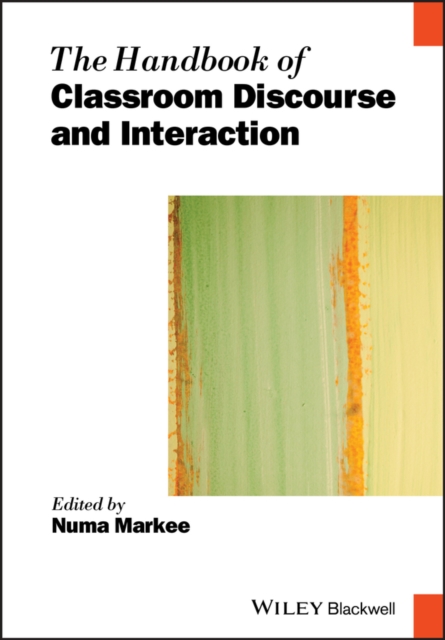
The handbook of classroom discourse and interaction
Offering an interdisciplinary approach, The Handbook of Classroom Discourse and Interaction presents a series of contributions written by educators and applied linguists that explores the latest research methodologies and theories related to classroom language. • Organized to facilitate a critical understanding of how and why various research traditions differ and how they overlap theoretically and methodologically • Discusses key issues in the future development of research in critical areas of education and applied linguistics • Provides empirically-based analysis of classroom talk to illustrate theoretical claims and methodologies • Includes multimodal transcripts, an emerging trend in education and applied linguistics, particularly in conversation analysis and sociocultural theory
eBook

Development and Use of the Approaches to Teaching Inventory
This paper describes how research into approaches to university teaching, from a relational perspective, has been used to develop an inventory to measure the key aspects of the variation in approaches to teaching. The Approaches to Teaching Inventory (ATI) is one of several that derive from the research perspective applied by Marton and colleagues in Europe (Marton, F., Hounsell, D., and Entwistle, N. (eds.) (1997). The Experience of Learning, 2nd edn., Scottish Academic Press, Edinburgh) to student learning. A feature of these inventories is that they measure the response of a group to a particular context, rather than more general characteristics of individuals in that group. Studies using these inventories have consistently shown relations between students' approaches to learning and the quality of their learning outcome. The question of interest to many university teachers is whether there are relations between the way teachers approach their teaching and ways their students approach their learning. This question was answered in a study published in 1999 that used the ATI to show that teacher-focused approaches to teaching were associated with students' reproducing orientations. Subsequent research revealed that in subjects where teachers adopted more student-focused approaches to teaching, their students adopted a deeper approach to learning. Some recent research using the inventory is reviewed along with an analysis of the validity of the ATI. The current version of the inventory is reproduced in this paper.
Journal Article

Teachers’ perceptions of using virtual reality technology in classrooms: A large-scale survey
High-immersion virtual reality (VR) technology is often associated with gaming. Yet, it is increasingly popular in educational contexts due to its potential to engage and motivate learners. Prior to VR technology integration in the classroom, the acceptance or resistance toward VR needs to be explored. This paper reports the results obtained from a large-scale (N = 20,876) survey on teachers’ attitudes toward the use of VR for education. The survey explored the relationships between the teachers’ VR integration level and their instructional approaches, as well as the frequency of VR use. Furthermore, the survey yielded answers on the relationship between the availability of information technology (IT) personnel and the frequency of VR use. Overall, teachers had moderately positive perceptions of the use of VR in education. There was no strong correlation between instructional approaches and the level of VR integration, but lower levels of VR integration were associated with more traditional teaching approaches. The results revealed a positive correlation between the level of VR integration and the frequency of VR use. However, the VR frequency use had a weak correlation with the availability of IT personnel.
Journal Article

Implementation of a Contextual Teaching Approach in Primary School Education
Theoretical discussions and results of empirical research on the contextual approach to teaching and learning point to its effectiveness in realising numerous learning outcomes. The theoretical part of the paper presents the theoretical foundations of the contextual teaching and learning approach, with a focus on constructivist learning theory. The empirical part of the paper presents the results of a study on the implementation of the contextual teaching and learning approach in primary school education from the teachers` perspective. The results indicate that teachers apply the principles of the contextual teaching and learning approach relatively rarely in the teaching process.
Journal Article