
Catalogue Search | MBRL


Are you sure you want to remove the book from the shelf?

{{itemTitle}}
7,000
result(s) for
"Teaching of students with specific learning difficulties / needs"
Sort by:
Classroom behavior, contexts, and interventions
Intended to be of interest to clinicians, teachers, researchers, graduate students, and others who work with students with learning and behavioral disabilities, this book focuses on identify and review issues and outcomes associated with behavioral concerns of students with learning and behavioral disabilities.
eBook
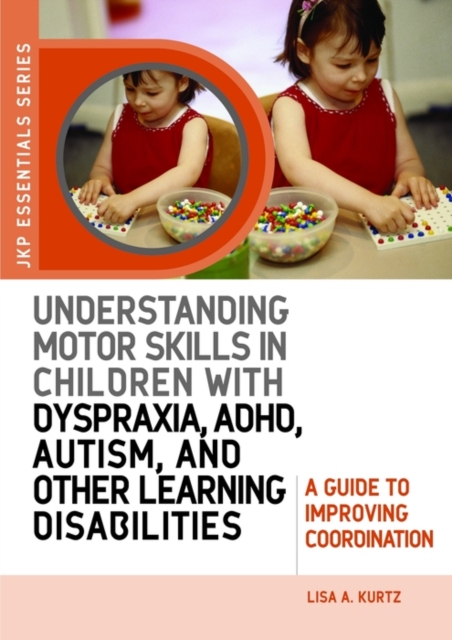
Understanding motor skills in children with dyspraxia, ADHD, autism, and other learning disabilities : a guide to improving coordination
The book is user-friendly and includes clear diagrams in each section, along with tables to outline key points. I found these very useful and they are an easy reference/ reminder, for example, they include a normal development chart, what assessments are available and their main aims.'
- National Association of Paediatric Occupational Therapists
Coordination problems often make everyday activities a challenge for children with learning disabilities. This accessible manual offers practical strategies and advice for helping children with coordination difficulties.
The author explains how to recognize normal and abnormal motor development, when and how to seek help, and includes specific teaching strategies to help children with coordination difficulties succeed in the classroom, playground, and home. She describes a wide range of therapeutic methods and provides a comprehensive list of resources.
Full of practical help, this is essential reading for anyone caring for, or working with, children with developmental motor concerns.
eBook
Literacy and learning
Inhalt: Response to intervention: treatment validity and implementation challenges in the primary and middle grades / Stephanie Al Otaiba, Mary Beth Calhoon and Jeanne Wanzek -- The role of context in the assessment of \"unresponsiveness\" within responsiveness-to-intervention: the \"relative slope-difference discrepancy model\" (RSDDM) / Georgios D. Sideridis, Susana Padeliadu and Faye Antoniou -- Literacy supports for adolescent struggling readers: taking action through comprehension instruction / Michael Faggella-Luby and Patricia Sampson Graner -- Developmental dyslexia in a transparent orthography: a study of Spanish dyslexic children / Manuel Soriano and Ana Miranda -- Reading comprehension: unanswered questions and reading instruction challenges / Solveig-Alma Halaas Lyster -- A longitudinal study of the impact of effective beginning reading instruction for English learners: literacy, language, and learning disabilities / Anne W. Graves -- Writing: underutilized for young children with disabilities? / M. Susan Burns, Julie K. Kidd and Tamara Genarro -- Teaching students with LD to use reading comprehension strategies / Alison Gould Boardman, Janette K. Klingner, Amy L. Boele and Elizabeth Swanson -- Persuading students with emotional disabilities to write: a design study / Margo A. Mastropieri, Thomas E. Scruggs, Yojanna Cuenca-Sanchez, Narcy Irby, Sara Mills, Linda Mason and Richard Kubina -- Components affecting expressive writing in typical and disabled writers / Cesare Cornoldi, Francesco Del Prete, Anna Gallani, Francesco Sella and Anna Maria Re -- Dyslexia: a categorical falsehood without validity or utility / Simon Gibbs and Julian Elliott -- The study of human exceptionality: how it informs our knowledge of learning and cognition / Margo A. Mastropieri and Thomas E. Scruggs.
eBook

Special Education Transition Services for Students with Disabilities
This book discusses the considerable challenges students with disabilities conquer in education, varying from relationships with teachers and academics, learning resources, and everyday social situations.
eBook
Promoting Social Inclusion
Create Opportunities to Interact with PeersIdentify and Address the Barriers to Social Inclusion; Emphasize Reciprocity; Promote Values, Rights and Character Traits that Support Social Inclusion; Examine the Social Structures of the School and Community; Utilize a Whole-school Approach; Attend to Voice; Conclusion; References; Segregation versus Solidarity: Rethinking the Uncritical Commitment to Inclusion; Segregation versus Solidarity; Enforced versus Voluntary; Imposed Agenda versus Common Purpose; Remediation versus Acceptance; Damaged Identities versus Positive Identities
eBook
Working with Teaching Assistants and Other Support Staff for Inclusive Education
Volume 4 in this series investigates ways that staff can work effectively with Teaching Assistants and other support staff when implementing inclusive educational practices in schools. Consideration is given to the perspectives of a variety of stakeholders.
eBook

Assessing L2 Students with Learning and Other Disabilities
This edited volume discusses the theoretical, ethical and practical considerations involved in the assessment of Second Language Learners (SLLs) with Specific Language Learning Disorders (SpLD), such as dyslexia and Attention Deficit and Hyperactivity Disorder, and with other disabilities like visual and hearing impairments. The volume contains 14 chapters. These explore various theoretical models and research findings that identify and evaluate the language and special needs of SLLs with SpLD and other disabilities and evaluate the effectiveness of the accommodation practices employed so far. The studies involve both high-stakes tests and classroom-based assessments conducted by professionals and researchers working in the areas of psychology, special education and second/foreign language testing and assessment from various countries around the globe, including the USA, Canada, New Zealand and European countries such as Italy, UK, Greece, Germany, and Slovenia. The volume accommodates high-quality submissions that cover a gap in a research area that has long been in need of theoretical and empirical attention. This volume will become a valuable point of reference and springboard for future research initiatives.
eBook
Perspectives on bullying and difference: supporting young people with special educational needs and/or disabilities in school
Children with special education needs and/or disabilities are particularly vulnerable to bullying in school.Drawing on the experiences of young people, parents, carers and practitioners and combining them with the latest research findings, this book explores just how much work there is to be done in schools right now. It also reveals how solutions are closer than we may think, providing guidance and case studies which outline how schools and parents can tackle the problem.This book has a powerful message which sets the agenda schools, and for future research in the field of bullying and difference. It is a must read for everyone involved in education.
eBook
Teacher Expectations for Student Performance: Lessons Learned and Implications for Research and Practice
In this chapter, we begin by exploring the lessons learned from studies of teachers’ expectations for student behavior, being with early inquiry conducted following the Education for All Handicapped Children Act (P.L. 94-142) of 1975. Next, we explore the expanding knowledge base following reauthorization of the Individuals with Disabilities Education Act (IDEA, 1997), the Individuals with Disabilities Education Improvement Act (IDEIA, 2004), and No Child Left Behind Act (NCLB, 2001) as the field increasingly emphasized inclusive programming and supporting access to the general education curriculum, called for academic excellence for all students, and focused on systems-level perspectives for teaching behavioral expectations. We summarize lessons learned from these bodies of knowledge, focusing attention on key findings and existing limitations of the studies conducted to date. We conclude with implications for educational research and practice, with attention to how lessons learned regarding teacher expectations for student performance can (a) facilitate inclusive programming for students with disabilities, (b) support school transitions, (c) inform primary prevention efforts and targeted supports, and (d) inform teacher preparation programs.
Book Chapter
Adapting Research-Based Practices with Fidelity: Flexibility by Design
The contemporary focus on high fidelity implementation of research-based practices often creates tensions for educators who seek to balance fidelity with needed flexibility as they strive to improve learner outcomes. In an effort to improve how decisions are made such that flexibility is achieved while fidelity to core components is maintained, this chapter begins with a discussion of the role of fidelity in research and practice. Particular attention is given to current conceptualizations of fidelity that may help inform theoretically and empirically driven adaptations to research-based practices. Specifically, we describe adaptations based on the instructional context for implementation and the characteristics of the individual learners. A framework for adapting research-based practices is then presented with relevant examples from research designed to optimize learner responsiveness without sacrificing fidelity to core components. The chapter ends with implications and future directions for research and practice.
Book Chapter