
Catalogue Search | MBRL


Are you sure you want to remove the book from the shelf?

{{itemTitle}}
35,267
result(s) for
"Technology, Pharmaceutical - methods"
Sort by:


In Vivo, In Situ Imaging of Microneedle Insertion into the Skin of Human Volunteers Using Optical Coherence Tomography
Purpose To gather sub-surface in situ images of microneedle-treated human skin, in vivo, using optical coherence tomography (OCT). This is the first study to utilise OCT to investigate the architectural changes that are induced in skin following microneedle application. Methods Steel, silicon and polymer microneedle devices, with different microneedle arrangements and morphologies, were applied to two anatomical sites in human volunteers following appropriate ethical approval. A state-of-the-art ultrahigh resolution OCT imaging system operating at 800 nm wavelength and <3 µm effective axial resolution was used to visualise the microneedle-treated area during insertion and/or following removal of the device, without any tissue processing. Results Transverse images of a microneedle device, in situ, were captured by the OCT system and suggest that the stratified skin tissue is compressed during microneedle application. Following removal of the device, the created microchannels collapse within the in vivo environment and, therefore, for all studied devices, microconduit dimensions are markedly smaller than the microneedle dimensions. Conclusions Microchannels created in the upper skin layers by microneedles are less invasive than previous histology predicts. OCT has the potential to play a highly influential role in the future development of microneedle devices and other transdermal delivery systems.
Journal Article

Analytical method validation and instrument performance verification
Validation describes the procedures used to analyze pharmaceutical products so that the data generated will comply with the requirements of regulatory bodies of the US, Canada, Europe and Japan. Calibration of Instruments describes the process of fixing, checking or correcting the graduations of instruments so that they comply with those regulatory bodies. This book provides a thorough explanation of both the fundamental and practical aspects of biopharmaceutical and bioanalytical methods validation. It teaches the proper procedures for using the tools and analysis methods in a regulated lab setting. Readers will learn the appropriate procedures for calibration of laboratory instrumentation and validation of analytical methods of analysis. These procedures must be executed properly in all regulated laboratories, including pharmaceutical and biopharmaceutical laboratories, clinical testing laboratories (hospitals, medical offices) and in food and cosmetic testing laboratories.
eBook
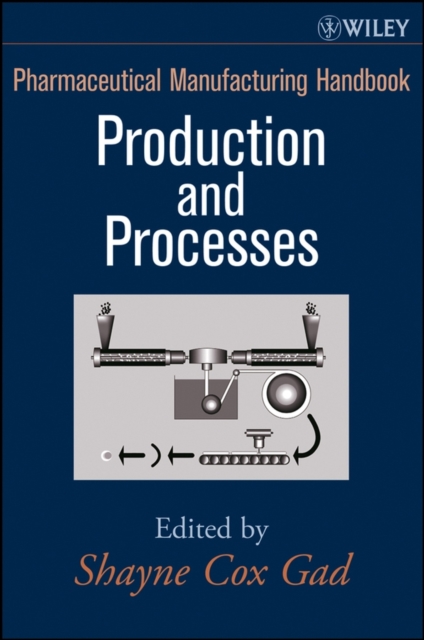
Pharmaceutical manufacturing handbook
This handbook features contributions from a team of expert authors representing the many disciplines within science, engineering, and technology that are involved in pharmaceutical manufacturing. They provide the information and tools you need to design, implement, operate, and troubleshoot a pharmaceutical manufacturing system. The editor, with more than thirty years' experience working with pharmaceutical and biotechnology companies, carefully reviewed all the chapters to ensure that each one is thorough, accurate, and clear.
eBook
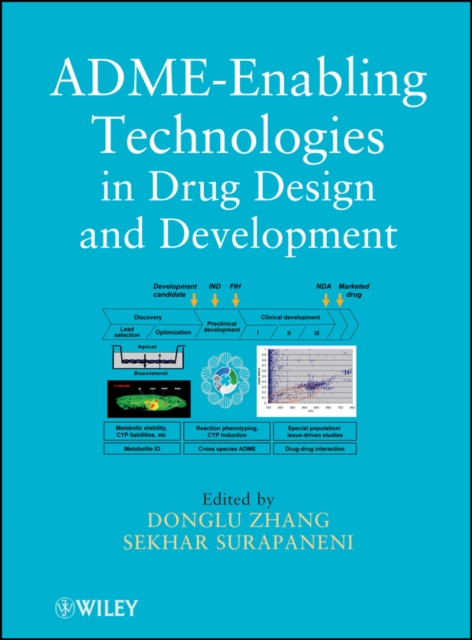
ADME-enabling technologies in drug design and development
A comprehensive guide to cutting-edge tools in ADME research The last decade has seen tremendous progress in the development of analytical techniques such as mass spectrometry and molecular biology tools, resulting in important advances in drug discovery, particularly in the area of absorption, distribution, metabolism, and excretion (ADME). ADME-Enabling Technologies in Drug Design and Development focuses on the current state of the art in the field, presenting a comprehensive review of the latest tools for generating ADME data in drug discovery. It examines the broadest possible range of available technologies, giving readers the information they need to choose the right tool for a given application, a key requisite for obtaining favorable results in a timely fashion for regulatory filings. With over thirty contributed chapters by an international team of experts, the book provides: A thorough examination of current tools, covering both electronic/mechanical technologies and biologically based ones Coverage of applications for each technology, including key parameters, optimal conditions for intended results, protocols, and case studies Detailed discussion of emerging tools and techniques, from stem cells and genetically modified animal models to imaging technologies Numerous figures and diagrams throughout the text Scientists and researchers in drug metabolism, pharmacology, medicinal chemistry, pharmaceutics, toxicology, and bioanalytical science will find ADME-Enabling Technologies in Drug Design and Development an invaluable guide to the entire drug development process, from discovery to regulatory issues.
eBook

Live attenuated pandemic influenza vaccine: Clinical studies on A/17/California/2009/38 (H1N1) and licensing of the Russian-developed technology to WHO for pandemic influenza preparedness in developing countries
In February 2009, Nobilon granted the World Health Organization (WHO) a non-exclusive licence to develop, register, manufacture, use and sell seasonal a pandemic live attenuated influenza vaccine (LAIV) produced on embryonated chicken eggs. WHO was permitted to grant sub-licences to vaccine manufacturers in developing countries within the framework of its influenza vaccine technology transfer initiative. In parallel, the Institute of Experimental Medicine (IEM), Russia, concluded an agreement with WHO for the supply of Russian LAIV reassortants for use by these manufacturers.
Also in 2009, IEM carried out a study on a novel A/17/California/2009/38 (H1N1) pandemic LAIV candidate derived from the pandemic-related A/California/07/2009 (H1N1) influenza virus and the attenuated A/Leningrad/134/17/57 (H2N2) master donor virus, using routine reassortant technique in embryonated chicken eggs. Following successful preclinical studies in eggs and in ferrets, a double-blind, controlled, randomized clinical trial was carried out in immunologically naïve study participants between 12–18 and 18–60 years old. Collectively, the immunogenicity data (haemagglutinin inhibition test, ELISA and cytokine tests for the detection of memory T cells) support the use of a single dose of the pandemic H1N1 LAIV in 12–60 year olds. The outcome of the studies showed no significant adverse reactions attributable to the vaccine, and suggests that the vaccine is as safe and immunogenic as seasonal influenza vaccines. Importantly, it was clearly demonstrated that reliance on the HAI assay alone is not recommended for testing LAIV.
To date, via the licence agreement with WHO, the H1N1 LAIV has been transferred to the Government Pharmaceutical Organization in Thailand, the Serum Institute of India, and the Zhejiang Tianyuan Bio-Pharmaceutical Co., Ltd. in China.
Journal Article

A next-generation, serum-free, highly purified Vero cell rabies vaccine is safe and as immunogenic as the reference vaccine Verorab® when administered according to a post-exposure regimen in healthy children and adults in China
•Sanofi Pasteur has developed a next-generation rabies vaccine (PVRV-NG).•PVRV-NG is an evolution of Sanofi Pasteur's currently licensed rabies vaccine Verorab.•We conducted a post-exposure Phase 3 clinical trial with Verorab as control in China.•PVRV-NG was at least as immunogenic as Verorab and was well tolerated.•PVRV-NG offers a new alternative for the prophylaxis of rabies.
As an evolution of its currently licensed rabies vaccine Verorab®, Sanofi Pasteur has developed a next-generation, serum-free, highly purified Vero rabies vaccine (PVRV-NG). Through this Phase III clinical trial, we aimed to demonstrate the non-inferiority of PVRV-NG over Verorab when administered according to a post-exposure regimen and to assess its clinical safety.
A total of 816 healthy subjects aged ≥10 years were randomized according to a 2:1 ratio to receive PVRV-NG or Verorab. Half of the subjects were aged 10–17 years, the other half were aged ≥18 years. All subjects were to receive 5 injections on days 0, 3, 7, 14 and 28. Three blood samples were taken for rabies virus neutralizing antibodies (RVNA) assessment, at baseline, on day 14 and day 42. Solicited adverse reactions (between injections 1, 2 and 3, and within 7 days post-injections 4 and 5) and adverse events (up to 28 days after the last injection) were collected for clinical safety assessment; serious adverse events were reported up to 6-months after the last injection.
The proportion of subjects with an RVNA titer ≥0.5IU/mL after the third injection of PVRV-NG was non-inferior to the proportion of those who received Verorab. PVRV-NG was shown to be as immunogenic as Verorab in each age range in the per-protocol and full analysis sets. PVRV-NG induced a strong immune response in both age ranges, with high RVNA levels and increased geometric mean titers compared to baseline after each measured time point. PVRV-NG had a satisfactory safety profile after each injection, similar to Verorab with regards to the nature, frequency, duration and severity of adverse events. Two serious adverse events were reported, none was related to vaccination.
This trial demonstrated the immunogenic non-inferiority of PVRV-NG over Verorab and showed that both vaccines have similar safety profiles. This trial is registered at ClinicalTrials.gov (NCT01339312). This manuscript is the first full report of the study. An abstract of the study results was previously presented at the Rabies in the Americas (RITA) conference in October 2012 in São Paulo, Brazil.
Sanofi Pasteur.
Journal Article

A Cell Culture—Derived Influenza Vaccine Provides Consistent Protection Against Infection and Reduces the Duration and Severity of Disease in Infected Individuals
Background. Current knowledge of the consistency of protection induced by seasonal influenza vaccines over the duration of a full influenza season is limited, and little is known about the clinical course of disease in individuals who become infected despite vaccination. Methods. Data from a randomized double-blind placebo-controlled clinical trial undertaken in healthy young adults in the 2008—2009 influenza season were used to investigate the weekly cumulative efficacy of a Vero cell culture—derived influenza vaccine. In addition, the duration and severity of disease in vaccine and placebo recipients with cell culture—confirmed influenza infection were compared. Results. Vaccine efficacy against matching strains was consistently high (73%—82%) throughout the study, including the entire period of the influenza season during which influenza activity was above the epidemic threshold. Vaccine efficacy was also consistent (68%—83%) when calculated for all strains, irrespective of antigenic match. Vaccination also ameliorated disease symptoms when infection was not prevented. Bivariate analysis of duration and severity showed a significant amelioration of myalgia (P = .003), headache (P = .025), and fatigue (P = .013) in infected vaccinated subjects compared with placebo. Cough (P = .143) and oropharyngeal pain (P = .083) were also reduced in infected vaccinated subjects. Conclusions. A Vero cell culture—derived influenza vaccine provides consistently high levels of protection against cell culture—confirmed infection by seasonal influenza virus and significantly reduces the duration and severity of disease in those individuals in which infection is not prevented. Clinical Trials Registration. ClinicalTrials.gov NCT00566345.
Journal Article

Process scale purification of antibodies
Traditional column chromatography dominates current purification technology, and many of the productivity gains that have been achieved have relied on upscaling such devices. However, this comes with a cost penalty and the pharmaceutical industry has reached the point at which further upscaling becomes economically unsupportable. This book offers a broad-based reassessment of old and new purification methods, incorporating an analysis of innovative new trends in purification. The book has wide coverage of different antibody purification strategies and brings together top-tier experts to address problems in process-scale antibody purification.
eBook

The Artificial Intelligence-Powered New Era in Pharmaceutical Research and Development: A Review
Currently, artificial intelligence (AI), machine learning (ML), and deep learning (DL) are gaining increased interest in many fields, particularly in pharmaceutical research and development, where they assist in decision-making in complex situations. Numerous research studies and advancements have demonstrated how these computational technologies are used in various pharmaceutical research and development aspects, including drug discovery, personalized medicine, drug formulation, optimization, predictions, drug interactions, pharmacokinetics/ pharmacodynamics, quality control/quality assurance, and manufacturing processes. Using advanced modeling techniques, these computational technologies can enhance efficiency and accuracy, handle complex data, and facilitate novel discoveries within minutes. Furthermore, these technologies offer several advantages over conventional statistics. They allow for pattern recognition from complex datasets, and the models, typically developed from data-driven algorithms, can predict a given outcome (model output) from a set of features (model inputs). Additionally, this review discusses emerging trends and provides perspectives on the application of AI with quality by design (QbD) and the future role of AI in this field. Ethical and regulatory considerations associated with integrating AI into pharmaceutical technology were also examined. This review aims to offer insights to researchers, professionals, and others on the current state of AI applications in pharmaceutical research and development and their potential role in the future of research and the era of pharmaceutical Industry 4.0 and 5.0.
Graphical Abstract
Journal Article