
Catalogue Search | MBRL


Are you sure you want to remove the book from the shelf?

{{itemTitle}}
78,989
result(s) for
"Technology Philosophy."
Sort by:


Machines as the Measure of Men
Over the past five centuries, advances in Western understanding of and control over the material world have strongly influenced European responses to non-Western peoples and cultures. InMachines as the Measure of Men, Michael Adas explores the ways in which European perceptions of their scientific and technological superiority shaped their interactions with people overseas. Adopting a broad, comparative perspective, he analyzes European responses to the cultures of sub-Saharan Africa, India, and China, cultures that they judged to represent lower levels of material mastery and social organization.
Beginning with the early decades of overseas expansion in the sixteenth century, Adas traces the impact of scientific and technological advances on European attitudes toward Asians and Africans and on their policies for dealing with colonized societies. He concentrates on British and French thinking in the nineteenth century, when, he maintains, scientific and technological measures of human worth played a critical role in shaping arguments for the notion of racial supremacy and the \"civilizing mission\" ideology which were used to justify Europe's domination of the globe. Finally, he examines the reasons why many Europeans grew dissatisfied with and even rejected this gauge of human worth after World War I, and explains why it has remained important to Americans.
Showing how the scientific and industrial revolutions contributed to the development of European imperialist ideologies,Machines as the Measure of Menhighlights the cultural factors that have nurtured disdain for non-Western accomplishments and value systems. It also indicates how these attitudes, in shaping policies that restricted the diffusion of scientific knowledge, have perpetuated themselves, and contributed significantly to chronic underdevelopment throughout the developing world. Adas's far-reaching and provocative book will be compelling reading for all who are concerned about the history of Western imperialism and its legacies.
First published to wide acclaim in 1989,Machines as the Measure of Menis now available in a new edition that features a preface by the author that discusses how subsequent developments in gender and race studies, as well as global technology and politics, enter into conversation with his original arguments.
eBook


Crouching Predictions, Hidden Hopes: Futures for Philosophy of Technology
The article presents an historico-philosophical narrative of developments in the philosophy of technology across four generations: (1) the late 1800s work of such figures as Ernst Kapp and Karl Marx, (2) the mid-20th century analysis of technology as a challenge to the lifeworld by such thinkers as José Ortega y Gasset, Martin Heidegger, and Jacques Ellul, (3) a pragmatist, empirical turn by late twentieth century US American and Dutch philosophers, (4) a current movement toward globalization. An elaboration on the third generation calls attention to work from the United States by Hans Jonas, Don Ihde, Albert Borgmann, Kristin Shrader-Frechette, and Paul Durbin as well as Dutch philosophers such as, among others, Peter Kroes, Anthonie Meijers, Hans Achterhuis, Philip Brey, and Peter-Paul Verbeek. A concluding section projects a future of continuing globalization.
Journal Article

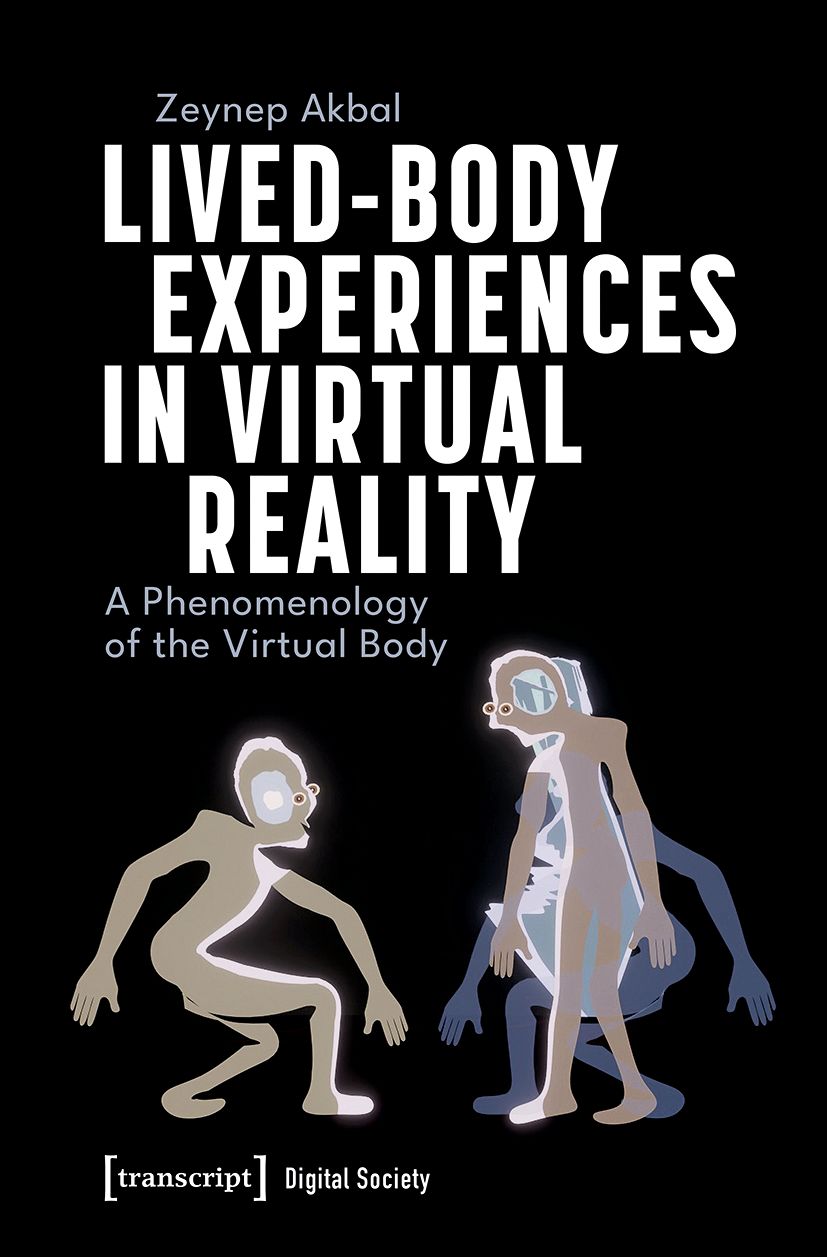
Lived-Body Experiences in Virtual Reality
What is it like to perceive a virtual object through the sensed presence of a virtual body? How do subject-object relations occur and can be actualized in virtual environments? Zeynep Akbal explores the impact of virtual reality (VR) technology on the subjective experience of the body and situates the results in context with existing theories in media sciences and the phenomenology of bodily perception. This study presents VR technology as a tool that can be used to more closely examine and study the fundamental intersections of the humanities and the natural sciences that explore the nature of perception.
eBook

Postphenomenological investigations
This book provides an introduction to postphenomenology, an emerging school of thought in the philosophy of technology and science and technology studies, which addresses the relationships users develop with the devices they use.
eBook


Exceptional Technologies
A discussion of the rapidly growing field, from a thinker at the forefront of research at the interface of technology and the humanities, this is a must-read for anyone interested in contemporary developments in Continental philosophy and philosophy of technology. Philosophy of technology regularly draws on key thinkers in the Continental tradition, including Husserl, Heidegger, and Foucault. Yet because of the problematic legacy of the ‘empirical turn’, it often criticizes ‘bad’ continental tendencies - lyricism, pessimism, and an outdated view of technology as an autonomous, transcendental force. This misconception is based on a faulty image of Continental thought, and in addressing it Smith productively redefines our concept of technology. By closely engaging key texts, and by examining ‘exceptional technologies’ such as imagined, failed, and impossible technologies that fall outside philosophy of technology’s current focus, this book offers a practical guide to thinking about and using continental philosophy and philosophy of technology. It outlines and enacts three key characteristics of philosophy as practiced in the continental tradition: close reading of the history of philosophy; focus on critique; and openness to other disciplinary fields. Smith deploys the concept of exceptional technologies to provide a novel way of widening discussion in philosophy of technology, navigating the relationship between philosophy of technology and Continental philosophy; the history of both these fields; the role of imagination in relation to technologies; and the social function of technologies themselves.
eBook