
Catalogue Search | MBRL


Are you sure you want to remove the book from the shelf?

{{itemTitle}}
94,772
result(s) for
"Technology Social aspects Research."
Sort by:


Shaky Foundations
Numerous popular and scholarly accounts have exposed the deep impact of patrons on the production of scientific knowledge and its applications.Shaky Foundationsprovides the first extensive examination of a new patronage system for the social sciences that emerged in the early Cold War years and took more definite shape during the 1950s and early 1960s, a period of enormous expansion in American social science.
By focusing on the military, the Ford Foundation, and the National Science Foundation, Mark Solovey shows how this patronage system presented social scientists and other interested parties, including natural scientists and politicians, with new opportunities to work out the scientific identity, social implications, and public policy uses of academic social research. Solovey also examines significant criticisms of the new patronage system, which contributed to widespread efforts to rethink and reshape the politics-patronage-social science nexus starting in the mid-1960s.
Based on extensive archival research,Shaky Foundationsaddresses fundamental questions about the intellectual foundations of the social sciences, their relationships with the natural sciences and the humanities, and the political and ideological import of academic social inquiry.
eBook

Greedy science : creating knowledge, making money, and being famous in the 1980s
\"The authors in this edited collection of essays explore this particular attribute-greed-by looking how it informed, intersected, and interlaced with science and technology (and scientists and technologists) during the 1980s. During this decade, greed, although undeniably present in earlier eras, became an extensive, expansive, and at times explicit characteristic of science both in the United States and around the world.3 The global scientific community was reshaped in a multitude of ways, large and small, by money, fame, and the pursuit of celebrity\"-- Provided by publisher.
BOOK

Foundations of Critical Media and Information Studies
This book lays down foundations for the analysis of media, information, and information technology in twenty-first-century information society, as well as introducing the theoretical and empirical tools necessary for the critical study of media and information. Christian Fuchs shows the role classical critical theory can play for analyzing the information society and the information economy, as well as analyzing the role of the media and the information economy in economic development, the new imperialism, and the new economic crisis.
eBook

Scientific research
Discusses issues that have bearing on how scientists work and whether problems not related to the work itself will get in the way of scientists' successs in gaining new knowledge.
Book

Science and public reason
This essay collection explores how democratic governments construct public reason -- that is, the forms of evidence and argument used in making state decisions accountable to citizens. The term public reason as used here is not simply a matter of constructing principled arguments that respect the norms of democratic deliberation. My objective is to investigate what societies do in practice when they claim to be reasoning in the public interest. Reason, from this perspective, comprises the institutional practices, discourses, techniques and instruments through which governments claim legitimacy in an era of potentially unbounded risks -- physical, political, and moral. Those legitimation efforts, in turn, depend on citizens' acceptance of the forms of reasoning that governments offer. Included here therefore is an inquiry into the conditions that lead citizens of democratic societies to accept policy justification as being reasonable. These modes of public knowing, or 'civic epistemologies,' are integral to the constitution of political culture as described in this book. Methodologically, the book is grounded in the field of science and technology studies (STS). It uses in-depth qualitative studies of legal and political practices to shed light on the cultural construction of public reason and the reasoning political subject. It employs comparative analysis to illuminate the diverse ways in which science and expertise are factored into democratic decisionmaking; and it illustrates how STS scholarship can use comparison without falling into rigidly structural analysis. The collection as a whole contributes to democratic theory, legal studies, comparative politics, and ethnographies of modernity, as well as STS. (Text excerpt, IAB-Doku).
eBook

How data happened : a history from the age of reason to the age of algorithms
\"From facial recognition--capable of checking people into flights or identifying undocumented residents--to automated decision systems that inform who gets loans and who receives bail, each of us moves through a world determined by data-empowered algorithms. But these technologies didn't just appear: they are part of a history that goes back centuries, from the census enshrined in the US Constitution to the birth of eugenics in Victorian Britain to the development of Google search. Expanding on the popular course they created at Columbia University, Chris Wiggins and Matthew L. Jones illuminate the ways in which data has long been used as a tool and a weapon in arguing for what is true, as well as a means of rearranging or defending power. They explore how data was created and curated, as well as how new mathematical and computational techniques developed to contend with that data serve to shape people, ideas, society, military operations, and economies. Although technology and mathematics are at its heart, the story of data ultimately concerns an unstable game among states, corporations, and people. How were new technical and scientific capabilities developed; who supported, advanced, or funded these capabilities or transitions; and how did they change who could do what, from what, and to whom? Wiggins and Jones focus on these questions as they trace data's historical arc, and look to the future. By understanding the trajectory of data--where it has been and where it might yet go--Wiggins and Jones argue that we can understand how to bend it to ends that we collectively choose, with intentionality and purpose.\"-- Publisher marketing.
Book


Impacts of COVID-19 and social isolation on academic staff and students at universities: a cross-sectional study
Background
“The impacts of the Coronavirus Disease 2019 (COVID-19) pandemic and the shutdown it triggered at universities across the world, led to a great degree of social isolation among university staff and students. The aim of this study was to identify the perceived consequences of this on staff and their work and on students and their studies at universities.
Method
The study used a variety of methods, which involved an on-line survey on the influences of social isolation using a non-probability sampling. More specifically, two techniques were used, namely a convenience sampling (i.e. involving members of the academic community, which are easy to reach by the study team), supported by a snow ball sampling (recruiting respondents among acquaintances of the participants). A total of 711 questionnaires from 41 countries were received. Descriptive statistics were deployed to analyse trends and to identify socio-demographic differences. Inferential statistics were used to assess significant differences among the geographical regions, work areas and other socio-demographic factors related to impacts of social isolation of university staff and students.
Results
The study reveals that 90% of the respondents have been affected by the shutdown and unable to perform normal work or studies at their institution for between 1 week to 2 months. While 70% of the respondents perceive negative impacts of COVID 19 on their work or studies, more than 60% of them value the additional time that they have had indoors with families and others. .
Conclusions
While the majority of the respondents agree that they suffered from the lack of social interaction and communication during the social distancing/isolation, there were significant differences in the reactions to the lockdowns between academic staff and students. There are also differences in the degree of influence of some of the problems, when compared across geographical regions. In addition to policy actions that may be deployed, further research on innovative methods of teaching and communication with students is needed in order to allow staff and students to better cope with social isolation in cases of new or recurring pandemics.
Journal Article
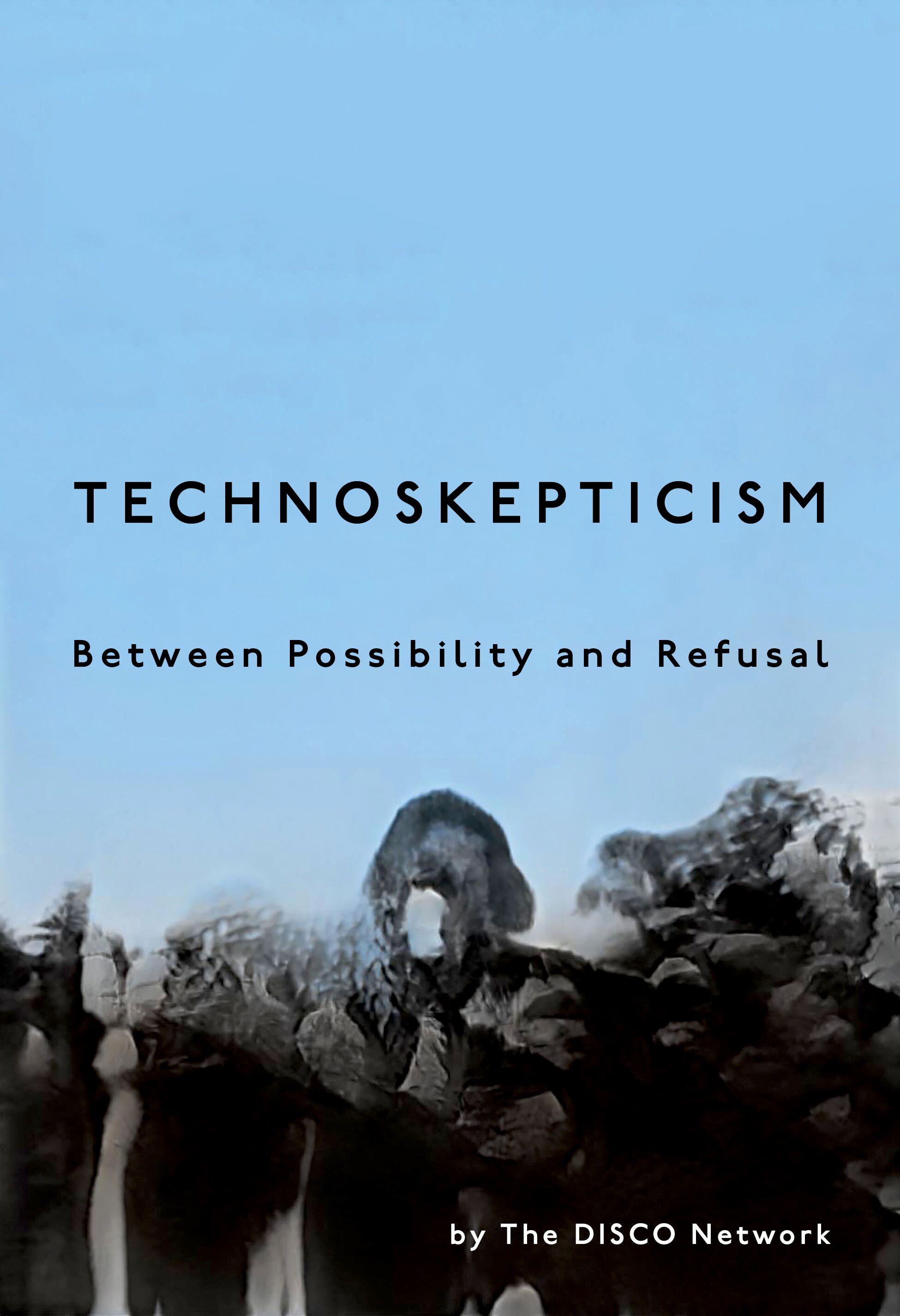
Technoskepticism
From Munchausen by Tiktok to wellness apps to online communities to AI, the DISCO Network explores the possibilities that technoskepticism can create. This is a book about possibility and refusal in relation to new technologies. Though refusal is an especially powerful mode—particularly for those who have historically not been given the option to say no—people of color and disabled people have long navigated the space between saying yes and saying no to the newest technologies. Technoskepticism relates some of these stories to reveal the possibilities skepticism can create. The case for technoskepticism unfolds across three sections: the first focused on disability, the creative use of wellness apps, and the desire for diagnosis; the second on digital nostalgia and home for Black and Asian users who produced communities online before home pages gave way to profiles; and the third focused on the violence inherent in A.I.-generated Black bodies and the possibilities for Black style in the age of A.I. Acknowledging how the urge to refuse new technologies emerges from specific racialized histories, the authors also emphasize how care can look like an exuberant embrace of the new.
eBook