
Catalogue Search | MBRL


Are you sure you want to remove the book from the shelf?

{{itemTitle}}
24,580
result(s) for
"Technology Terminology."
Sort by:


Handbook of Terminology Management
The Handbook of Terminology Management is a unique work designed to meet the practical needs of terminologists, translators, lexicographers, subject specialists (e.g., engineers, medical professionals, etc.), standardizers and others who have to solve terminological problems in their daily work.In more than 900 pages, the Handbook brings together contributions from approximately 50 expert authorities in the field. The Handbook covers a broad range of topics integrated from an international perspective and treats such fundamental issues as: practical methods of terminology management; creation and use of terminological tools (terminology databases, on-line dictionaries, etc.); terminological applications.The high level of expertise provided by the contributors, combined with the wide range of perspectives they represent, results in a thorough coverage of all facets of a burgeoning field. The lay-out of the Handbook is specially designed for quick and for cross reference, with hypertext and an extensive index.See also Handbook of Terminology Management set (volumes 1 and 2).
eBook

How to speak tech : the non-techie's guide to key technology concepts
\"Things you've done online: ordered a pizza, checked the weather, booked a hotel, and reconnected with long-lost friends. Now it's time to find out how these things work. Vinay Trivedi peels back the mystery of the Internet, explains it all in the simplest terms, and gives you the knowledge you need to speak confidently when the subject turns to technology. This revised second edition of How to Speak Tech employs the strategy of the popular first edition: through the narrative of setting up a fictitious startup, it introduces you to essential tech concepts. New tech topics that were added in this edition include the blockchain, augmented and virtual reality, Internet of Things, and artificial intelligence. The author's key message is: technology isn't beyond the understanding of anyone. By breaking down major tech concepts involved with a modern startup into bite-sized chapters, the author's approach helps you understand topics that aren't always explained clearly and shows you that they aren't rocket science\"-- Provided by publisher.
Book
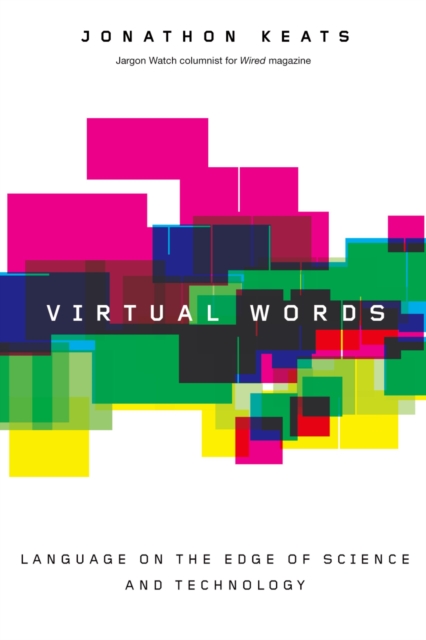
Virtual words : language on the edge of science and technology
Technology provides an unusually active laboratory for the study of linguistic innovation. Virtual Words consists of short essays, covering 28 recently coined words, that consider how words get coined, what relationship they have to their subject matter, and why they succeed or fail.
eBook

Terminological dictionary of automatic control, systems and robotics
This dictionary contains terms from the fields of automatic control, which includes mathematical modelling, simulation of dynamic systems, automation technology with its corresponding elements, and robotics. It also includes signal processing, information technologies and production technologies. The terminological dictionary is primarily aimed at experts and students who deal with control technology and dynamic systems in both technical and non-technical domains. To be able to use the dictionary, at least basic knowledge in this field is required. In the dictionary users will find concise terminological definitions. A given concept may be expressed by different terms; therefore, cross-references are used.
Book

Key to Technical Translation
This handbook for German/English/German technical translators at all levels from student to professional covers the root terminologies of the spectrum of scientific and engineering fields. The work is designed to give technical translators direct insight into the main error sources occurring in their profession, especially those resulting from a poor understanding of the subject matter and the usage of particular terms to designate different concepts in different branches of technology. The style is easy to read and suitable for nonnative English speakers and translators with no engineering experience. Volume 1 presents a comprehensive systematic description of the basic concepts underlying all branches of technology: Electrical, Mechanical and Chemical Engineering, Materials, Science, Electronics, Nucleonics, Aeronautics, Computers, Automobiles, Plastics and other important fields. Volume 2 expands this terminology with the aid of a Technical Thesaurus and a set of structured bilingual dictionaries which draw attention to specific English/German errors, usage of technical vocabulary and to collocations of general vocabulary in engineering contexts. The two volumes combine 3 major areas: 1. Technical Translation, 2. General Linguistics and 3. Computational Lexicography, possibly indirectly marking the birth of a new discipline \"Technical Linguistics\". The book is designed for practical as well as academic use, for translator trainers, practicing translators, applied linguists, and professional engineers and scientists working with English/German documentation. \"There is so much material there that the books will not only be wanted by English/German/English translators, but the English basis on its own will be attractive to other language orientations involving English\" Juan C. Sager (UMIST, Manchester).
eBook

Virtual words : language on the edge of science and technology
In 45 short essays, Keats examines how words get coined, what relationship they have to their subject matter, and why some, like blog, succeed while others, like flog, fail. Divided into broad categories--such as euphemism, polemic, jargon, and slang, in addition to scientific and technological neologisms--chapters each consider one exemplary word, its definition, origin, context, and significance.
Book


Green Building a to Z
Green building is the fastest-growing trend to hit since the Internet, bringing with it an enormous range of new products, systems, and technologies.Green Building A to Zis an informative, technically accurate, and highly visual guide to green building, for both decision-makers and interested citizens. It begins with an introduction to the importance of green buildings and a brief history of the green building movement, outlines the benefits and costs of green buildings, and shows how you can influence the spread of green buildings. The book touches on key issues, such as enhancing water conservation, reducing energy use, and creating a conservation economy. The book examines all aspects of green buildings, including: Architecture 2030 Locally sourced materials Natural ventilation Solar energy Zero-net-energy buildings More than just a reference, this book emphasizes the importance of green buildings and green developments for a sustainable future. It will be an invaluable resource for businesspeople, homeowners, product manufacturers, developers, building industry professionals, and government officials. Jerry Yudelsonis a professional engineer with an MBA. He has trained three thousand people in the LEED (Leadership in Energy and Environmental Design) Green Building Rating System, and has chaired Greenbuild, the world's largest green building conference, for the past four years. The founder of a green building consulting firm, he is the author of three books on green building marketing and an advisor to manufacturers, venture capital firms, design firms, and developers.
eBook
