
Catalogue Search | MBRL


Are you sure you want to remove the book from the shelf?

{{itemTitle}}
17,004
result(s) for
"Technology and civilization"
Sort by:

New thinking : from Einstein to artificial intelligence, the science and technology that transformed our world
New Thinking: As each new stage technology builds on the previous innovations of the last, advancements begin to increase at an exponential rate. Now, more than ever, it's important to see how we got here. What hidden stories lie behind much of the technology we use today? What drove those who invented it to do so? What were those special moments that changed the world forever? New Thinking is the story of human innovation, the story of us-through war and peace, it is humanity at our most innovative. Disruptive technology and innovation: From the stories behind the steam engine revolution to the electric world of Tesla, to the first computers, to the invention of the internet and artificial intelligence, this book explores the hidden history of technology, discovering the secrets that have shaped our world. New Thinking brings you the stories of the men and women who thought in a new way to bring our world to where it is today.
Book

Composite Artefacts in the Ancient near East
This volume represents a first attempt to conceptualise the construction and use of composite artefacts in the Ancient Near East by looking at the complex relationships between environments, materials, societies and materiality.
eBook


The Power of Knowledge
Information is power. For more than five hundred years the success or failure of nations has been determined by a country's ability to acquire knowledge and technical skill and transform them into strength and prosperity. Leading historian Jeremy Black approaches global history from a distinctive perspective, focusing on the relationship between information and society and demonstrating how the understanding and use of information have been the primary factors in the development and character of the modern age.
Black suggests that the West's ascension was a direct result of its institutions and social practices for acquiring, employing, and retaining information and the technology that was ultimately produced. His cogent and well-reasoned analysis looks at cartography and the hardware of communication, armaments and sea power, mercantilism and imperialism, science and astronomy, as well as bureaucracy and the management of information, linking the history of technology with the history of global power while providing important indicators for the future of our world.
eBook

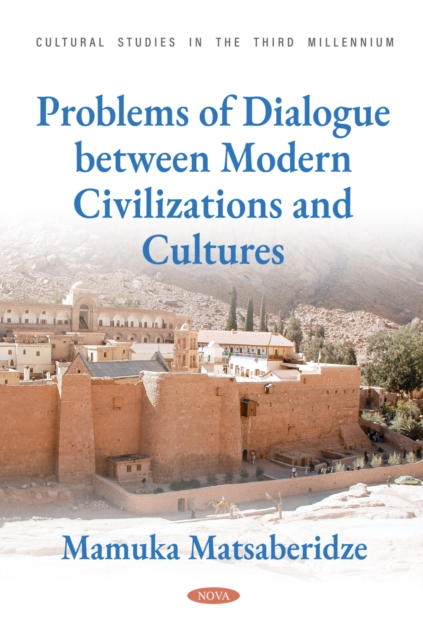
Problems of Dialogue Between Modern Civilizations and Cultures
This book presents several examples of organizing a platform for the dialogue of civilizations and cultures. The authors present several cases and strategies for facilitating dialogues between representatives of societies of different civilizations and cultures. One of the missions of this book is the formation of a systematic topology of intentions to solve the fundamental problems of the modern world. It will be beneficial to diplomats, sociologists, conflictologists, employees of international organizations, and governmental and non-governmental organizations.
eBook


Androids and Intelligent Networks in Early Modern Literature and Culture
Awarded a 2014 Science Fiction and Technoculture Studies Prize Honourable Mention.
This book explores the creation and use of artificially made humanoid servants and servant networks by fictional and non-fictional scientists of the early modern period. Beginning with an investigation of the roots of artificial servants, humanoids, and automata from earlier times, LaGrandeur traces how these literary representations coincide with a surging interest in automata and experimentation, and how they blend with the magical science that preceded the empirical era. In the instances that this book considers, the idea of the artificial factotum is connected with an emotional paradox: the joy of self-enhancement is counterpoised with the anxiety of self-displacement that comes with distribution of agency.In this way, the older accounts of creating artificial slaves are accounts of modernity in the making-a modernity characterized by the project of extending the self and its powers, in which the vision of the extended self is fundamentally inseparable from the vision of an attenuated self. This book discusses the idea that fictional, artificial servants embody at once the ambitions of the scientific wizards who make them and society's perception of the dangers of those ambitions, and represent the cultural fears triggered by independent, experimental thinkers-the type of thinkers from whom our modern cyberneticists descend.
eBook


I, Yantra
What does it mean to be human? I , Yantra examines ancient
Indian narratives about robots and mechanically constructed beings
to explore how their Hindu, Jain, and Buddhist authors approached
this question. Making translations of many of these texts available
in English for the first time, author Signe Cohen argues that they
shed considerable light on South Asian religious notions of
humanity, self, and agency. She also documents connections between
ancient and modern responses to the ethical problems of what
precisely constitutes a sentient being and what rights such a being
should have. Situated at the intersection of humanities and
bioethics, this cross-disciplinary study will be of interest to
scholars of South Asian languages and literature as well as
specialists in religion and technology.
eBook