
Catalogue Search | MBRL


Are you sure you want to remove the book from the shelf?

{{itemTitle}}
202,552
result(s) for
"Technology in literature"
Sort by:

Women in technology
Celebrates the lives and accomplishments of women inventors and technological innovators thoughout history.
BOOK

Media, Technology, and Literature in the Nineteenth Century
Operating at the intersection where new technology meets literature, this collection discovers the relationship among image, sound, and touch in the long nineteenth century. The chapters speak to the special mixed-media properties of literature, while exploring the important interconnections of science, technology, and art at the historical moment when media was being theorized, debated, and scrutinized. Each chapter focuses on a specific visual, acoustic, or haptic dimension of media, while also calling attention to the relationships among the three. Famous works such as Wordsworth's \"I wandered lonely as a cloud\" and Shelley's Frankenstein are discussed alongside a range of lesser-known literary, scientific, and pornographic writings. Topics include the development of a print culture for the visually impaired; the relationship between photography and narrative; the kaleidoscope and modern urban experience; Christmas gift books; poetry, painting and music as remediated forms; the interface among the piano, telegraph, and typewriter; Ernst Heinrich Weber's model of rationalized tactility; and how the shift from visual to auditory telegraphic instruments amplified anxieties about the place of women in nineteenth-century information networks. Full of surprising insights and connections, the collection offers new impetus for stimulating historical conversations and debates about nineteenth-century media, while also contributing fresh perspectives on new media and (re)mediation today.
eBook

Narratives of technology
\"This book documents and investigates the stories we have told and continue to tell about technology - now the dominant feature of our civilization - in fiction, non-fiction, film, and advertising. It answers important questions about the meanings people ascribe to technology, the hopes and fears we express in the different narratives, the effect of those narratives upon us, and the new forms of myth those narratives represent. 'Narratives of Technology' offers an approach grounded in the humanities, adding another perspective to that of social scientists and technologists.\"--Back cover.
Book

Literature, Technology and Magical Thinking, 1880–1920
In this 2001 book Pamela Thurschwell examines the intersection of literary culture, the occult and new technology at the fin-de-siècle. Thurschwell argues that technologies began suffusing the public imagination from the mid-nineteenth century on: they seemed to support the claims of spiritualist mediums. Talking to the dead and talking on the phone both held out the promise of previously unimaginable contact between people: both seemed to involve 'magical thinking'. Thurschwell looks at the ways in which psychical research, the scientific study of the occult, is reflected in the writings of such authors as Henry James, George du Maurier and Oscar Wilde, and in the foundations of psychoanalysis. This study offers provocative interpretations of fin-de-siècle literary and scientific culture in relation to psychoanalysis, queer theory and cultural history.
eBook

Top 101 women of STEM
Chronicles the lives of women scientists throughout history, including Linda B. Buck, Gertrude B. Elion, Barbara McClintock, and Yi Soyeon.
Book

Gears and God
A revealing study of the connections between
nineteenth-century technological fiction and American religious
faith. In
Gears and God: Technocratic Fiction, Faith, and Empire in
Mark Twain’s America , Nathaniel Williams analyzes the
genre of technology-themed exploration novels—dime novel
adventure stories featuring steam-powered and electrified robots,
airships, and submersibles. This genre proliferated during the
same cultural moment when evolutionary science was dismantling
Americans’ prevailing, biblically based understanding of
human history. While their heyday occurred in the late 1800s,
technocratic adventure novels like Twain’s
A Connecticut Yankee in King Arthur’s Court
inspired later fiction about science and technology. Similar to
the science fiction plotlines of writers like Jules Verne and H.
Rider Haggard, and anticipating the adventures of Tom Swift some
decades later, these novels feature Americans using technology to
visit and seize control of remote locales, a trait that has led
many scholars to view them primarily as protoimperialist
narratives. Their legacy, however, is more complicated. As they
grew in popularity, such works became as concerned with the
preservation of a fraught Anglo-Protestant American identity as
they were with spreading that identity across the globe. Many of
these novels frequently assert the Bible’s authority as a
historical source. Collectively, such stories popularized the
notion that technology and travel might essentially
“prove” the Bible’s veracity—a message
that continues to be deployed in contemporary debates over
intelligent design, the teaching of evolution in public schools,
and in reality TV shows that seek historical evidence for
biblical events. Williams argues that these fictions performed
significant cultural work, and he consolidates evidence from the
novels themselves, as well as news articles, sermons, and other
sources of the era, outlining and mapping the development of
technocratic fiction.
eBook

Singularities : technoculture, transhumanism, and science fiction in the twenty-first century
\"In a time of protracted economic crisis, failing political systems, and impending environmental collapse, one strand in our collective cultural myth of Progress--the technological--remains vibrantly intact, surging into the future at ramming speed. Amid the seemingly exponential proliferation of machine intelligence and network connectivity, and the increasingly portentous implications of emerging nanotechnology, futurists and fabulists look to an imminent historical threshold whereupon the nature of human existence will be radically and irrevocably transformed. The Singularity, it is supposed, can be no more than a few years off; indeed, some believe it has already begun. Technological Singularity--a trope conceived in science fiction and subsequently adopted throughout technocultural discourse and beyond--is the primary site of interpenetration between technoscientific and science-fictional figurations of the future, a territory where longstanding binary oppositions between science and fiction, and between present and future, are rapidly dissolving. In this groundbreaking volume, the first to mount a sustained and wide-ranging critical treatment of Singularity as a subject for theory and cultural studies, Raulerson draws SF texts into a complex dialogue with contemporary digital culture, transhumanist movements, political and economic theory, consumer gadgetry, gaming, and related vectors of high-tech postmodernity. In theorizing Singularity as a metaphorical construct lending shape to a range of millennial anxieties and aspirations, Singularities also makes the case for a recent and little-understood subgeneric formation--postcyberpunk SF--as a cohesive body of work, engaged in a shared literary project that is simultaneously shaping, and shaped by, purportedly nonfictional technoscientific discourses\"--Publisher.
Book

Disability in science fiction : representations of technology as cure
In this groundbreaking collection, twelve international scholars - with backgrounds in disability studies, English and world literature, classics, and history - discuss the representation of dis/ability, medical \"cures,\" technology, and the body in science fiction.
eBook

The Cambridge companion to literature and the posthuman
\"The Cambridge Companion to Literature and the Posthuman is the first work of its kind to gather diverse critical treatments of the posthuman and posthumanism together in a single volume. Fifteen scholars from six different countries address the historical and aesthetic dimensions of posthuman figures alongside posthumanism as a new paradigm in the critical humanities. The three parts and their chapters trace the history of the posthuman in literature and other media, including film and video games; and identifies major political, philosophical, and techno-scientific issues raised in the literary and cinematic narratives of the posthuman and posthumanist discourses\"-- Provided by publisher.
Book
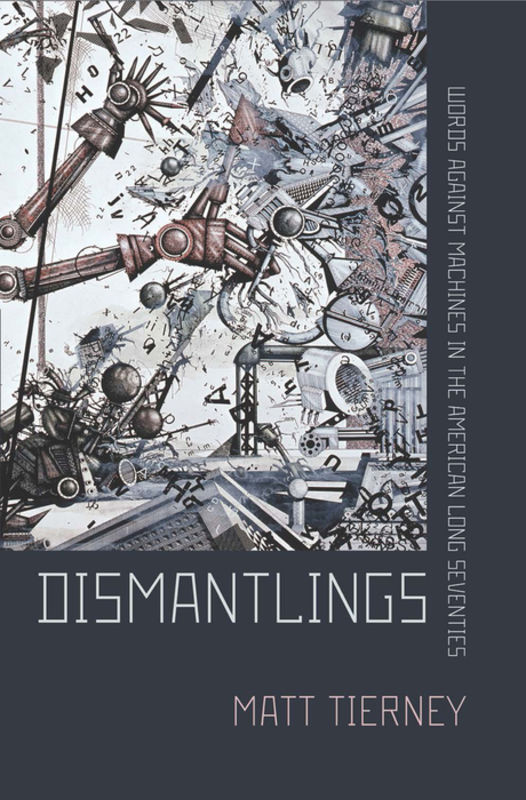
Dismantlings
\"For the master's tools,\" the poet Audre Lorde wrote, \"will never dismantle the master's house.\" Dismantlings is a study of literary, political, and philosophical critiques of the utopian claims about technology in the Long Seventies, the decade and a half before 1980. Following Alice Hilton's 1963 admonition that the coming years would bring humanity to a crossroads—\"machines for HUMAN BEINGS or human beings for THE MACHINE\"—Matt Tierney explores wide-ranging ideas from science fiction, avant-garde literatures, feminist and anti-racist activism, and indigenous eco-philosophy that may yet challenge machines of war, control, and oppression.Dismantlings opposes the language of technological idealism with radical thought of the Long Seventies, from Lorde and Hilton to Samuel R. Delany and Ursula K. Le Guin to Huey P. Newton, John Mohawk, and many others. This counter-lexicon retrieves seven terms for the contemporary critique of technology: Luddism, a verbal and material combat against exploitative machines; communion, a kind of togetherness that stands apart from communication networks; cyberculture, a historical conjunction of automation with racist and militarist machines; distortion, a transformative mode of reading and writing; revolutionary suicide, a willful submission to the risk of political engagement; liberation technology, a synthesis of appropriate technology and liberation theology; and thanatopography, a mapping of planetary technological ethics after Auschwitz and Hiroshima. Dismantlings restores revolutionary language of the radical Long Seventies for reuse in the digital present against emergent technologies of exploitation, subjugation, and death.
eBook