
Catalogue Search | MBRL


Are you sure you want to remove the book from the shelf?

{{itemTitle}}
56
result(s) for
"Teenage girls in popular culture"
Sort by:

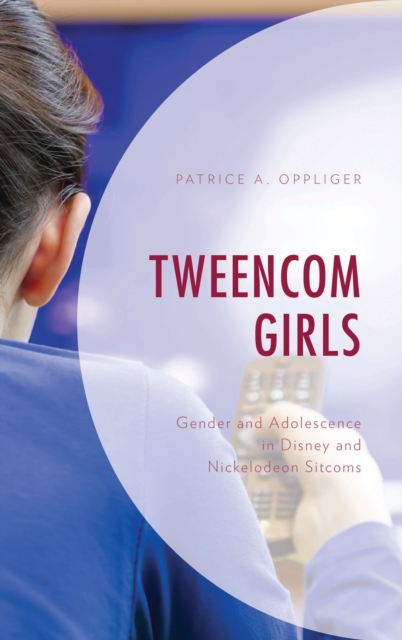
Tweencom Girls
Tweencom Girls analyzes the different ways character tropes are portrayed in media targeted at eight- to twelve-year-olds, particularly female characters, over the last twenty-five years.The book focuses particularly on sitcoms produced by the cable giants Disney Channel and Nickelodeon because of their popularity and ubiquity.
eBook


Girl Talk
Challenging assumptions about women?s magazines, Currie looks at young readers and how they interpret the message of magazines in their everyday lives. A fascinating, sometimes surprising study of young women and their relationship with print media.
eBook

“Teenage addiction”: Adolescent girls drawing upon popular culture texts as mentors for writing in an after -school writing club
The purpose of this action research study was to explore what and how a group of adolescent girls learned about writing from using popular culture texts as mentor texts for writing projects in an after-school writing club. This research was grounded in social perspectives of literacy, and the writing club that was the context for the inquiry was informed by writing workshop and critical media literacy pedagogies. The participants included four Black, four Latina, and one Native American/White girls who lived in a high poverty neighborhood in the Bronx. Data were collected over a 10-week period during which the writing club met 2-3 times a week for two-hour blocks and included: participant observation, collection of written artifacts from group activities and participants' writing projects, retrospective interviews about the participants' writing projects, and a focus group interview. Interpretive data analysis first focused on constant comparative analysis of the girls' construction of critical media literacy practices and then included the construction of case studies of two of the participants, Latoya's and Raquel's, writing projects. Case study analysis included both constant comparative analysis and discourse analysis of Latoya's and Raquel's oral and written texts. The findings of the case studies illustrated how Latoya and Raquel explicitly used popular culture texts as mentors for writing with perspectives of social class, gender, age, and race in mind to guide their crafting of short stories. Both Latoya and Raquel approached using popular culture texts as mentors for writing as an intertextual endeavor. Specifically, Latoya drew upon four upper middle class \"family shows\" as mentors for constructing her female adolescent character, and Raquel drew upon two adolescent movie mentor texts as mentors for critiquing high school popularity as a social construct that is determined by adolescents' social class status. In sum, using popular culture texts as mentors for writing opened up space for Latoya and Raquel to make sense of their lives in their writing and gave them opportunities to explore discourses of adolescent girls.
Dissertation

When John Lennon met the psychology professor
Talks to Dr Tony Taylor, Emeritus Professor of Psychology at Victoria University, about his study into the phenomena of Beatlemania and the psychology to this new level of band worship. Recalls the two occasions where he interviewed The Beatles band member John Lennon, during their 1964 tour to NZ, on his thoughts on fame and the reaction of teenagers to their music. Source: National Library of New Zealand Te Puna Matauranga o Aotearoa, licensed by the Department of Internal Affairs for re-use under the Creative Commons Attribution 3.0 New Zealand Licence.
Newspaper Article

Teenage Dreams
Utilizing a breadth of archival sources from activists, artists, and policymakers, Teenage Dreams examines the race- and class-inflected battles over adolescent women’s sexual and reproductive lives in the late twentieth and early twenty-first century United States. Charlie Jeffries finds that most adults in this period hesitated to advocate for adolescent sexual and reproductive rights, revealing a new culture war altogether--one between adults of various political stripes in the cultural mainstream who prioritized the desire to delay girlhood sexual experience at all costs, and adults who remained culturally underground in their support for teenagers’ access to frank sexual information, and who would dare to advocate for this in public. The book tells the story of how the latter group of adults fought alongside teenagers themselves, who constituted a large and increasingly visible part of this activism. The history of the debates over teenage sexual behavior reveals unexpected alliances in American political battles, and sheds new light on the resurgence of the right in the US in recent years.
eBook

Taking on the Light
Abstract When society invokes Cashawn Thompson's hashtag phrase, “Black Girl Magic,” we laud the accomplishments of Black women and girls as if those triumphs are innate. In this article, I suggest that Black girls participate in a process that I call light making, or embodying that which is lighthearted, encouraging, and self-preserving. In exploring this particular ontology, I deconstruct Black Girl Magic by focusing on contemporary examples of light making as a way of understanding the critical role that Black girls play in Black cultural formation. By focusing on Black girl joy and play in social media, I stress light making as an ontology located in Black girlhood.
Journal Article

How to Be a Real Girl: Authenticity and Mediated Girlhood in Black Mirror's \Rachel, Jack and Ashley Too\
Rachel (Angourie Rice) and her sister Jack (Madison Davenport) embody two versions of girlhood that can be mapped onto a series of binaries: cheerfulness and broodiness, conformity and rebellion, optimism and cynicism, light and darkness, mainstream and underground. While the former, in this case Rachel, is celebrated as \"optimistic, self-inventing, and success-oriented.\" the latter, in this case Jack, is the object of moral concern due to her \"juvenile delinquency, nihilism and antisocial attitudes\" (24). In all these ways, this paper explores how the Black Mirror episode \"Rachel, Jack and Ashley Too\" interrogates the often-blurry line that divides the real from the manufactured, specifically through the ways whereby it unsettles the borders between the celebrity image and one's authentic self, between the human and the non-human, and between pop music and alternative rock. Nowadays, Disney's so-called \"tween machine\" (Borstin and Wheat) spreads beyond television and into multiple forms of media and merchandise, and it possesses star-making power, as is demonstrated by some of the big names in acting and music that got their start as tween Disney stars, like Hilary Duff, Miley Cyrus, Selena Gomez, Demi Lovato and, more recently, Zendaya. 2 As Blue explains in Girlhood on Disney Channel, through its promotion of girl performers, Disney Channel continues to portray and shape an idealized version of girlhood that corresponds to Harris's can-do girls, who are \"identifiable by their commitment to exceptional careers and career planning, their belief in their capacity to invent themselves and succeed, and their display of a consumer lifestyle\" (13).
Journal Article
MTV and teen pregnancy
In 2009, 16 and Pregnant premiered on MTV, closely followed by the spinoffs Teen Mom and Teen Mom 2. Because of their controversial portrayals of teenage mothers, the shows have received ongoing media attention. While some argue that the programs could play a factor in reducing the number of teen pregnancies, others claim the shows exploit young women and glamorize their situations. Among these debates, there have been surprisingly few in-depth discourses that discuss the roles such shows have on teenage audiences. In MTV and Teen Pregnancy: Critical Essays on 16 and Pregnant and Teen Mom, contributors from a variety of backgrounds and expertise offer potent essays about these programs. Divided into four parts, the book tackles the controversial representations of teen pregnancy from various disciplines. Part I explores gendered social norms and the shows’ roles as either educational resources or idealized depictions of teenage motherhood. Part II prompts readers to consider the intersections of race, class, gender, and the social and cultural power structures often glossed over in these programs. Part III focuses on teenage fathers, the portrayal of masculinity, and “good” vs. “bad” parents. Part IV draws from TVs representations of reality to discuss the impact of these shows on the viewing audience. This section includes a narrative from a teen mother who argues that the shows do not accurately reflect the life she leads. As the debates about 16 and Pregnant and Teen Mom continue, this collection provides a valuable critical discourse to be used both inside and outside the classroom. Those engaged in courses on gender and women’s studies, as well as media studies, social work, and family and childhood development, will find MTV and Teen Pregnancy especially insightful—as will those involved in community outreach programs, not to mention teens and young mothers themselves.
eBook