
Catalogue Search | MBRL


Are you sure you want to remove the book from the shelf?

{{itemTitle}}
791
result(s) for
"Tehran (Iran)"
Sort by:

Young and Defiant in Tehran
With more than half its population under twenty years old, Iran is one of the world's most youthful nations. The Iranian state characterizes its youth population in two ways: as a homogeneous mass, \"an army of twenty millions\" devoted to the Revolution, and as alienated, inauthentic, Westernized consumers who constitute a threat to the society. Much of the focus of the Islamic regime has been on ways to protect Iranian young people from moral hazards and to prevent them from providing a gateway for cultural invasion from the West. Iranian authorities express their anxieties through campaigns that target the young generation and its lifestyle and have led to the criminalization of many of the behaviors that make up youth culture.In this ethnography of contemporary youth culture in Iran's capital, Shahram Khosravi examines how young Tehranis struggle for identity in the battle over the right to self-expression. Khosravi looks closely at the strictures confronting Iranian youth and the ways transnational cultural influences penetrate and flourish. Focusing on gathering places such as shopping centers and coffee shops, Khosravi examines the practices of everyday life through which young Tehranis demonstrate defiance against the official culture and parental dominance. In addition to being sites of opposition, Khosravi argues, these alternative spaces serve as creative centers for expression and, above all, imagination. His analysis reveals the transformative power these spaces have and how they enable young Iranians to develop their own culture as well as individual and generational identities. The text is enriched by examples from literature and cinema and by livid reports from the author's fieldwork.
eBook

Transit Tehran : young Iran and its inspirations
\"Tehran is a city of contradictions. Its swollen population of fourteen million and upwards contains the religious, the irreligious and the simply indifferent. Located on a major fault line, it is nevertheless in the throes of a construction boom. While regular demonstrations after Friday prayers call for the death of Great Satan America, Iranians of all ages enjoy a long-standing love affair with Western luxury brands. Among the hip and fashionable, the veil has morphed from cover-up to come-on, and the young women in colourful scarves and heavy makeup are increasingly targeted by the female officers of the Special Guidance Patrols. Transit Tehran: Young Iran and Its Inspirations is an original anthology of writing and images primarily featuring the generation of photojournalists who came of age during the reformist movement. Newsha Tavakolian, Abbas Kowsari, Javad Montazeri and Omid Salehi continue to document the social transformation of their country despite the government's mass closures of newspapers and magazines. Unexpected facets of urban experience are explored in the art of Sadegh Tirafkan, the new journalism of Asieh Amini, and the short stories of Alireza Mahmoodi-Iranmehr. Transit Tehran also celebrates the long tradition of artistic and cultural resistance that has influenced young Iranians, noticeably in the work of veteran writer and editor Masoud Behnoud, premier satirist and cartoonist Ardeshir Mohassess, and photographers Kaveh Golestan and Mohsen Rastani. The Internet, youth and fashion culture and the homegrown trends of the Islamic Republic fuel the city's paradoxes its pains as well as its obvious pleasures. Sunk in permanent smog, tangled in traffic jams, suffused with the threat of war and political unrest, life in Tehran is chaotic and unpredictable. Its passions and preoccupations make it a city like no other.\"--Book cover.
Book

The martyrs of Karbala : Shiʿi symbols and rituals in modern Iran
No detailed description available for \"The Martyrs of Karbala\".
eBook

The Martyrs of Karbala
This innovative study examines patterns of change in Shi'i symbols and rituals over the past two centuries to reveal how modernization has influenced the societal, political, and religious culture of Iran. Shi'is, who support the Prophet Mohammad's progeny as his successors in opposition to the Sunni caliphate tradition, make up 10 to 15 percent of the world's Muslim population, roughly half of whom live in Iran. Throughout the early history of the Islamic Middle East, the Sunnis have been associated with the state and the ruling elite, while Shi'is have most often represented the political opposition and have had broad appeal among the masses. Moharram symbols and rituals commemorate the Battle of Karbala in 680 CE, in which the Prophet Mohammad's grandson Hoseyn and most of his family and supporters were massacred by the troops of the Umayyad caliph Yazid.
Moharram symbols and rituals are among the most pervasive and popular aspects of Iranian culture and society. This book traces patterns of continuity and change of Moharran symbols and rituals in three aspects of Iranian life: the importance of these rituals in promoting social bonds, status, identities, and ideals; ways in which the three major successive regimes (Qujars, Pahlavis, and the Islamic Republic), have either used these rituals to promote their legitimacy, or have suppressed them because they viewed them as a potential political threat; and the uses of Moharram symbolism by opposition groups interested in overthrowing the regime.
While the patterns of government patronage have been radically discontinuous over the past two centuries, the roles of these rituals in popular society and culture have been relatively continuous or have evolved independently of the state. The political uses of modern-day rituals and the enduring symbolism of the Karbala narratives continue today.
eBook

Recent advances in the science and technology of natural zeolites in Iran
Iran has significant deposits of high-purity natural zeolites. Many Iranian scholars conduct scientific research on porous materials, from natural and synthetic zeolites to metal organic framework materials. Iranian zeolite deposits and associated research are reviewed here. Various industrial applications of natural zeolites, from agriculture to animal husbandry to the construction industry and beyond are discussed here.
Journal Article

Rooftops of Tehran
An unforgettable debut novel of young love and growing up in an Iran headed toward revolution. In a middle-class neighborhood of Iran's sprawling capital city, 17-year-old Pasha Shahed spends one perfect, stolen summer with his beautiful neighbor, Zari, until he unwittingly guides the Shah's secret police to their target: Zari's intended. The violent consequences awaken Pasha and his friends to the reality of life under the rule of a powerful despot, and lead Zari to make a shocking choice from which Pasha may never recover.
Book
Doing Psychoanalysis in Tehran
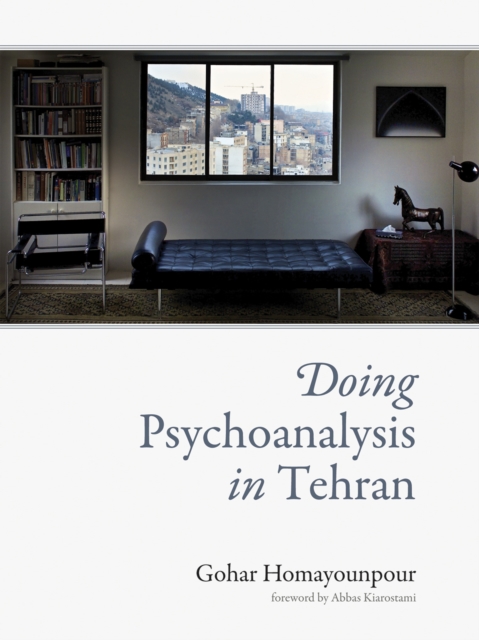
Is psychoanalysis possible in the Islamic Republic of Iran? This is the question that Gohar Homayounpour poses to herself, and to us, at the beginning of this memoir of displacement, nostalgia, love, and pain. Twenty years after leaving her country, Homayounpour, an Iranian, Western-trained psychoanalyst, returns to Tehran to establish a psychoanalytic practice. When an American colleague exclaims, \"I do not think that Iranians can free-associate!\" Homayounpour responds that in her opinion Iranians do nothing but. Iranian culture, she says, revolves around stories. Why wouldn't Freud's methods work, given Iranians' need to talk? Thus begins a fascinating narrative of interlocking stories that resembles--more than a little--a psychoanalytic session. Homayounpour recounts the pleasure and pain of returning to her motherland, her passion for the work of Milan Kundera, her complex relationship with Kundera's Iranian translator (her father), and her own and other Iranians' anxieties of influence and disobedience. Woven throughout the narrative are glimpses of her sometimes frustrating, always candid, sessions with patients. Ms. N, a famous artist, dreams of abandonment and sits in the analyst's chair rather than on the analysand's couch; a young chador-clad woman expresses shame because she has lost her virginity; an eloquently suicidal young man cannot kill himself. As a psychoanalyst, Homayounpour knows that behind every story told is another story that remains untold. Doing Psychoanalysis in Tehran connects the stories, spoken and unspoken, that ordinary Iranians tell about their lives before their hour is up.
eBook