
Catalogue Search | MBRL


Are you sure you want to remove the book from the shelf?

{{itemTitle}}
152,369
result(s) for
"Teleconferencing"
Sort by:

Face-to-face communication over the Internet : emotions in a web of culture, language, and technology
\"Social platforms such as MySpace, Facebook and Twitter have rekindled the initial excitement of cyberspace. Text based computer-mediated communication has been enriched with face-to-face communication such as Skype, as users move from desk tops to laptops with integrated cameras and related hardware. Age, gender and culture barriers seem to have crumbled and disappeared as the user base widens dramatically. Other than simple statistics relating to e-mail usage, chatrooms and blog subscriptions, we know surprisingly little about the rapid changes taking place. This book assembles leading researchers on non-verbal communication, emotion, cognition and computer science to summarize what we know about the processes relevant to face-to-face communication as it pertains to telecommunication, including video-conferencing. The authors take stock of what has been learned regarding how people communicate, in person or over distance, and set the foundations for solid research helping to understand the issues, implications and possibilities that lie ahead\"--Provided by publisher.
Book

BITE THERAPY: JUST IN TIME EDUCATION FOR NEWLY APPROVED MEDICATIONS
Significance & Background: In 2023, 13 new drugs were approved for treatment of a variety of cancers. Additionally, 67 drugs were approved for expanded use or treatment of additional patient populations. One cellular therapy, omidubicel-only, was approved to reduce time to neutrophil recovery in individuals receiving umbilical cord blood transplant after a myeloablative regimen. Medications administered in the outpatient setting may require admission to the inpatient area where nurses are not familiar with the specific agent. BiTE therapy has been available since 2014 (blinatumomab) with additional drug approvals in 2021 through 2024. Once a provider determines that a patient will receive BiTE therapy, approval is required from the hospital Pharmacy and Therapeutics Committee (P&T). After approval, there is not always lead time to schedule formal in-services or have a pharmaceutical representative present on site or via a video call to educate nursing staff. Purpose: The goal of this project was to provide just-in-time education and resources available, specifically on BiTE therapy, for staff prior to the day of treatment. Interventions: Project interventions included creation of a one-page summary specific to the agent. Information included indication, medication safety (toxicity concerns), administration specifics, and events requiring provider notification. A longer presentation addressing information from the package insert and treatment orders/protocols was available for leisurely review. An overview of the product was provided by either the clinical nurse specialist or the nursing professional development generalist prior to initial administration. Results: Information for six agents are currently available on the hospital oncology nursing Microsoft Team site. The site is available to all oncology nursing staff at the facility. A copy of the package insert is also posted on the Team site. Additionally, a binder was provided to the inpatient BMT, hematology, and medical oncology units containing copies of all presentation information. Discussion: In person in-services or sessions offered via a video call can also provide current updates on medications approved by P&T. However, there is not always lead time to schedule these events. Although just-in-time education may not be the preferred delivery method and can be time consuming for the education team and the nursing staff, this method allows for timely staff updates.
Journal Article
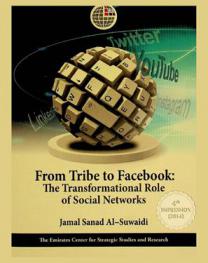
From tribe to Facebook : the transformational role of social networks
The effects of online social networking have been transformed at a global level and nowhere more so than in the Arab world.
Book


Can you hear me? : how to connect with people in a virtual world
Communicating virtually is cool, useful, and becoming more universal every day. But the actual communication is often quite bad. Indeed, everyone agrees that the quality of human connection we feel in virtual meetings, email, and other forms of virtual communication is awful. Worse than boring, virtual communication very often leads to misunderstandings, because it deprives us of the emotional knowledge that helps us understand context. How can we fix this? A key problem is that we are busy trying to replicate the experience of a face-to-face meeting in the virtual world, assuming the same rules apply. That is a big mistake. We need to shift our focus and energy to a new challenge, unique to the virtual era. As communication expert Nick Morgan argues in this essential book, recent research suggests that we need to learn to consciously deliver a whole set of cues, both verbal and nonverbal, that we used to deliver unconsciously in the previrtual era. Indeed, we need to update all our rules of connection for the virtual sphere, rethinking them from the beginning and avoiding the mistake of assuming that they are inherently similar to face-to-face connections. Can You Hear Me? explains and guides you through this important process, describing what the current research reveals about what works and what doesn't in virtual communications, and creating a new set of rules and practical tips for how to connect with people--your team, your audience, your organization--when you can't be physically present. If you work or manage in an organization that has more than one office or customers who aren't nearby, Can You Hear Me? is your essential communications manual for twenty-first-century work.-- Provided by publisher
Book


Telepsychiatry versus face-to-face treatment: systematic review and meta-analysis of randomised controlled trials
The COVID-19 pandemic has transformed healthcare significantly and telepsychiatry is now the primary means of treatment in some countries.
To compare the efficacy of telepsychiatry and face-to-face treatment.
A comprehensive meta-analysis comparing telepsychiatry with face-to-face treatment for psychiatric disorders. The primary outcome was the mean change in the standard symptom scale scores used for each psychiatric disorder. Secondary outcomes included all meta-analysable outcomes, such as all-cause discontinuation and safety/tolerability.
We identified 32 studies (
= 3592 participants) across 11 mental illnesses. Disease-specific analyses showed that telepsychiatry was superior to face-to-face treatment regarding symptom improvement for depressive disorders (
= 6 studies,
= 561; standardised mean difference s.m.d. = -0.325, 95% CI -0.640 to -0.011,
= 0.043), whereas face-to-face treatment was superior to telepsychiatry for eating disorder (
= 1,
= 128; s.m.d. = 0.368, 95% CI 0.018-0.717,
= 0.039). No significant difference was seen between telepsychiatry and face-to-face treatment when all the studies/diagnoses were combined (
= 26,
= 2290;
= 0.248). Telepsychiatry had significantly fewer all-cause discontinuations than face-to-face treatment for mild cognitive impairment (
= 1,
= 61; risk ratio RR = 0.552, 95% CI 0.312-0.975,
= 0.040), whereas the opposite was seen for substance misuse (
= 1,
= 85; RR = 37.41, 95% CI 2.356-594.1,
= 0.010). No significant difference regarding all-cause discontinuation was seen between telepsychiatry and face-to-face treatment when all the studies/diagnoses were combined (
= 27,
= 3341;
= 0.564).
Telepsychiatry achieved a symptom improvement effect for various psychiatric disorders similar to that of face-to-face treatment. However, some superiorities/inferiorities were seen across a few specific psychiatric disorders, suggesting that its efficacy may vary according to disease type.
Journal Article